
Kalmaegi to hit Northeast Nov 7–9 as irrigation officials move to ease Ping River overflow
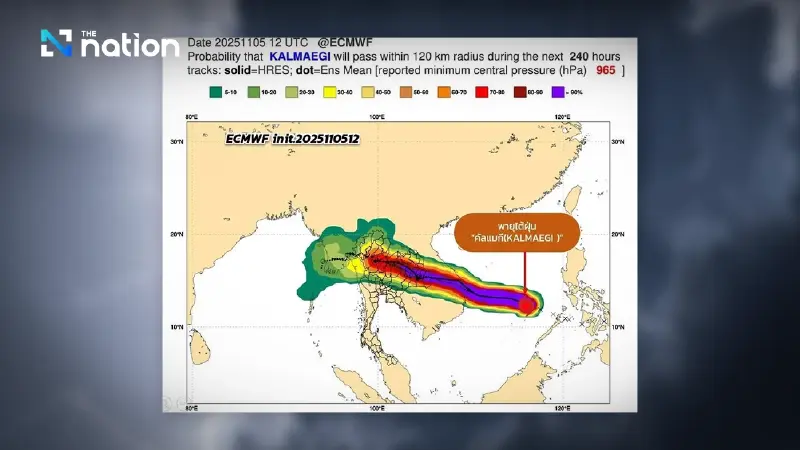


TMD warns of typhoon Kalmaegi hitting Northeast Nov 7–9 while RID rushes to ease Ping River overflow after heavy northern rains

The Meteorological Department has issued an urgent weather warning for typhoon Kalmaegi, which is expected to bring heavy rain and flooding to Northeast Thailand from November 7–9, with Ubon Ratchathani forecast to be hardest hit. Meanwhile, the Royal Irrigation Department (RID) is implementing emergency measures to manage rising water levels in the Ping River basin following days of heavy rainfall in the North.
At a press briefing held at 10.30am on November 6 2025, Dr Sukanyanee Yawincharn, Director-General of the Meteorological Department, said that Kalmaegi is expected to make landfall in central Vietnam between November 6 and 7 before weakening into a tropical storm and depression as it moves through Laos into Ubon Ratchathani on November 7. The storm will increase rainfall across upper Thailand.

Provinces at risk of very heavy rainfall (over 90 millimetres) are in the lower Northeast, including Ubon Ratchathani, Buri Ram, Surin, Si Sa Ket, Maha Sarakham, Roi Et, Yasothon, Amnat Charoen, and Nakhon Ratchasima.
In addition, many provinces across the North, Northeast, Central, East, South, and Bangkok and its vicinity are expected to see heavy rain of 35–90 millimetres. Waves in the Andaman Sea are forecast to rise 2–3 metres, and more than 3 metres in thunderstorm areas. The department has advised small boats to remain ashore from November 6–7.
The Meteorological Department urged residents and farmers in at-risk areas to closely monitor weather reports and prepare for flash floods, mountain runoff, and overflowing rivers. Updates are available at www.tmd.go.th and via the 1182 hotline, open 24 hours.

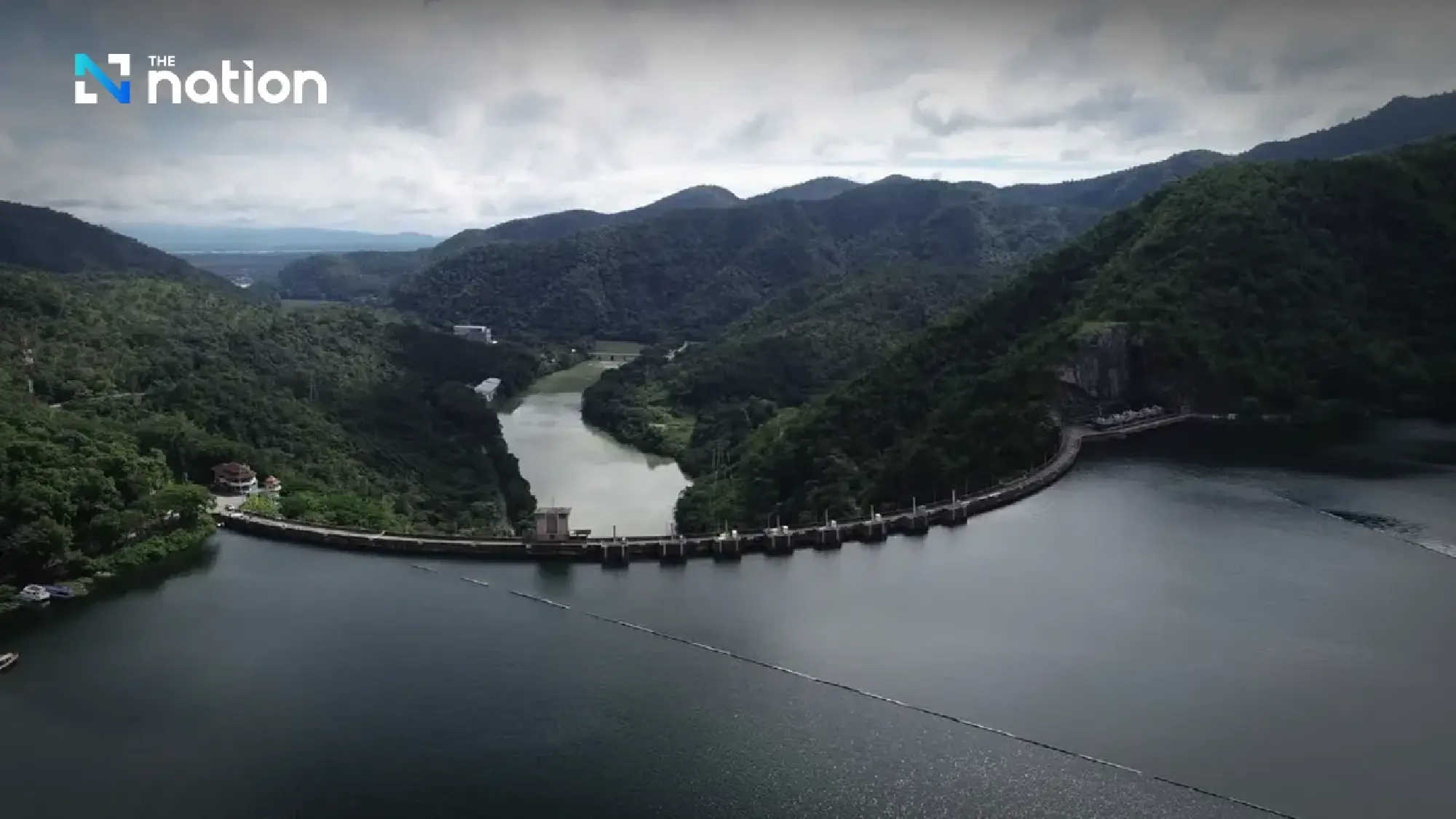

Ping River overflows after days of heavy rain in the North
The Royal Irrigation Department reported that heavy rainfall between November 2–4 in the upper Ping River basin — covering Chiang Mai, Lamphun, Tak, and Kamphaeng Phet — has caused water levels to surge above normal. The current water flow into the Chao Phraya River basin is now being closely monitored.
Authorities have implemented an intensive water management strategy using major reservoirs in the upper basin to delay runoff into the lower Chao Phraya area.

Key operations include:
Bhumibol Dam in Tak Province — holding and storing inflows from the upper Ping River.
Sirikit Dam in Uttaradit Province — managing runoff from the Nan River.
Despite these efforts, runoff and rainfall downstream of Bhumibol Dam have caused water levels in the lower Ping River to rise sharply, merging with flows from the Nan and Sakae Krang rivers above the Chao Phraya Dam in Chai Nat Province.
As a result, water discharge from the Chao Phraya Dam has increased to 2,700 cubic metres per second, with continued rainfall in the central region further elevating river levels.
To reduce impacts on communities, the RID has launched several urgent measures, including:
- Diverting water into irrigation canals on both sides of the river at full capacity.
- Deploying pumping and pushing equipment to accelerate drainage into the Gulf of Thailand.
- Coordinating with the Electricity Generating Authority of Thailand (EGAT) and related agencies for integrated water management.
The RID stated it will continue to monitor and assess the situation daily, adjusting discharge rates according to rainfall and runoff conditions to minimise the impact on the public.
