
Buri Ram strengthens border to block illegal Cambodian rice
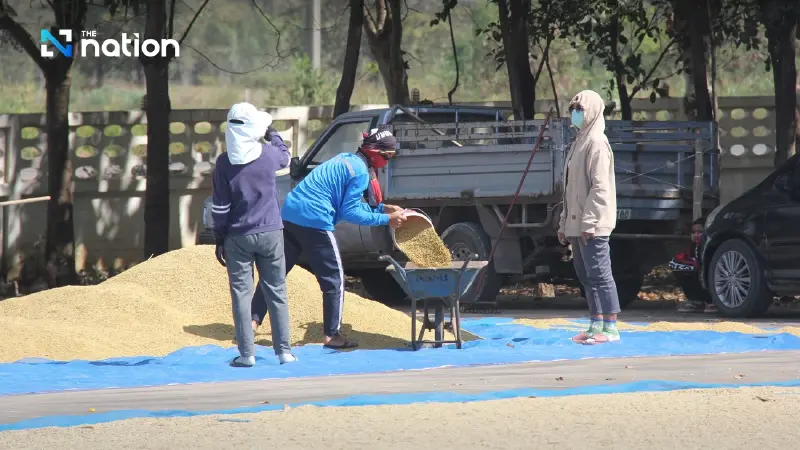


Buri Ram implements strict border control to block cheap Cambodian rice from entering. All rice paddy shipments over 5 tons must have a transportation permit.
- Buri Ram provincial authorities are increasing border controls to prevent the illegal smuggling of cheap paddy rice from Cambodia.
- The measure is a response to a significant drop in Cambodian rice prices to THB 3–4 per kilogram following a recent conflict, which creates a strong incentive for smuggling.
- Officials are concerned that the smuggled rice will be mixed with the local supply, which would negatively impact and lower the price of Thai rice.
- New enforcement includes intensified surveillance and a requirement for a transportation permit for any rice shipment exceeding 5 tons.
Sritham Ratchakaew, Deputy Governor of Buri Ram Province, chaired a meeting with heads of government agencies and related officials on November 6, 2025. The meeting emphasised the need to increase strict border control measures along the Thai-Cambodian border, specifically in districts like Ban Kruat, Lahan Sai, and Non Din Daeng.
The Deputy Governor called for enhanced cooperation among the police, local administration, and security sectors to intensify surveillance and prevent the smuggling of paddy rice from the neighbouring country for adulteration or sale in the area.
This heightened concern stems from the closure of the Thai-Cambodian border following the conflict and fighting in late July 2025.
The conflict resulted in a significant drop in the price of paddy rice in Cambodia, falling to only THB3–4 per kilogram. Authorities are concerned that this low price may prompt groups to illegally import and mix Cambodian rice into the local supply, which would negatively impact and lower the price of Thai rice.


In light of this, the public is urged to cooperate and report any irregularities or groups attempting to smuggle and adulterate the Thai rice market with cheap rice from the neighbouring country. Offenders will be subject to inspection and legal action.
Any single transport of paddy rice into or out of the area exceeding 5 tons requires a transportation permit from the Provincial Administration. Transporting rice without this authorisation will result in legal prosecution.
Chatchai Ninarat, President of the Buri Ram Rice Mill Club, stated that rice mill operators in Buri Ram Province have not historically opened yards or jetties to purchase rice in Cambodia.

He noted, however, that some exporters in other provinces may have previously set up receiving yards in Cambodia to process paddy rice into polished rice for export to Europe or the US, but these operations are likely inactive following the border closure.
Chatchai affirmed that the closure of the Thai-Cambodian border has not affected the price of Thai rice, as Thailand's primary markets are the US, China, Hong Kong, and Singapore. However, the border closure could lead to a slight reduction in Thai rice production as the import of Cambodian paddy rice is no longer possible.
