
Flooding in Ang Thong: Authorities work to protect against rising waters, hospitals on high alert
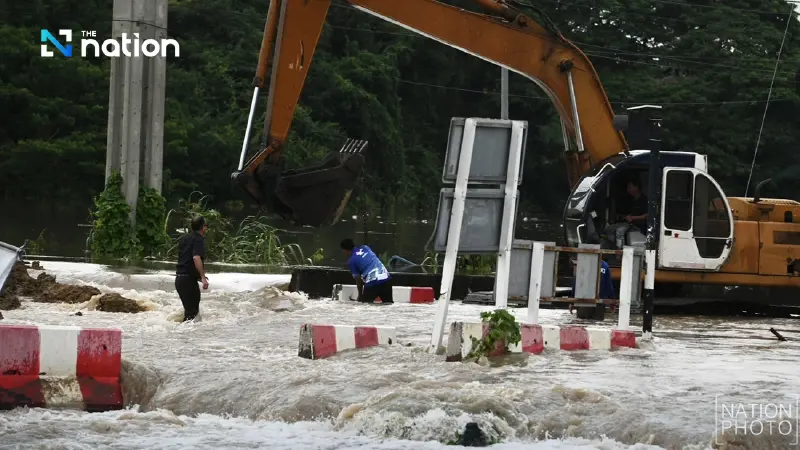


Floodwaters continue to inundate homes and markets in Ang Thong, with authorities using clay embankments to control the flow of the Chao Phraya River. Hospitals and locals are on high alert.
The flooding situation in Ang Thong province remains critical as officials continue efforts to fortify defences against the rising waters of the Chao Phraya River, which have breached several areas, including Pa Mok Market and local municipalities. The authorities are laying clay embankments in multiple locations to contain the water and prevent further flooding into homes.

In Pa Mok Market, Pa Mok district, parts of the area have seen water levels rise by up to 50 cm, forcing locals to move their belongings to higher ground. The Electricity Authority has also shut off power in the market area to ensure safety.
Residents mentioned that this was the worst flood in nearly 40 years, with the last major flood occurring in 2011, though that year did not affect this specific area.

Meanwhile, at Pa Mok Hospital, despite the 4-metre-high embankment in place at the front, floodwaters have breached the rear of the hospital due to a nearby canal, causing the water to flow into the back of the village adjacent to the hospital. The hospital is working quickly to strengthen defences by building clay embankments to protect vulnerable areas near the river and the canal. According to officials, the hospital has never experienced flooding since it was established in 1995.

In Community 11, which is adjacent to the hospital, floodwaters have already started to affect the first floors of homes, leading to the evacuation of bedridden patients to safer areas. Sandbags are being placed, but some homes have already been overwhelmed by the flooding.
The Chao Phraya River, which has been receiving runoff from Chainat Province, is still flowing at a rate of over 2,700 cubic metres per second, as reported by the Chao Phraya Dam. If the water can be contained, the levels should not rise further.

The Geo-Informatics and Space Technology Development Agency (GISTDA) has identified areas at high risk of flooding due to the water discharge from the Chao Phraya Dam. Floodwaters continue to flow down from the North, which is why the dam is being used to manage water levels and prevent further flooding in downstream areas.
Low-lying regions in Chainat, Singburi, Ang Thong, Suphanburi, Ayutthaya, Saraburi, and Pathum Thani are particularly vulnerable, as water levels may rise and overflow into agricultural and residential areas along the river. This situation underscores the vulnerability of the Chao Phraya Basin, which is facing both river runoff and rainfall simultaneously.
Authorities stress the importance of preparation and timely alerts to minimise damage. Local authorities, government agencies, and residents must cooperate closely. People living in orange and red zones are advised to move belongings to higher ground and remain alert to further developments.

