
Bangkok governor says Chao Phraya River under control
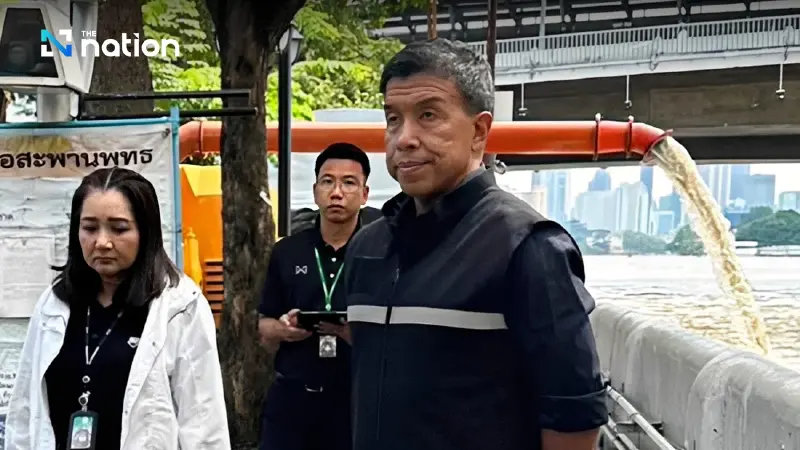


Governor Chadchart Sittipunt confirms Chao Phraya River levels remain safe despite high upstream discharge; Bangkok teams on 24-hour flood watch

On November 10, 2025, Bangkok Governor Chadchart Sittipunt inspected flood prevention measures along the Chao Phraya River, focusing on the Phra Phuttha Yodfa Bridge (Memorial Bridge) and the Tha Tien area — both identified as “weak spots” in the city’s flood defences.
Chadchart said the overall situation along the Chao Phraya had improved compared to the previous day. Although upstream discharge from the Chao Phraya Dam has increased to about 2,800 cubic metres per second, tidal levels from the sea have decreased, easing pressure on the city’s riverbanks.
“At noon today, the water peaked at around 2.1 metres, while our flood barriers are 2.8 metres high — leaving a 70-centimetre safety margin,” he said, affirming that Bangkok’s flood defences remain secure.
“Pump and fight” strategy keeps seepage under control
The governor explained that the city is using a “pump-and-fight” method in areas where water seeps through or rises along the embankments — immediately pumping the water back into the river to prevent street or community flooding.
“The situation in Bangkok is not worrisome. There are minor leaks in some sections, but overall the city remains in control, with teams working on-site around the clock,” Chadchart said, urging residents to report any areas of concern.
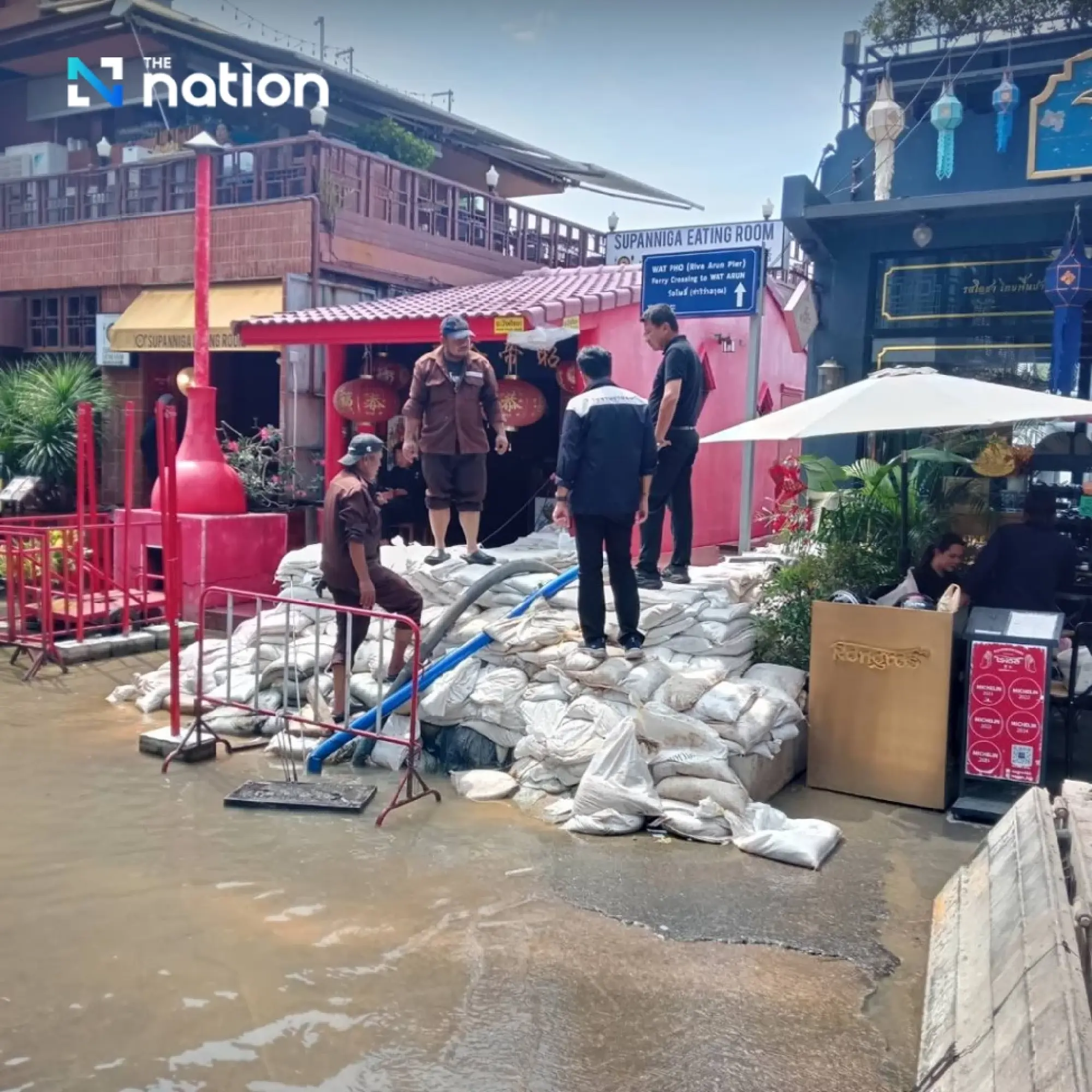

Reinforcing sandbag barriers at risk points
Most of the riverbank defences remain in good condition, but Chadchart instructed officials to reinforce sandbag barriers around the Rongros riverside restaurants area — a key weak spot — to prevent wall subsidence and protect nearby economic zones.
- The Drainage and Sewerage Department has deployed officers, water pumps, and flood prevention equipment, maintaining 24-hour surveillance of tide and river levels.
- The Phra Nakhon District Office is reinforcing sandbags and constructing temporary wooden walkways to help residents move safely.
- Backup sandbags have been stored nearby, and the district’s Public Works Division has been tasked with inspecting piers and other high-risk points for immediate reinforcement.
Coordination with private property owners
The Phra Nakhon district director noted that some riverside areas lie on private property, requiring owner consent before protective barriers can be installed. The city is working with landowners to resolve these issues while maintaining constant 24-hour monitoring in sensitive areas.
Chadchart reiterated that Bangkok Metropolitan Administration (BMA) staff remain on full alert, ready to act quickly to protect riverside communities and prevent floodwaters from reaching key urban areas.
