
COP30 begins: 6-pillar agenda paves way for US$1.3 trillion 2035 fund
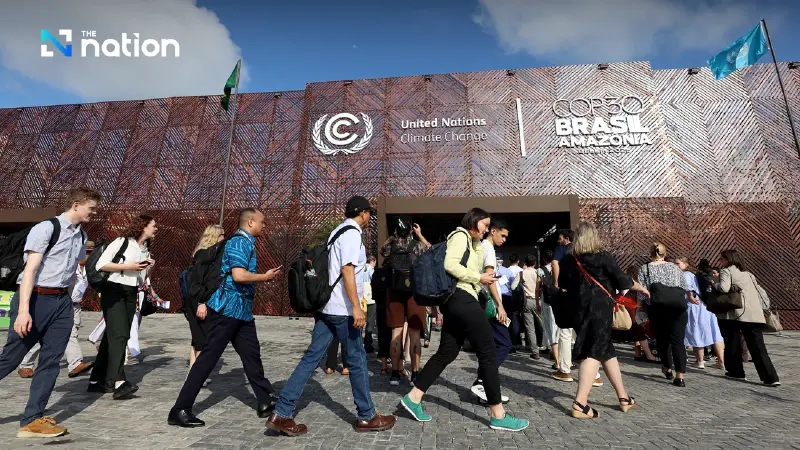


COP30, now in Belém, Brazil, seeks accelerated climate action via its 6-pillar agenda. Baku to Belém Roadmap targets US$1.3 trillion annually by 2035 for developing nations.
- The 30th UN Climate Change Conference (COP30) has commenced in Belém, Brazil, structured around a six-pillar Action Agenda covering energy transition, nature protection, and sustainable agriculture.
- A primary objective is to establish a climate finance roadmap, known as the "Baku to Belém Roadmap," to mobilize at least US$1.3 trillion annually by 2035 for developing nations.
- The US$1.3 trillion fund will be implemented through five core strategies ("5Rs"), focusing on replenishing grants, rebalancing budgets, and reshaping the global financial system for equitable capital flow.
- The conference operates under the theme "Global Mutirão" (a collective effort), emphasizing the integration of governments, businesses, and communities to achieve the agenda's goals.
The 30th session of the United Nations Climate Change Conference (COP30) has commenced in Belém, Brazil, running from November 10–21, 2025.
The conference is under intense global scrutiny and high expectations to truly become the "Action COP," as many nations continue to fall behind in carbon reduction targets necessary to limit global warming to 1.5°C under the Paris Agreement.
This year’s conference is defined by five critical global expectations and a focus on collective effort. Key among these are the mobilisation of a US$1.3 trillion climate finance roadmap to assist developing and vulnerable nations, and the commitment to triple renewable energy capacity by 2030.
The gathering is unified under the slogan "Global Mutirão" (a collective, joint effort), emphasising the integration of power from governments, businesses, communities, and citizens to achieve the 30 objectives across the six pillars of the Action Agenda:
- Energy, Industry, and Transport Transition: Shifting to clean energy systems.
- Protecting Nature: Conserving forests, oceans, and biodiversity for natural balance.
- Sustainable Agriculture and Food Systems: Reducing methane emissions and improving resource efficiency.
- Resilient Infrastructure: Building resilient cities, infrastructure, and water resources to cope with extreme weather disasters.
- Human and Social Development: Creating green jobs and enhancing economic equality.
- Cross-Sectoral Integration: Linking finance, technology, and capacity building for a sustainable transition.


Five Key Global Issues Under the Spotlight
COP30 is not merely a political negotiating forum; it is a green economic and geopolitical arena that will define the future of global resource allocation and responsibility. Five primary issues demand attention:
- 2025 Deadline for New NDCs: Submitting more ambitious Nationally Determined Contributions (NDCs) that cover greenhouse gas reduction, adaptation, and climate finance, with new tracking mechanisms to close the ambition gap.
- Operationalising the Global Goal on Adaptation (GGA): Moving the GGA from planning to concrete action with a new set of indicators to enhance the resilience of vulnerable communities.
- The US$1.3 Trillion Climate Finance Roadmap: Closing the funding gap for developing countries with an emphasis on fairness and transparency, alongside reforming International Financial Institutions (IFIs) to align with climate goals.
- Inaugural Loss and Damage Fund Applications: Opening the fund with an initial capital of US$250 million to assist affected communities, alongside discussions on effective fund management.
- 10th Anniversary of the Paris Agreement: COP30 must elevate the agreement from policy-setting to genuine implementation, reinforcing the capacity and voice of local actors to drive a sustainable and equitable global future.


Mobilising US$1.3 Trillion: The Baku to Belém Roadmap
Mukhtar Babayev, COP29 President, and André Corrêa do Lago, COP30 President, jointly unveiled the "Baku to Belém Roadmap", a blueprint to mobilise at least US$1.3 trillion in climate finance annually by 2035 to support developing nations. The Roadmap outlines five core approaches, known as the 5Rs:
- Replenishing: Increasing grants, low-interest loans, and low-cost funding.
- Rebalancing: Adjusting fiscal budgets and debt sustainability.
- Rechanneling: Promoting new forms of private sector investment and lowering financial costs.
- Revamping: Strengthening capacity and cooperation to expand the climate project portfolio.
- Reshaping: Restructuring the financial system to facilitate the equitable flow of capital.
The COP30 President stated that the plan reflects a global drive to reform the international financial system, especially following the Covid-19 crisis, which highlighted the need for a more equitable and sustainable financial structure.
"This is the start of the climate finance era. For the Paris Agreement to accelerate, it must be integrated into the real economic and financial structures. The 5Rs plan is a bridge connecting scientific urgency to a tangible global action plan."
Belém 4X: Accelerating Sustainable Fuels
Brazilian President Luiz Inácio Lula da Silva affirmed that Brazil is not afraid to discuss energy transition, noting that 90% of the country's electricity comes from clean sources, and Brazil is the world's second-largest leader in biofuel.
Brazilian gasoline is mixed with 30% ethanol, and diesel with 15% biodiesel.
At COP30, the "Belém 4X" initiative was launched, a collaboration among 19 nations dedicated to quadrupling the use of sustainable fuels by 2035 to accelerate the energy transition and tackle the climate crisis.
"The challenge is that over two billion people globally lack access to safe cooking fuels. I call on COP30 to resolve the debt problem and unfair conditions faced by developing nations, ensuring that the energy transition is just, inclusive, and allows all countries access to technology and finance."
Five Paths to Energy Transition
António Guterres, United Nations Secretary-General, emphasised that renewable energy is the lowest-cost source of electricity in almost every country, and every US$1 invested in clean energy creates three times more jobs than fossil fuels.
He called for an urgent, just, rapid, and widespread energy revolution through five essential pathways:
- Policy Alignment: Adjusting policies, laws, and incentives to support the transition.
- Just Transition: Prioritising fairness for workers and communities dependent on coal, oil, and gas.
- Investment: Investing in power grids and energy storage technologies.
- Clean Demand: Meeting all new electricity demands, including the AI sector, with clean energy.
- Financial Unlock: Unlocking finance to support developing countries, particularly in Africa, which currently receives only 2% of global clean energy investment.
The Secretary-General warned that despite existing commitments, global efforts are insufficient, and the world is still heading toward warming beyond 2°C, leading to increased flooding, heat, and suffering.
He stressed the need to cut carbon emissions by nearly half by 2030 and achieve carbon neutrality by 2050.
