
COP30 in Brazil: A pivotal moment for climate and nature cooperation
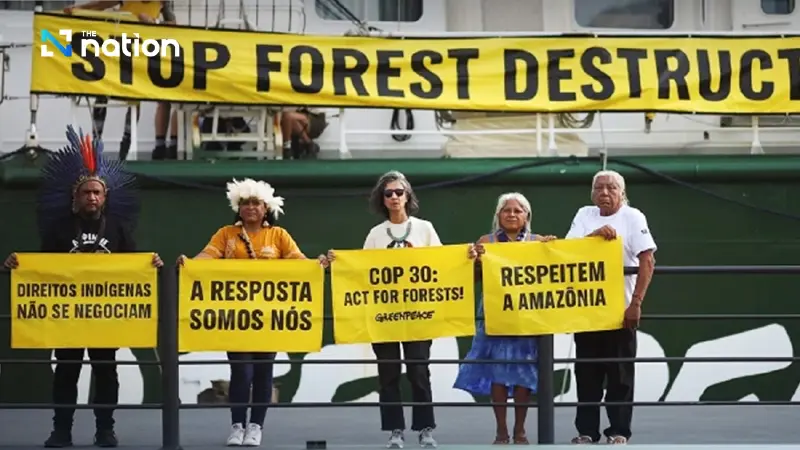


COP30 in Belem, Brazil, marks a pivotal moment in the global climate agenda, 10 years after the Paris Agreement, with the private sector playing a key role in climate action.
The 30th United Nations Climate Change Conference (COP30) in Belem, Brazil, from November 10-21, 2025, is a landmark event, marking the 10th anniversary of the 2015 Paris Agreement. This conference comes at a critical juncture, with the global landscape having changed dramatically in the past decade.
In the past, governments were the driving forces behind climate action, supported by unprecedented political backing. However, the current situation is different. The private sector is playing an increasingly vital role, with the green market rapidly expanding and a real economic transition underway. Despite this, there has been a decline in policy ambition, leading to a worrying gap between what the world must do and what governments have pledged.
COP30 will be a defining moment, testing whether the mechanisms established by the Paris Agreement can deliver tangible results. This is especially true as climate action is increasingly backed by strong economic reasoning.
Data from the World Economic Forum’s Alliance of CEO Climate Leaders, which includes over 130 companies with combined revenues exceeding $4 trillion, shows that between 2019 and 2023, members reduced their total greenhouse gas emissions by 12%, while their revenues grew by 20%. The global green technology market, including solar panels, wind turbines, electric vehicles, and batteries, has grown nearly fourfold since 2015, now valued at over $700 billion annually. This highlights the commercial potential of the green economy.
However, private sector momentum faces resistance from policy uncertainty, limited budgets, and geopolitical tensions. COP30 must reignite political will to unlock the immense economic opportunities offered by climate action.
The Gap in Nationally Determined Contributions (NDCs)
By 2025, every country must submit its third national climate action plan, or NDCs 3.0, which will be the most ambitious yet, covering the period from 2025 to 2035. These plans must demonstrate clear progress and align with the goal of limiting global temperature rise to 1.5°C.
However, progress has been slow. Currently, only 69 major economies, accounting for 61% of global greenhouse gas emissions, have submitted their plans, according to the ClimateWatch NDC Tracker. China only submitted its plan on November 3.
UN Secretary-General Antonio Guterres warned that the current NDCs will only reduce emissions by 10%, while the world needs to cut emissions by 60% to stay on track for the 1.5°C target. This means exceeding the target is becoming inevitable.
The first Global Stocktake at COP28 in 2023 showed that current policies are leading the world towards a 3°C temperature rise, far beyond safe limits. Without stronger new commitments, the window of opportunity to avoid climate catastrophe will close soon.
A recent synthesis report from the UNFCCC on October 28, 2025, analysing NDCs from 64 countries, found that many countries have started reducing emissions. It also noted that climate action has become a pillar of economic stability, health, energy, and security. However, there is a need to accelerate the depth and pace of emissions reductions to ensure the benefits of this action are felt equitably by all countries and people.
Ahead of COP30, NDC submissions have been picking up momentum. At the September Climate Summit in New York, over 100 countries, accounting for two-thirds of global emissions, submitted or announced new NDCs. Notably, China and Nigeria announced economy-wide emissions reduction targets for the first time, covering all sectors.
Nature and Climate
COP30, held in Belem, a gateway to the Amazon rainforest, which covers around 60% of the world's tropical rainforests, sends a clear message: nature is no longer a secondary issue but the heart of climate survival.
Forests play a crucial role in carbon sequestration, regulating water and soil systems, and supporting biodiversity. According to BCG, the value of global forests is around $150 trillion. However, in 2024, the world lost over 6.7 million hectares of primary tropical rainforest, an 80% increase from the previous year, primarily due to wildfires.
One of the key initiatives to be pushed at COP30 is the "Tropical Forest Forever Facility," designed to provide long-term funding for countries that conserve and restore tropical forests. This project could be valued at up to $125 billion and allocate up to $4 billion per year, with at least 20% directed towards indigenous and local communities who have proven to be true custodians of ecosystems. This represents a shift from "exploiting nature" to "compensating for nature protection."
Additionally, the 1t.org project aims to mobilise and link global forest restoration networks to plant 1 trillion trees by 2030, supporting the UN Decade on Ecosystem Restoration (2021-2030) and accelerating solutions through nature-based approaches.
Climate Finance
André Corrêa do Lago, President of COP30, stated that Brazil aims to help developing countries access more funding to mitigate and adapt to climate change.
At COP29 in Azerbaijan, the “Baku Finance Goal” was set to allocate at least $300 billion per year to developing countries by 2035. However, this figure falls far short of the actual target of $1.3 trillion, which is the level that vulnerable countries need to cope with the impacts of climate change.
Although developed countries have committed to $300 billion, the path to mobilising the $1.3 trillion remains unclear. While many governments acknowledge that private sector investment must be the main driver, mechanisms to mobilise private sector funding on a large scale are still lacking in concreteness.
The UNEP Adaptation Gap Report 2025 states that the world needs around $310 billion annually to adapt to the impacts of rising sea levels, heatwaves, and more intense storms. However, adaptation spending is currently only $26 billion annually, 12 times less than what is needed.
Thus, COP30 must establish a "significant commitment" for adaptation financing and set out an "Action Plan from Baku to Belem" to bridge this gap, leveraging funding from governments, the private sector, foundations, and multilateral development banks.
Food Systems and Agriculture
Agriculture and food systems are one of the six key pillars of the “COP30 Action Agenda,” which seeks to mobilise climate action across all sectors, from civil society, business, cities, to governments.
The agriculture and land use sectors account for about one-third of global greenhouse gas emissions, and Brazil is a global leader in food and agriculture.
The World Economic Forum has launched the “First Movers Coalition for Food” in partnership with the private sector, farmers, governments, and academics, aiming to harness the power of collective procurement and market demand to drive the production of climate-resilient food.
Meanwhile, Brazil has launched the “Na Mesa da COP30” initiative to ensure that at least 30% of the food served at the conference comes from smallholder farmers and eco-friendly agricultural producers, reflecting sustainability right from the event itself.
