
Gen Boonsin says ceasefire order came only on July 28
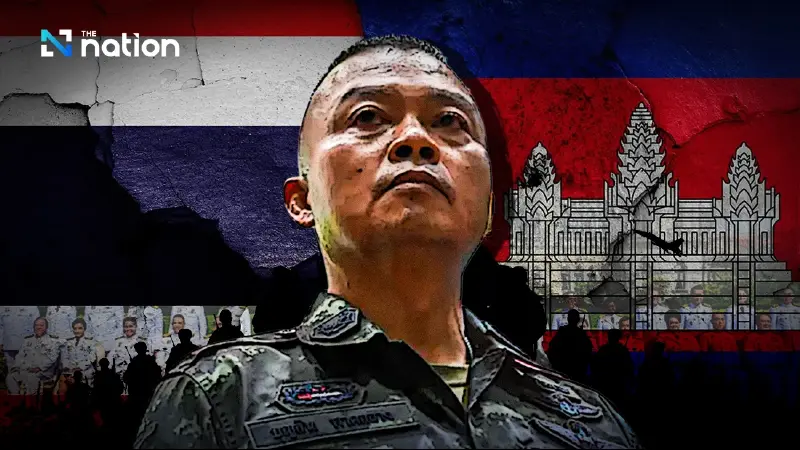


Thai-Cambodian tensions rise after a Thai soldier hit a landmine in Si Sa Ket; Gen Boonsin Padklang says the official ceasefire order came only on July 28
Thai-Cambodian border tensions have flared up once again after a Thai soldier became the seventh to lose a leg in a landmine explosion during a patrol in Huai Ta Maria, Kantharalak district, Si Sa Ket province, on November 10, 2025. The incident prompted Prime Minister Anutin Charnvirakul to suspend the Thailand-Cambodia Joint Declaration, signed in Malaysia last month.
The escalation came shortly after Lt Gen Boonsin Padklang, former commander of the Second Army Area and current adviser to the Army Commander-in-Chief, revealed new details on November 8 during an event at Phutthasathan Pathom Asoke Temple in Nakhon Pathom. He said that during the first day of the border clashes on July 24 2025,
“After six hours of fighting, I received a call telling me to stop firing — but I refused.”
The revelation sparked widespread public debate over “who gave the order.”
In an interview with Kom Chad Luek on Nation TV Channel 22, Boonsin clarified that there was no official ceasefire command at the time.
“It was a discussion, not a command. Everyone in the chain of command did their duty. Miscommunication may have occurred. The official ceasefire order came only on July 28, after discussions between the two governments in Malaysia,” he explained.
Boonsin said he had no intention to stir political controversy and would “take the question to his grave.”
“I didn’t speak for political reasons or to damage anyone’s reputation. I was simply asked, and I answered truthfully,” he said.
He emphasised that if no official order had been issued, commanders could still proceed with their operations.
“As soldiers, we follow orders. If an order isn’t given, we keep discussing. Once the July 28 order came, we complied immediately.”
Asked whether continuing to fight despite a request to cease fire could be considered disobedience, Boonsin replied,
“It wasn’t a command — it was a request for opinion. If it had been a command, I would have obeyed.”
Reflections on Prasat Ta Kwai
Boonsin said the military had surrounded Prasat Ta Kwai but could not reclaim it before the ceasefire took effect.
“We did our best. I still feel regret about Prasat Ta Kwai. It remains a sensitive point for Thais. Today, Prasat Ta Muen Thom is entirely under Thai control, but Prasat Ta Kwai is still occupied by Cambodian troops.”
He added that any future reclamation must proceed through diplomacy:
“We believe the site belongs to Thailand. Let’s reclaim it peacefully through dialogue.”
Reaction to the latest blast
Commenting on the November 10 landmine incident, Boonsin said the blast — which led to Thailand suspending the joint peace framework — raised questions about Cambodia’s sincerity.
“This incident will test whether Cambodia is genuinely committed to peace. It’s now up to our military and security agencies to decide how to respond,” he said, adding that the mine could either be newly laid or an old one missed in previous sweeps.
Asked if he believed Cambodia would one day cease being hostile toward Thailand, Boonsin said that depended on leadership in Phnom Penh:
“If Cambodia’s leaders change their mindset and vision, friendship is possible. But if they still pursue territorial claims or take disputes to the World Court, it will remain difficult.”
On the military’s political neutrality
Boonsin also addressed criticism of the army’s alleged political involvement, saying the Thai military remains neutral:
“The army serves the nation, not politics. Whoever becomes defence minister or prime minister, we respect them as lawful leaders. Military decisions always involve consultation with the government.”
When asked whether a future coup could still happen, Boonsin replied:
“I think it’s unlikely. The world no longer accepts dictatorship. The military’s role is to safeguard internal stability, not to seize power.”
He concluded,
“The military must be the backbone of the nation. Politics will continue to turn as it will, but our duty is to keep the country stable and respected in the eyes of the world.”
