
NSC approves suspension of Thai-Cambodian agreement, authorises military action
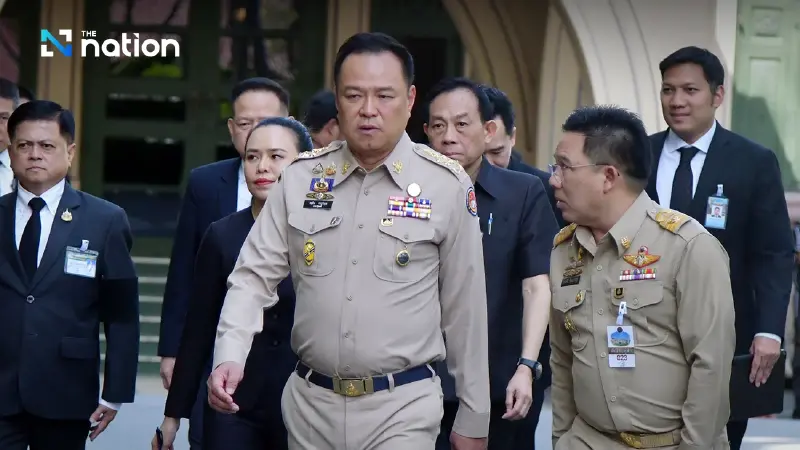


Thailand’s National Security Council suspends Thai-Cambodian agreement and approves military operations after new landmine blasts in Si Sa Ket
The National Security Council (NSC) on Tuesday (Nov 11) approved the suspension of the Thai-Cambodian Joint Declaration and authorised military operations, urging Cambodia to take full responsibility for the recent landmine incidents that injured Thai soldiers near the border.
The three-hour NSC meeting, chaired by Prime Minister and Interior Minister Anutin Charnvirakul, was held to determine Thailand’s response after four Thai soldiers were injured by landmines in Huai Ta Maria, Si Sa Ket province.
When asked by reporters after the meeting whether Thailand would introduce retaliatory measures, Anutin replied briefly that the government would first consult the Cabinet before making an official announcement.
Asked again if the government planned to terminate the Thai-Cambodian Peace Declaration, Anutin responded succinctly: “Suspended.”
Pressed for how long the suspension would last, the prime minister did not answer and proceeded immediately to the weekly Cabinet meeting at Government House.
According to officials, the NSC resolution includes three key points:
- The loss and injuries to Thai soldiers are unacceptable, and the government expresses its condolences and commitment to their families.
- The presence of landmines within Thai territory constitutes a violation of sovereignty.
- The Thai government will fully protect its sovereignty and the lives of its people.
The meeting formally suspended all four clauses of the Thai-Cambodian Declaration and halted the repatriation of 18 Cambodian detainees.
Defence Minister Gen Nattapon Nakpanich confirmed that the Thai military has received authorisation to act as necessary within Thai sovereign territory, though he declined to discuss operational details. He also announced that Thailand would no longer participate in the General Border Committee (GBC) format, declaring, “No more negotiations.”

Gen Nattapon rejected the notion that the Thai military expects anything from Cambodia beyond actions justified by fact-finding, and reiterated that where unilateral Thai action is warranted it will proceed.
On the question of escalating measures, Gen Nattapon said some steps have already been taken — including suspension of the Joint Declaration and halting the return of detainees — and that military operations in Thai sovereign areas have been authorised. He declined to discuss the specific military measures.
When asked whether demining operations expose personnel to risk, Gen Nattapon said clearance work falls into the two levels described above; many of the incidents have occurred in areas where Thai forces already operate routinely. Formal TMAC operations will continue in pilot areas once all parties coordinate; Cambodia has not yet agreed to one remaining pilot site.
Pressed about reports that barbed-wire fences were torn down and explosives planted inside Thai territory, Gen Nattapon said Thailand has rules of engagement: any incursions will be met with warning fire up to and including heavy weapons as needed, but he withheld operational specifics and reiterated that the NSC had authorised military action as circumstances require.
On prior comments that this might be the “last” round of talks, Gen Nattapon said the Ministry of Defence and he personally will not engage further with the GBC in the same format if talks are unproductive. He said withdrawal of heavy weapons has been suspended and refused to say whether heavy weapons will be redeployed unless pressed further.
When asked about a former chief of staff’s remark that the seventh casualty justifies a right to retaliate, Gen Nattapon called that a personal view, not an official policy.
Foreign Minister Sihasak Phuangketkeow said Thailand views the recent landmine explosion as a clear violation of the declaration. The Foreign Ministry has lodged a formal protest with Cambodian Foreign Minister Prak Sokhon and will issue an official letter demanding a thorough investigation.
When pressed about whether the current measures marked the most decisive possible Thai stance, Sihasak said the government’s actions were already firm, but added: “We can raise the firmness further depending on Cambodia’s reaction.” He noted that Cambodia’s initial responses were insufficient to convince Thailand it was acting in good faith.
Asked whether Thailand could impose a boycott or other sanctions, Sihasak said the government would follow proper steps: suspend the declaration, submit formal protests and wait to see Phnom Penh’s reaction before considering further measures.
He added that Thailand will also submit its protest under the Ottawa Convention on the Prohibition of Anti-Personnel Mines, while briefing the United States and Malaysia, both witness countries to the Thai-Cambodian declaration, to explain the reasons behind the suspension.
“Thailand has already taken a decisive stance — but we can become even more decisive if Cambodia’s response proves inadequate,” Sihasak said.
He emphasised that Thailand expects Cambodia to show accountability by acknowledging the incident, expressing regret, and implementing measures to prevent further violations.
While Thailand’s demining operations in areas under unilateral Thai responsibility will continue for public safety, all other joint frameworks have been suspended pending Cambodia’s reaction.
Officials said the government will closely monitor Phnom Penh’s next move before determining whether to escalate diplomatic or military measures further.
