
Tourism and business groups urge government to review new Alcohol Control Act
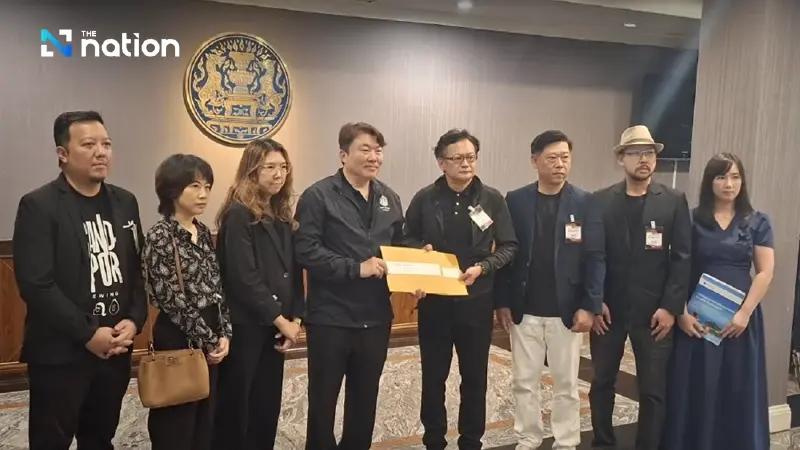


Tourism and business leaders petition PM Anutin to revise the new Alcohol Control Act, urging removal of off-sale drinking ban to protect tourism
On November 12, 2025, representatives from Thailand’s tourism and service industries gathered at Government House to submit a petition to Prime Minister Anutin Charnvirakul, urging the government to review the Alcohol Control Act (No. 2) B.E. 2568, which came into effect on November 8. The petition was received by Government Spokesman Siripong Angkasakulkiat.
The group was led by Sanga Ruangwattanakul, president of the Khaosan Road Business Association; Sorathep Rojpotjanaruch, head of the Restaurant Business Club; and Nattachai Ungsriwong, president of the Craft Beer Business Association. They were joined by representatives from the Thai Retailers Association, Restaurant Association, Pattaya Entertainment and Tourism Industry Association, and Khao Yai Tourism Association.
Operators demand removal of “drinking ban during off-sale hours”
The petition calls for the government to abolish the prohibition on “drinking outside permitted hours”, introduced under the amended law, which allows extended sales hours but forbids sitting and drinking after the permitted period, with fines up to 10,000 baht for violations.
Sanga said the unclear rules have caused confusion among both operators and customers, especially when patrons continue drinking after sales hours. This uncertainty, he warned, could harm tourism during the upcoming high season.
He proposed lifting the 2pm–5pm alcohol sales ban and extending drinking hours from midnight to 1am, calling the adjustments realistic and beneficial to both businesses and tourists.
Despite earlier concerns, Sanga noted that business revenues have remained stable year-on-year, with average hotel occupancy at 80%, mostly driven by European tourists, as the local market has not been affected by the Chinese slowdown. He added that relaxing restrictions would help boost Thailand’s festive image online and support tourism during the New Year countdown period, especially in the Khaosan area.
Foreign media coverage adds pressure
Sorathep Rojpotjanaruch said the ambiguity of the new law could hurt the country’s image among foreign tourists — especially Europeans who enjoy afternoon and early evening drinking. Restaurants and hotels without entertainment licences are likely to face the most disruption. He also mentioned that Australian media outlet 10 News had already reported warnings about the ban, which could influence some travellers to change destinations.
Call for balanced reform before New Year
Nattachai Ungsriwong, president of the Craft Beer Business Association, urged the government to find a balanced solution before the New Year holiday, a crucial economic period. He proposed scrapping the drinking-time restriction and reframing the alcohol industry as part of economic promotion, while ensuring appropriate social safeguards.
Government to discuss easing rules
Government spokesman Siripong Angkasakulkiat said the Prime Minister has prioritised this issue since the first economic cabinet meeting, directing the Alcohol Control Committee to urgently propose solutions. A meeting is scheduled for November 13.
Preliminary options include issuing a new Prime Minister’s Office announcement to lift the daytime sales ban and allow customers to continue drinking after midnight under certain conditions, pending recommendations from the committee.
On the issue of zoning, Siripong said the government may not be able to lift restrictions nationwide immediately but could start with pilot relaxation zones or expand existing leniency areas.
He confirmed that the government aims to finalise a relaxation plan as soon as possible to prevent any negative impact on tourism and the year-end economy.
