
Phiphat discusses 10-billion-baht U-Tapao MRO investment with Airbus
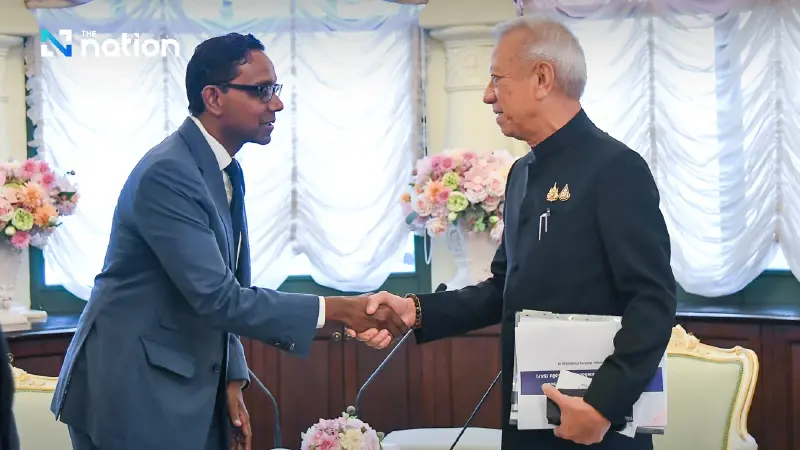


Deputy PM Phiphat Ratchakitprakarn meets Airbus executives to renew talks on a 10-billion-baht aircraft maintenance hub at U-Tapao Airport under Thailand’s EEC aviation strategy.
Deputy Prime Minister and Transport Minister Phiphat Ratchakitprakarn met with Anand Stanley, President of Airbus Asia-Pacific, and senior executives on Wednesday to discuss cooperation in aviation and energy industries, with the Thai government inviting Airbus to reconsider investing in a 10-billion-baht aircraft maintenance, repair and overhaul (MRO) centre at U-Tapao Airport.

“We presented several investment opportunities in Thailand, especially the proposal for Airbus to revisit the U-Tapao MRO project,” Phiphat said. “It was initially planned before the COVID-19 pandemic but was later shelved. The Airbus executives said they would take the proposal under consideration.”
The U-Tapao MRO facility is part of Thailand’s Eastern Economic Corridor (EEC) flagship projects. When asked whether the revived project would still involve a joint venture with a Thai company, Phiphat said the decision would rest with Airbus. As for investment incentives, he noted that EEC already provides various privileges and special conditions, and the details would depend on further discussions once Airbus responds.
“If this MRO centre materialises, Thailand’s goal of becoming an aviation hub will move closer to reality. Aircraft stopping over in Thailand will be able to use local maintenance services, accelerating our progress toward becoming the region’s aviation centre,” Phiphat added.

Airbus also encouraged Thai airlines to purchase more of its aircraft. Phiphat noted that, apart from Thai Airways, most Thai carriers already operate Airbus fleets, but deeper cooperation — such as investment in the MRO centre — could further strengthen the partnership between Airbus and Thai operators.
The government also asked Airbus to expand its local supply chain, particularly by sourcing aircraft components manufactured in Thailand. Phiphat highlighted that Thai suppliers possess strong technical capabilities comparable to those in other countries and are ready to participate more fully in Airbus’s regional production network.
In addition, Phiphat urged Airbus to provide technology transfer and aviation training to support Thailand’s workforce development.
When asked whether ongoing trade and tariff negotiations with the United States could affect Airbus’s investment decisions, Phiphat clarified that aircraft procurement decisions lie entirely with the private sector, not the government.
“The government cannot interfere in airline fleet decisions — it’s up to private businesses to decide whether to buy aircraft from US or European manufacturers,” he said.
