
NESDC urges swift development of traceability system after Thailand approves increased import quota for feed corn
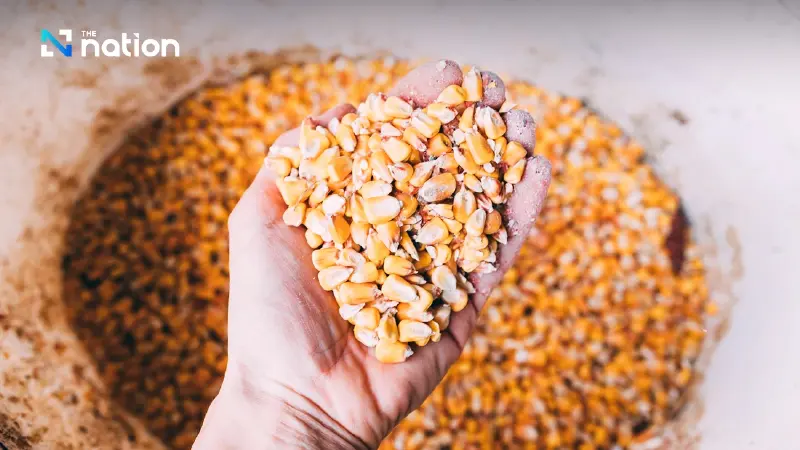


NESDC calls for a traceability system and strict GMO controls after Thailand boosts its 2026 feed corn import quota to 1 million tonnes at zero tariff
Following the Cabinet’s approval to increase Thailand’s 2026 import quota for feed corn from the previous 54,700 tonnes at a 20% tariff to 1 million tonnes at a 0% tariff, the National Economic and Social Development Council (NESDC) has advised the government to urgently establish a traceability mechanism for imported feed corn.
The quota expansion stems from trade negotiations between Thailand and the United States regarding customs tariffs and conditions for importing 1 million tonnes of U.S. feed corn. This commitment was made under the previous administration and will take effect on February 1, 2026.
NESDC submitted its recommendations to the Cabinet, urging the Ministry of Agriculture and Cooperatives and the Ministry of Commerce, along with relevant agencies, to quickly determine a traceability system for corn imports. Once the Cabinet’s approval is formalised, the government should establish clear procedures for traceability and related operations.
Such mechanisms would ensure proper enforcement of measures prohibiting the import of feed corn produced through burning-based agricultural practices, thereby helping reduce fine particulate pollution (PM2.5). It would also ensure strict compliance with regulations on genetically modified (GMO) feed corn, as mandated by the Agriculture and Commerce ministries, to maintain safety for both animals and consumers of animal products.
NESDC noted that failure to do so could affect Thailand’s ability to export animal products to markets that do not accept livestock raised on GMO feed, particularly highly strict markets such as the European Union (EU) and Japan.
NESDC also recommended that the government consider providing incentives and support to increase the domestic production capacity and efficiency of animal feed raw materials. This should go hand-in-hand with promoting alternative feed ingredients to reduce dependence on imports and strengthen Thailand’s long-term food security across the supply chain.
Meanwhile, the Cabinet Secretariat expressed additional concerns. It noted that the 2026 feed corn import policies and measures under the WTO quota represent a significant increase compared to 2025, largely due to the U.S. Trade Policy Working Group’s request for Thailand’s Maize Policy and Management Committee to raise the import quota by an additional 1 million tonnes per year and waive import tariffs for the animal feed industry. This is intended to improve the competitiveness of Thai exports and support reciprocal trade negotiations between Thailand and the United States.
However, the Secretariat warned that these measures might impact domestic feed corn prices and Thai corn farmers. Representatives from the Crops Grower & Merchandise Association and the National Farmers Council formally opposed the quota expansion during the Maize Policy and Management Committee Meeting No. 3/2025 on June 10, 2025.
The Secretariat therefore recommended that the Agriculture Ministry, Commerce Ministry, and relevant agencies urgently communicate with stakeholders—especially corn farmers—to explain the rationale behind the policy, the necessity of its implementation, and the expected benefits for Thailand. This would help ensure clear understanding and alignment, allowing the 2026 feed corn import policy to proceed as intended.
