
Thai navy chief orders emergency installation of water-propulsion boats in critical flood zones
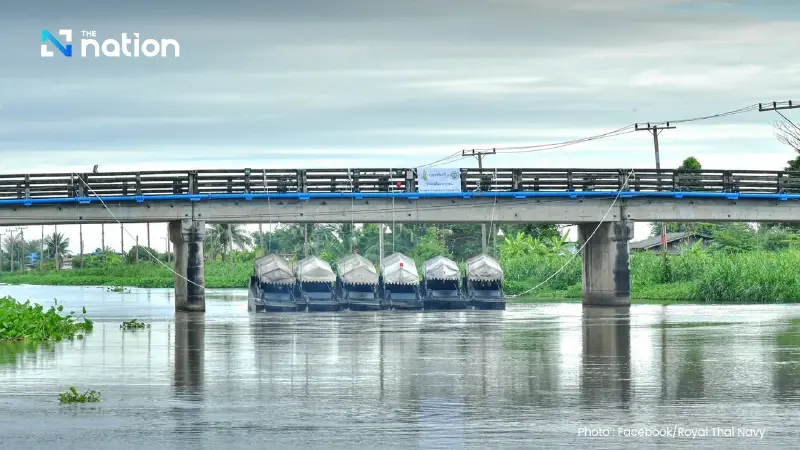


Thai Navy deploys 58 water-propulsion boats in critical flood zones, boosting drainage by up to 30% as Admiral Pairoj orders urgent relief operations

On November 17, 2025, Royal Thai Navy Commander Admiral Pairoj Fueangchan visited the Navy’s Water Propulsion Task Unit in Chachoengsao province, inspecting operations at Wat Sutthawat in Khlong Luang Phaeng, Mueang district.
The visit focused on monitoring water runoff from the upper basin, assessing prolonged flooding in the lower Chao Phraya region, and boosting morale among personnel operating water-propulsion boats in the area. He also reviewed operational progress and listened to obstacles encountered by personnel on the ground.
Amid widespread flooding in several provinces, Admiral Pairoj expressed deep concern for affected communities and ordered the Water Propulsion Task Unit to accelerate the installation of water-propulsion boats in critical zones to speed up drainage and ease public hardship as quickly as possible.

The task unit has coordinated with the Hydro-Informatics Institute (HII) to map and plan installation points across Bangkok and surrounding provinces, covering 10 key sites. The Naval Dockyard Department has deployed survey teams and installed 58 water-propulsion boats to help flush inner-city floodwater toward the sea.
On November 12, the first unit arrived at Wat Sutthawat, where six water-propulsion boats were immediately activated to push water from Khlong Chaiyanuchit toward the Gulf of Thailand. A total of 13 personnel are operating around the clock, with drainage expected to increase by 20–30%.
The Royal Thai Navy’s water-propulsion boat initiative follows the royal guidance of His Majesty King Bhumibol Adulyadej The Great, who introduced the concept in 1995 as a nationwide flood-mitigation solution. The system has since been adapted by the Royal Irrigation Department and further developed by the Navy during the major floods of 2011. Water-propulsion boats help accelerate outflow to the sea and wash away sediment in narrow waterways, improving flow in low-lying basins, ponds and bottleneck areas.
The water-propulsion machines used in this operation are Water Jet units designed by Navy engineers, capable of pushing up to 4,362 cubic metres per hour. They have been proven highly effective in boosting drainage capacity in flood-affected zones.
The Navy said it remains fully prepared with personnel and equipment to support disaster-relief operations nationwide. The public can request assistance through the Navy Disaster Relief Centre hotline 1696, available 24 hours a day.
