
Police crackdown on ‘mule accounts’ aims to cut off 100-billion-baht scam network



Thai police have launched a nationwide crackdown on “mule accounts” in an effort to choke off the financial lifelines of online scam networks that have caused over 100 billion baht in losses in recent years
Since 2022, more than 1.09 million online fraud complaints have been filed, with cumulative damages exceeding 100 billion baht, according to the Technology Crime Suppression Centre under the Royal Thai Police.
The Central Investigation Bureau (CIB) on Monday announced the latest phase of its operation to dismantle these networks, targeting account holders who rent out or sell their bank accounts for criminal use, as well as the recruiters who organise them.
“Mule accounts are not just the end of the chain — they are part of the core problem,”
Pol Lt Gen Jirabhop Phuridej, Assistant National Police Chief and deputy director of the Technology Crime Suppression Centre, said.
“We have already arrested 327 suspects and identified 55 mule-recruiting cells nationwide.”
He was speaking at the Crime Suppression Division (CSD) in Bangkok, where he chaired a briefing on the results of the nationwide operation “Lightning Strike: Shaking Mule Accounts Across the Country”, conducted between November 18–26, 2025 under orders from Pol Gen Thana Chuwong, Deputy National Police Chief and director of the technology crime centre.
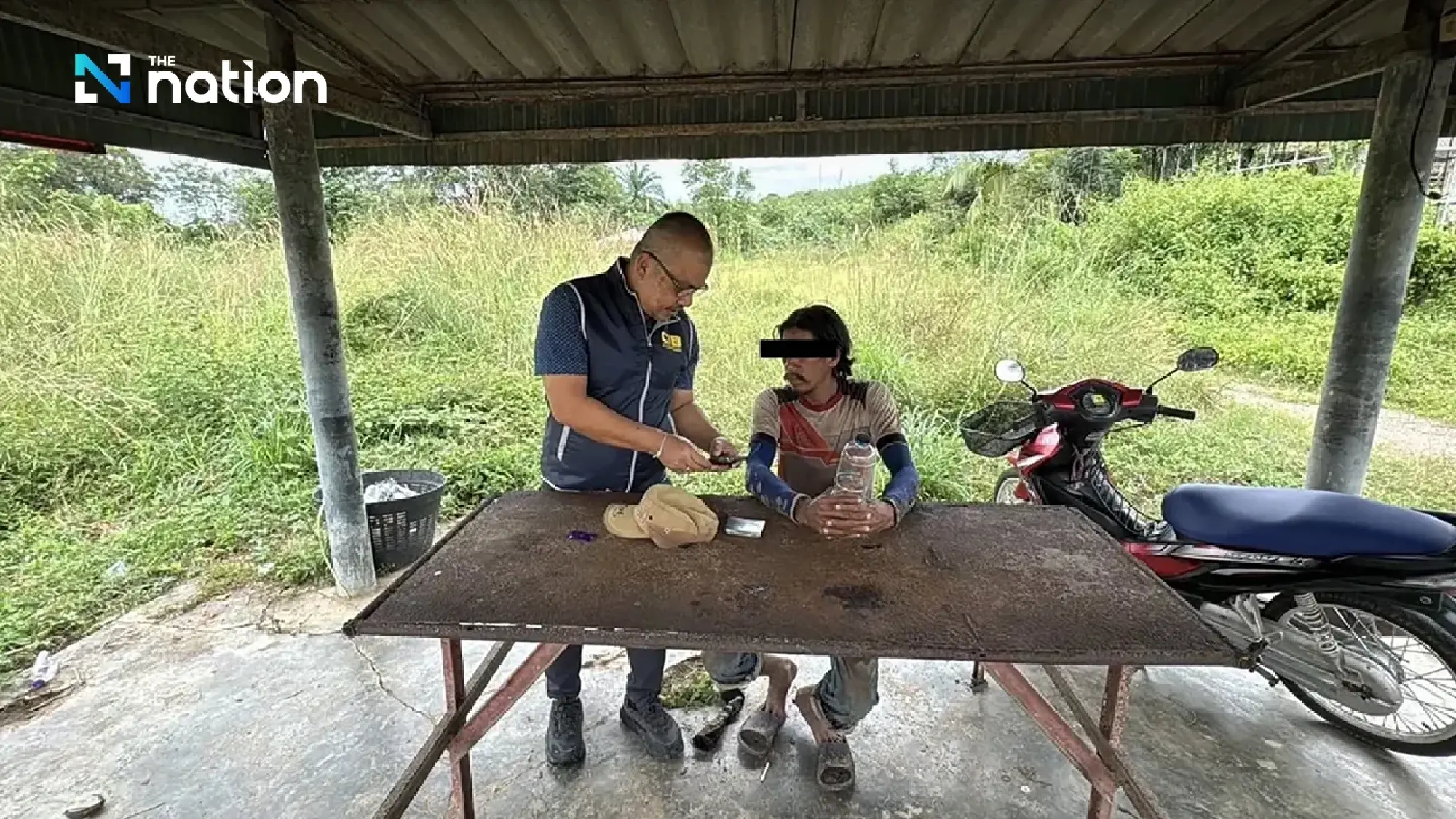

Hundreds of suspects, 55 mule-recruiter cells across 27 provinces
Pol Lt Gen Jiraphop said the intensified operation led to large numbers of arrests and the uncovering of deeper networks behind the scams.
Key figures include:
- 339 suspects arrested under court warrants,
- of whom 209 confessed to opening mule accounts.
- Further investigation traced 25 additional masterminds.
- Officers found 87 individuals involved in “real-time” scam operations,
- 58 of whom admitted they were paid to open mule accounts.
- The probe expanded to identify 30 more key operators.
In total, police have identified 55 recruiters or ringleaders behind mule-account networks, spanning 27 provinces.


Key busts: foreign crypto scam, SIM box hubs and ‘mule farms’
The operation also led to the exposure of several major cases, including:
- The arrest of 15 foreign nationals in Bueng Kum district, Bangkok, who allegedly ran a website scamming Turkish victims through fake cryptocurrency investments.
- The arrest of a Chinese national in Rayong believed to be responsible for managing cash withdrawals for a call-centre gang.
- Raids on illegal SIM box installations in Nong Khai, Bueng Kan and Mukdahan, where 12 devices were seized and two suspects arrested.
- The dismantling of a “mule farm” in Sakon Nakhon, where people were paid to scan their faces and open accounts for scam operations.

Police also arrested a female member of a call-centre gang in Phetchabun, who allegedly persuaded a victim to hand over 5.8 million baht in cash and 10 baht weight in gold directly at her home.
In another case, a so-called “hybrid scam” ring — combining romance scams and fake investment schemes — was taken down, with more than 12 suspects detained.
Investigators also found multiple “mule barns” — networks of recruiters responsible for sourcing people willing to open bank accounts — which form a critical upstream link in the scam infrastructure.


AI-assisted tracking and centralised handling of suspects
Pol Lt Gen Jirabhop said the technology crime centre has upgraded its operations by using AI analytics to flag suspicious accounts and patterns linked to fraud.
The police have also restructured the process of handling suspects by making the Central Investigation Bureau and Provincial Police Region 6 in Phitsanulok central hubs for processing and transferring detainees, to close procedural loopholes seen in the past.
During some raids, officers intercepted parcels containing large numbers of mobile phones and bank passbooks destined for Chinese financiers or “bosses” in neighbouring countries. These items were to be used to receive stolen funds immediately after mule accounts were activated through facial recognition.
Harsh penalties for mule accounts and recruiters
The CIB chief warned the public against opening mule accounts:
- Mule-account holders face up to 3 years in prison and/or fines of up to 300,000 baht.
- Recruiters or “mule barn” operators face harsher penalties of 2–5 years in prison and fines of 200,000–500,000 baht.
“The small payment you receive is not worth the risk of prosecution,” he said.
“You become a cog in a machine that inflicts massive damage on innocent people.”
Mixed international cooperation: concerns over Cambodia, progress with China and US
Pol Lt Gen Jirabhop noted that while Thailand has been coordinating with several countries, the actual operations by some partners have fallen short of expectations.
He cited a recent case where Thai authorities provided intelligence pinpointing scam hubs in Cambodia. When Cambodian authorities reported back, they said 30 suspects were caught but no Thais were among them, and the results did not fully match the intelligence Thailand had supplied. He described the response as slow and not fully in line with the facts.
By contrast, he said, China and the United States have shown strong commitment through information-sharing and joint crackdowns on transnational crime networks.
At a recent meeting in Kunming, China, Chinese authorities expressed serious determination to combat cross-border scam operations. They acknowledged that many offenders are Chinese nationals who have relocated to other countries, some obtaining second citizenships to run scam networks abroad, targeting Chinese, Thai and other foreign victims.
China has set up a six-country anti-scam coordination centre among Mekong-region states to enhance data exchange and joint operations.
Daily losses easing, but long fight ahead
Recent statistics show that both the number of daily cases and daily damage have started to decline somewhat, particularly after the centre began operating under a more systematic framework over the past month.
However, Pol Lt Gen Jirabhop stressed that tackling scammers is a long-term battle that requires sustained efforts across multiple fronts — enforcement, technology, financial oversight and public awareness.
He added that current data indicate more mule accounts are being opened in the Northeast than in other regions, underlining the need to intensify public education there about the legal consequences and social harm linked to mule accounts.
