
Floods Submerge 89 Districts in Southern Thailand; Aid Rushed In


While water levels recede, nine provinces remain affected with over 1.1 million households impacted. Songkhla and Nakhon Si Thammarat are hardest hit
- Flooding has submerged 89 districts across nine provinces in Southern Thailand, affecting over 1.1 million households.
- The provinces of Songkhla and Nakhon Si Thammarat are the most severely impacted by the disaster.
- Aid is being rushed to the region, including essential supplies like food, water, and medicine.
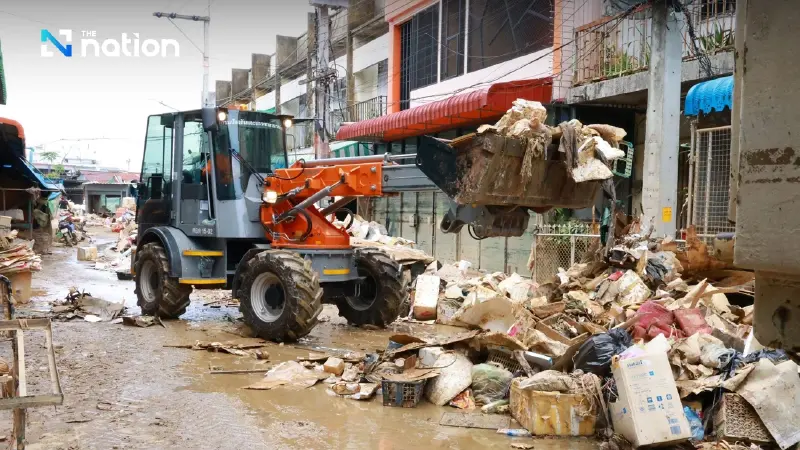
- Response teams are using boats, helicopters, and heavy machinery for rescue, transport, and to pump out floodwaters.
While water levels recede, nine provinces remain affected with over 1.1 million households impacted. Songkhla and Nakhon Si Thammarat are hardest hit.
The ongoing flood crisis in Southern Thailand continues to affect nearly three million people, with 89 districts across nine provinces still submerged, the Department of Disaster Prevention and Mitigation (DDPM) confirmed on Sunday.
While the DDPM reported that water levels are continuously receding across the region, the situation remains critical in several areas. The most severe impact is currently centred on Songkhla, followed closely by Nakhon Si Thammarat.
DDPM director-general Teerapat Kachamat stated that as of 6:00 AM on 30 November 2025, the floods persist in nine provinces: Surat Thani, Nakhon Si Thammarat, Trang, Phatthalung, Satun, Songkhla, Pattani, Yala, and Narathiwat.
Collectively, the disaster has impacted 89 districts, 595 sub-districts, and 4,227 villages, affecting a staggering 1,162,551 households (approximately 2,963,894 people).
Songkhla bears the brunt of the crisis, with 16 districts affected and over 633,000 households struggling with inundation. Meanwhile, Nakhon Si Thammarat has 20 districts affected, impacting nearly 234,000 households.

The DDPM and related agencies are aggressively pushing forward with relief and recovery missions to return all areas to normal as quickly as possible.
Efforts include the urgent distribution of essential supplies, such as relief bags, packaged meals, drinking water, medicines, and Royal-sponsored supplies.
Crucially, responders are employing flat-bottom boats, high-clearance vehicles, and helicopters to transport victims and install temporary bridges to restore public access to cut-off areas.
In the restoration phase, heavy machinery is being deployed, including water pumps and water pushing machines, to boost water management efficiency and rapidly mitigate the disaster's effects on the ground.
