
Bangkok chokes as PM2.5 turns red in 48 districts, public urged to mask up
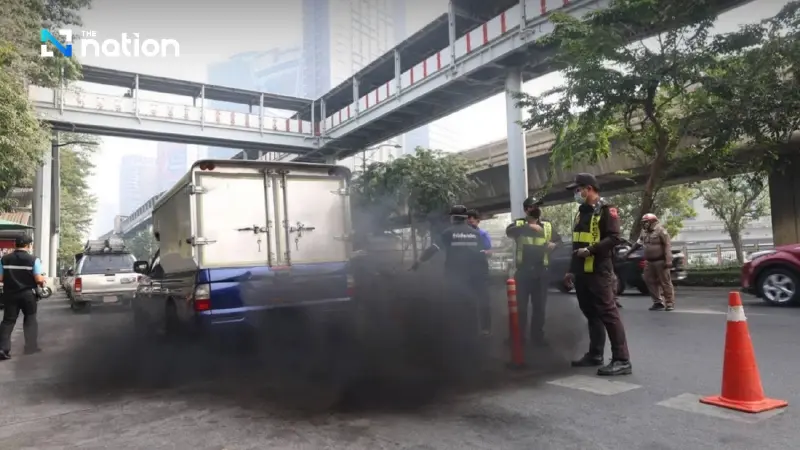


GISTDA warns PM2.5 red level in 48 Bangkok districts, with BMA reporting rising dust levels. Public urged to avoid outdoor exercise and wear protective masks.
- Hazardous PM2.5 air pollution has placed 48 districts in Bangkok into the "red" zone, indicating levels that pose a risk to respiratory health.
- The capital's average PM2.5 level was recorded at 45 µg/m³, exceeding the national safety standard of 37.5 µg/m³.
- Authorities are urging the public to wear PM2.5-rated protective masks when outdoors and to limit strenuous activities due to the poor air quality.
The Geo-Informatics and Space Technology Development Agency (GISTDA) issued a warning on Monday morning (December 1) after its “Check Foon” application recorded hazardous PM2.5 levels nationwide at 6am.
Five provinces were found to be in the red zone, indicating pollution well above safe limits and posing risks to respiratory health, while 41 provinces were in the orange zone, where air quality is beginning to affect vulnerable groups.
In Bangkok, PM2.5 levels exceeded the red threshold in 48 districts, including Nong Khaem, Bang Bon, Bang Khae, Thawi Watthana, Taling Chan, Phasi Charoen, Bang Khun Thian, Chom Thong, Bangkok Noi and Bangkok Yai.
A three-hour forecast by GISTDA indicates that red and orange levels will persist across many areas this morning.
Meanwhile, the Bangkok Metropolitan Administration’s air quality information centre reported at 7am that the capital recorded an average PM2.5 level of 45 µg/m³, exceeding the national standard of 37.5 µg/m³.
Districts with highest PM2.5 levels:
-
Bang Rak – 55.3 µg/m³
- Sathon – 54.6 µg/m³
- Lat Krabang – 54.6 µg/m³
- Nong Khaem – 53 µg/m³
- Ratchathewi – 52.4 µg/m³
- Pathumwan – 51.9 µg/m³
- Taling Chan – 51.4 µg/m³
- Khlong Sam Wa – 50.3 µg/m³
- Thawi Watthana – 50.3 µg/m³
- Bang Kho Laem – 50 µg/m³
Authorities warn that dust levels are expected to rise further, with overall air quality now at a level that may begin to affect public health.
Health recommendations
For the general public, people are advised to wear PM2.5-rated protective masks when going outdoors. They should limit the amount of time spent on strenuous outdoor activities and monitor any unusual symptoms, such as coughing, breathing difficulty or eye irritation.
For vulnerable groups, wearing a PM2.5 protective mask is recommended every time they leave the house. They should avoid strenuous outdoor exercise altogether and follow medical advice closely, seeking immediate medical attention if any symptoms arise.
