
Thailand signals major energy shift with plan to open Andaman petroleum blocks as Gulf reserves decline
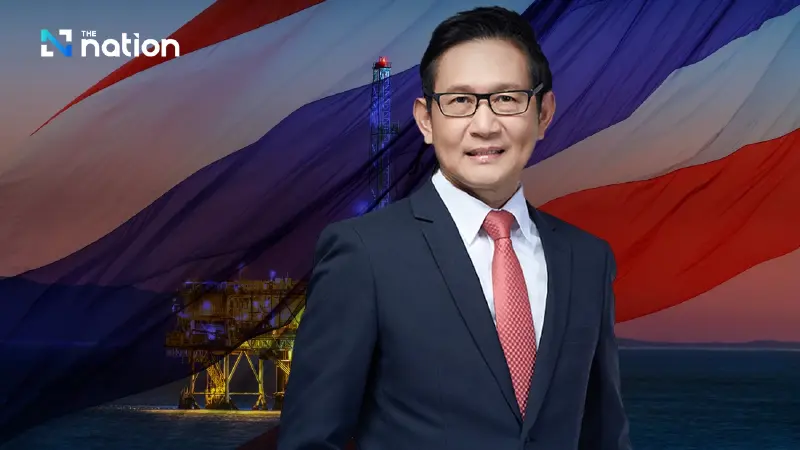


Energy Minister Auttapol Rerkpiboon confirms Thailand will open petroleum exploration blocks in the Andaman Sea, citing strong geological potential and the need to reduce reliance on disputed Thai-Cambodian waters. The move forms part of a broader strategy to secure new energy sources and accelerate the transition towards clean energy.
Thailand’s energy landscape is heading toward a major strategic shift, after Energy Minister Auttapol Rerkpiboon signalled that the government is preparing to open petroleum exploration blocks in the Andaman Sea, following promising data on major gas discoveries in nearby Indonesian waters. At the same time, the Minister made clear that the long-standing Thai-Cambodian maritime overlap issue will be “set aside for now”, redirecting Thailand’s energy focus towards resources fully under its own control.
Auttapol noted that the world’s most pressing risks over the next decade, according to the World Economic Forum, are dominated by climate-related threats. Clean energy, he said, is no longer solely an environmental concern but a decisive factor in national competitiveness, especially under new trade measures such as the EU’s Carbon Border Adjustment Mechanism (CBAM).
Although Thailand contributes less than 1% of global carbon emissions, it ranks among the 17 countries most at risk from climate impacts, prompting the government to move its Net Zero target forward from 2065 to 2050 in order to keep pace with regional competitors like Malaysia, Singapore and Vietnam.
The Minister acknowledged that Thailand’s energy security is under pressure due to declining gas reserves in the Gulf of Thailand and the deadlocked maritime dispute with Cambodia, which makes short-term progress impossible. As a result, the government has shifted its strategy towards the Andaman Sea, where studies indicate high geological potential within areas fully managed by Thailand.
“The Andaman will definitely be opened,” Auttapol said, stressing that exploration there would not only strengthen energy security but also supply Thailand with a new generation of domestic energy sources to meet soaring electricity demand driven by EV adoption, data centre growth and extreme heat. He added that peak demand in 2026 is expected to rival last year’s record highs.
He emphasised that Thailand’s energy policy must maintain a balance between security, sustainability and affordability. Over-prioritising any one pillar, he warned, would harm both the public and the country’s competitiveness. Securing new energy sources is therefore “the heart of this balance.”
Department of Mineral Fuels Director-General Warakorn Brahmopala said the upcoming 26th petroleum licensing round in the Andaman Sea represents a “new hope” for Thailand’s energy sector. Geological data suggests the potential for a major gas discovery, comparable to nearby Malaysian fields containing up to 10 trillion cubic feet of reserves.
If Thailand finds even half that volume, Warakorn noted, the country could secure 20 years of supply.
Several global oil majors — Chevron, ENI, Total, Exxon and PTTEP — have already expressed strong interest. The department is considering a hybrid fiscal regime, combining concession and PSC (production sharing contract) models to attract investment in deep-water zones, where drilling costs average US$27 million per well.
If significant gas reserves are found, the Andaman project could generate hundreds of billions of baht in economic value, while reducing reliance on LNG imports, which have been highly volatile due to global geopolitical tensions — notably during Middle East conflicts, when LNG prices surged two- to three-fold, directly impacting Thailand’s electricity costs.
The initiative would also stimulate new jobs, infrastructure investment (such as LNG terminals and processing facilities), and regional development, reinforcing Thailand’s long-term energy resilience.
Ultimately, the opening of the Andaman Sea is more than an exploration campaign — it is a strategic play to build a secure, future-proof energy foundation that supports Thailand’s transition toward clean energy and strengthens its regional competitiveness.
