
Thailand tells Ottawa Convention meeting that Cambodia violated landmine ban, calls for independent fact-finding mission
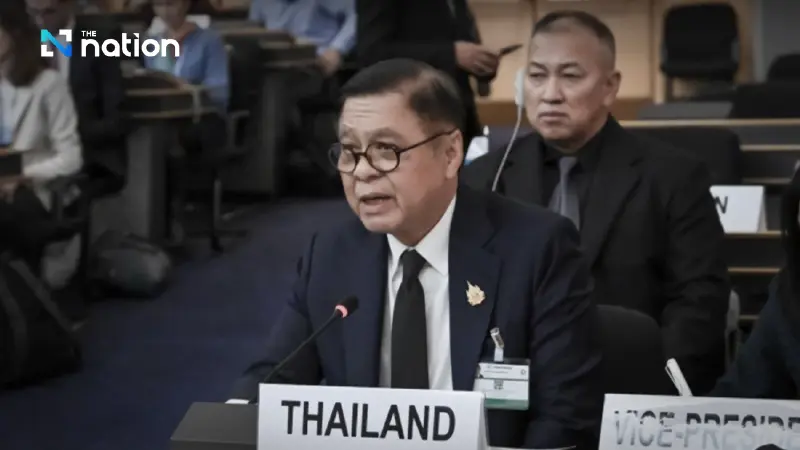


Thailand delivers a formal statement in Geneva accusing Cambodia of breaching the Ottawa Convention after Thai soldiers were maimed by newly planted landmines. Bangkok urges the creation of an independent fact-finding mission to ensure transparency.
Thailand has formally declared before the 22nd Meeting of the States Parties to the Anti-Personnel Mine Ban Convention in Geneva that Cambodia violated the Ottawa Convention by planting new landmines along the border, causing severe injuries and permanent disabilities to Thai soldiers.
On December 5, 2025, Foreign Minister Sihasak Phuangketkeow addressed the session on Article 8 of the Convention, outlining the facts and Thailand’s position regarding the escalating Thailand–Cambodia border situation.

The Minister reaffirmed Thailand’s unwavering commitment to upholding its treaty obligations and stressed that Thailand had engaged every available bilateral mechanism in good faith. He emphasised that Thailand had no intention of politicising the issue, but could not remain silent when Thai soldiers had “suffered and become permanently disabled” from Cambodia’s actions, which he described as a blatant violation of Article 1 of the Convention.
Sihasak noted that Cambodia’s explanations had contradicted verified evidence and been accompanied by disinformation, asking pointedly:
“If a State Party can plant new mines and simply deny it without consequence, what will happen after the next casualty?”
He said the fairest, most transparent path forward was to request the UN Secretary-General to facilitate the establishment of an independent fact-finding mission, arguing that this would help depoliticise the issue and demonstrate the effectiveness of the Convention’s own mechanisms.
At the same meeting, Ambassador Usana Berananda, Permanent Representative of Thailand to the UN in Geneva, exercised the Right of Reply to reject Cambodia’s accusations that Thailand acted unilaterally, lacked credibility, or politicised the deaths and injuries of seven Thai soldiers.
The Thai delegation presented concrete evidence, including video footage of Cambodian personnel training to plant PMN-2 landmines, all of which has already been submitted to the UN Secretary-General.
The Ambassador stated that Thailand’s proposed independent fact-finding mission would provide a neutral and transparent means of clarifying events — and that Cambodia should have no reason to refuse if it is acting in good faith.
Throughout the Geneva meeting, delegates from the Ministry of Foreign Affairs, the Permanent Mission of Thailand, the Thailand Mine Action Centre (TMAC) and the Ministry of Social Development and Human Security worked cohesively, delivering coordinated statements and exercising their rights of reply to defend Thailand’s interests and reaffirm the country’s position.
Thailand concluded by underscoring that transparency and accountability are essential to preserve the integrity of the Ottawa Convention — especially when lives continue to be at stake along the Thai-Cambodian border.
