
Cambodian outlet links border war with Thailand to deep economic crisis
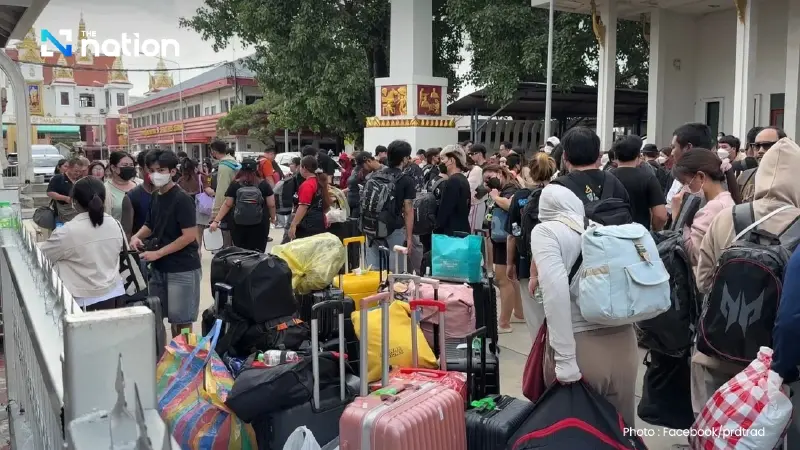


Cambodian media link renewed fighting with Thailand to a deep economic crisis at home, with nearly 72% of returnees from Thailand jobless and facing mental health issues
On December 13, 2025, Cambodian outlet “Kiri Post” reported findings from a new survey by Plan International, an independent development and humanitarian organisation promoting children’s rights and gender equality.
According to the report, in Siem Reap province alone, almost 72% of Cambodian workers who returned from Thailand during the first round of clashes in July remain without work, while most are struggling with mental health issues. The situation has prompted urgent calls for intervention from multiple sectors.

A new Plan International assessment says that in mid–2025 more than 900,000 Cambodian workers left Thailand amid escalating armed conflict along the border. The survey, based on 433 returnees from six districts — Angkor Chum, Srei Snam, Banteay Srei, Svay Leu, Angkor Thom and Prasat Bakong — found that 66.51% of respondents were women, most aged 25 and above.
The findings were presented at a workshop on the “Returned Migrants Needs Assessment Report”, held alongside the launch of “EMPOWER Her: Advancing Economic Opportunities for Young Women Migrant Returnees” on December 11.
Yi Kimthan, deputy country director of Plan International Cambodia, said mental health is a key issue for returnees from Thailand:
“The conditions they return to are full of fear, discrimination and a rapid loss of income, which has a severe impact on their mental health,” she explained. “The studies underline high levels of stress, anxiety and depression directly linked to financial insecurity and the loss of livelihoods.”
She called on agencies such as the Ministry of Labour and Vocational Training (MLVT) and the Ministry of Women’s Affairs to step in urgently.
The report notes that most returnees had previously been employed in construction and agriculture, with more than half earning over US$251 per month (almost 8,000 baht). Although 77.6% had entered Thailand legally, many faced unsafe working conditions and were forced to return due to coercion or sudden events.
Once back in Cambodia, however, 71.82% remained unemployed, the study found. Only 12.01% had access to vocational training or job-placement programmes — highlighting the scale of the economic shock now reverberating through Cambodia as border tensions with Thailand continue.

