
Cutting the fuel lifeline: Thailand tightens oil controls from the Gulf to Chong Mek
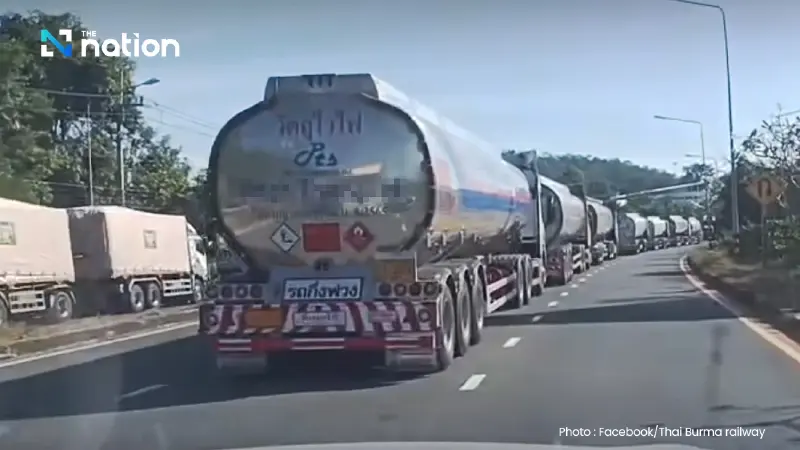


Thailand steps up moves to block fuel and strategic supplies reaching Cambodia, tightening sea monitoring and suspending fuel exports at Chong Mek
Thailand has stepped up efforts to choke off what security officials describe as a “lifeline” of fuel and strategic supplies potentially heading to Cambodia, expanding controls from maritime routes in the Gulf of Thailand to land crossings in the Northeast as border clashes drag on.
The push reflects a broader shift in the conflict from battlefield exchanges to pressure on logistics — with fuel treated not simply as a commodity, but as a strategic input that can sustain military operations and wider supply chains.
Fuel as a strategic supply
In prolonged conflict, fuel is central to mobility and operational readiness — powering everything from armoured vehicles and troop transports to naval assets and aircraft. Restricting access can therefore become a form of non-kinetic pressure, aimed at limiting an opponent’s capacity without escalating direct force.
Energy Ministry: exports to Cambodia halted
Veerapat Kiatfuengfoo, deputy permanent secretary at the Energy Ministry and the ministry’s spokesperson, said that since unrest escalated, authorities had asked all oil traders to stop exporting fuel to Cambodia — a request he said had been strictly followed.
He said Thailand has halted fuel exports to Cambodia “100%” since July 2025, under close supervision by the Department of Energy Business, which requires exporters to report volumes every time.
Sea route monitoring
Beyond export suspensions, security agencies are preparing to tighten oversight of maritime routes. Military commanders are expected to submit proposals to the National Security Council on Monday, December 15, 2025, including steps to suspend exports of fuel and key strategic goods to Cambodia, strengthen monitoring of vessels suspected of illicit fuel transport through the Thai Maritime Enforcement Command Centre, and designate sea areas around Cambodian ports as high-risk zones.
Navy spokesman Captain Nara Khunthothom has stressed the measure should not be described as “closing waters”, but rather as heightened surveillance and risk warnings for safety.

The Chong Mek pressure point
The latest focus has fallen on the Chong Mek permanent border crossing in Ubon Ratchathani, after security officials flagged unusual activity that could suggest fuel is moving through a third country — particularly Laos — before being forwarded to Cambodia.
The Second Army Area Operations Centre, under the signature of Lt Gen Weerayuth Raksilp, issued an urgent order suspending exports of all fuel products and military-related items at Chong Mek, effective from 12.00am on Monday, December 15, 2025.
Around the same time, a Facebook page called Thai Burma railway posted a video showing a line of fuel trucks waiting at Chong Mek. The post claimed — without independent verification in the footage itself — that about 80 fuel tankers were queued to enter Laos, estimating a total of roughly 4 million litres if each semi-trailer carried around 50,000 litres.
Questions over “abnormal” volumes
The article also points to background data from an “Energy Landscape of Lao PDR” report, noting Laos relies entirely on imports of refined fuel and recorded fuel demand of 1.47 Mtoe in 2017, with projections rising to 3.38 Mtoe by 2030 — figures cited to argue that unusually large cross-border volumes could warrant scrutiny.
Plugging every loophole
Taken together, the moves suggest Thai security agencies are attempting to seal multiple channels at once — official exports, maritime routes and possible third-country transit — amid concerns that fuel and other strategic supplies could be diverted despite formal restrictions.
The key test, officials say, will be sustained, proactive monitoring — keeping pace with shifting routes as networks look for new gaps to exploit.
