
Winter Solstice on December 21
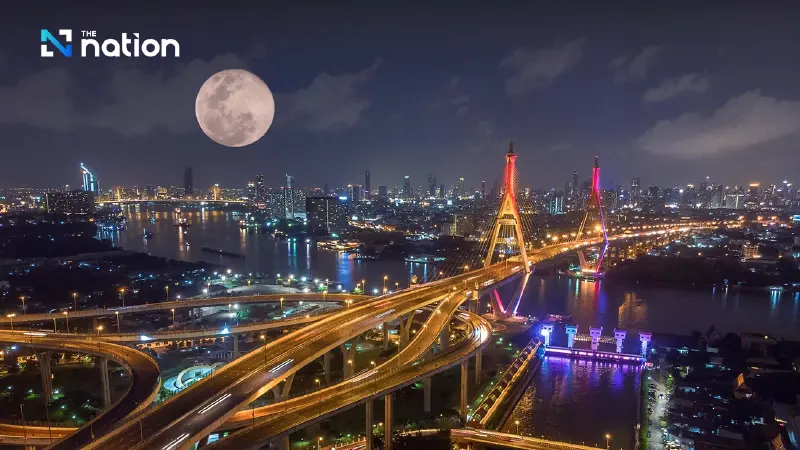


December 21, 2025, will be the Winter Solstice, with the longest night of the year lasting 12 hours and 41 minutes in Thailand
December 21, 2025, will mark the Winter Solstice, the day with the longest night of the year, lasting approximately 12 hours and 41 minutes. On this day, countries in the Northern Hemisphere will experience the start of winter, while those in the Southern Hemisphere will enter summer.
During the Winter Solstice, the sun will rise at the farthest point southeast and set at the farthest point southwest. This results in the shortest daylight hours and the longest night of the year. In Bangkok, for example, the sun will rise at 06:36 AM and set at 05:55 PM, providing only 11 hours and 19 minutes of daylight.
The Winter Solstice marks a shift in the Earth's seasons, caused by the Earth's axial tilt of 23.5 degrees. This tilt leads to varying angles of sunlight across different regions of the world, creating seasonal differences in temperature, daylight, and night length. In the summer, the sun rises early and sets late, resulting in longer days, while in the winter, the sun rises late and sets early, making nights longer than days.
Each year, there are four key solar events: the Vernal Equinox (spring), Autumnal Equinox (fall), Summer Solstice (longest day), and Winter Solstice (longest night). These events are a reminder of how the Earth's orbit and axial tilt shape our seasons.
For more information on other celestial events, visit the National Astronomical Research Institute of Thailand (NARIT) Facebook page at www.facebook.com/NARITpage or their website at www.NARIT.or.th.
