
Military says objectives achieved; 72-hour ceasefire is “not the end”
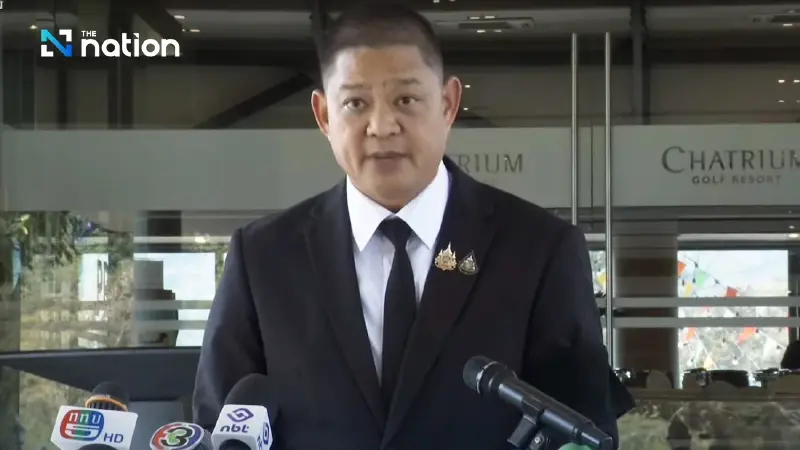


Military says it has met objectives as Thailand-Cambodia ceasefire takes effect, with forces frozen in place and 72-hour joint monitoring to test compliance
- Thailand and Cambodia reached a ceasefire deal, keeping forces at current levels, with a 72-hour joint monitoring mechanism to confirm the ceasefire is real.
- The Thai military said Thailand has already achieved its military objectives by securing key terrain within sovereign areas, warning that continued fighting could undermine Thailand’s legitimacy internationally.
- The ceasefire is not the end, but the start of a process to test sincerity and move towards longer-term steps such as demining and boundary demarcation.
- Thailand said it retains the right to self-defence if the deal is violated, using direct communication channels set up to resolve incidents quickly and prevent escalation.
On December 27, 2025, the Joint Press Centre for the Thai–Cambodian border situation summarised the outcome of the Special GBC meeting (3/2025) held at the Chatrium Resort in Pong Nam Ron district, Chanthaburi.
It said both sides agreed on key measures aimed at ensuring real calm, including a ceasefire taking effect after the signing of a joint statement, maintaining forces at current levels, refraining from provocation or attacks, and conducting 72 hours of joint monitoring, alongside verification mechanisms and coordination at both local and policy levels to ensure the ceasefire is real and continuous.
The centre said the 72-hour ceasefire window was set to confirm that the ceasefire is “real and continuous”, not merely a statement. The 72-hour period is intended to reduce the risk of misunderstandings and renewed clashes, and to create conditions for people to return home safely.
Asked what Thailand would do if there is firing or provocation during the 72-hour period, it said Thailand would act in line with the rules of engagement and appropriate measures to protect sovereignty and public safety, while using the direct communication mechanism established to resolve incidents quickly and prevent escalation.
On maintaining forces at current levels, it said neither side will move or reinforce troops in a way that increases tension, nor take actions that could be interpreted as provocation. In essence, once the ceasefire begins, each side’s forces will remain where they are until the survey and boundary marker process is completed.
For the next steps, it said the first stage will be a joint humanitarian demining mechanism—the Joint Taskforce/Working Group on Humanitarian Mine Action (JTCF)—to meet and carry out demining in designated areas to make zones safe. After that, the Joint Boundary Commission (JBC) will assign a joint technical survey team from both countries to conduct field surveys and proceed with boundary demarcation.
It said multi-level ceasefire monitoring mechanisms will be in place to ensure the agreement is enforceable and verifiable, including the ASEAN Observer Team (AOT), border coordination offices at local and policy levels, and hotlines between the defence ministers and the commanders-in-chief of both sides for immediate communication if incidents occur.
Thailand stressed that direct bilateral talks are key to building trust and designing practical mechanisms suited to realities on the ground, to support a sustainable peace. It said Thailand’s insistence on demining as a key condition reflects humanitarian and public safety concerns.
The centre also explained why Thailand is not continuing fighting. It said clashes between Thailand and Cambodia have occurred twice: the first for five days from July 24–28, 2025, and the second from December 7, 2025 until now, nearly 20 days. Based on current operations, it said Thailand has achieved its military objectives by securing key terrain in sovereign areas that affect civilians. It warned that if Thailand continued fighting, its legitimacy internationally could begin to decline, and additional Thai casualties could occur.
On the possible release of 18 Cambodian soldiers, it said the matter would be considered after the ceasefire remains continuous and calm under the monitoring framework, as a goodwill gesture in line with humanitarian principles.
It said measures were clearer this time—linking the ceasefire start time to the signing, maintaining forces at current levels, monitoring for 72 hours, and direct hotline communication—aimed at avoiding a repeat of past failures and enabling faster verification and response.
For border residents, it said people would be supported to return home gradually and safely once the ceasefire is genuinely sustained and the situation calms, based on local assessments. It noted some areas still require careful assessment because forces remain facing each other, including Ban Nong Chan, Ban Nong Ya Kaew and Ban Khlong Phaeng.
The press centre also said both countries’ communications teams will work closely to prevent misinformation and provide accurate, polite, transparent information without provocation, emphasising that Thailand prioritises civilian safety and will proceed carefully under humanitarian principles and international norms.
It reiterated that the signing is not the end, but the start of proving sincerity through real action. It said Thailand wants peace that is real on the ground, not merely a political declaration, and will monitor developments closely to ensure violence genuinely decreases and conditions allow long-term solutions.
On assessing Cambodia’s sincerity, it said the evaluation will be based on actions, not words, focusing on three conditions: a formal ceasefire announcement, a ceasefire that is real and continuous on the ground, and sincere cooperation in agreed mechanisms—especially humanitarian measures. If these conditions are met, it said, it would be a positive signal for the peace process.
It added that the ceasefire must be based on military assessments of facts on the ground, not political pressure or external messaging. If violations occur after the signing, Thailand said it will act based on verifiable facts through bilateral channels and communication with the international community, while retaining the right to self-defence under international law to protect sovereignty and public safety.
