
Commerce minister leads Thai firms in Mumbai to push green building trade
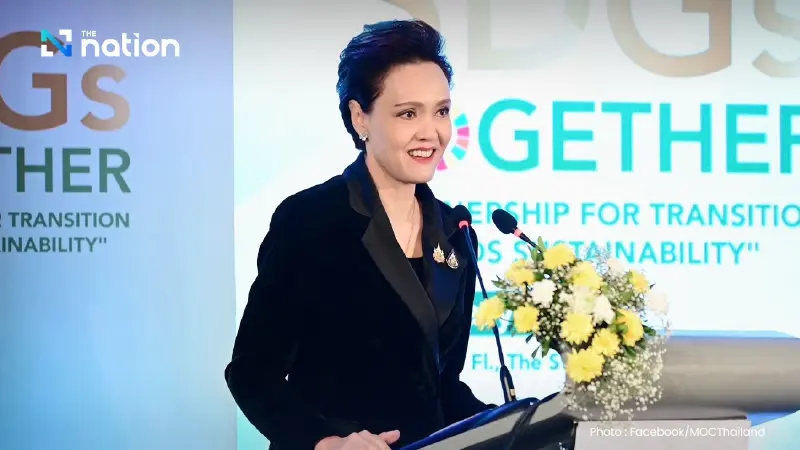


Commerce Minister Suphajee Suthumpun leads 17 Thai eco-building firms in Mumbai talks, promoting green supply chains and deeper Thai-India trade ties.
Commerce Minister Suphajee Suthumpun said India is a market she has visited repeatedly and one where she has seen clear progress and rising economic opportunities, reflecting what she described as strong growth under stable economic policies recognised internationally.
Speaking after a Thai-India business networking event at The St. Regis Mumbai, she said Thailand and India—maritime neighbours connected via the Andaman Sea—should view their relationship as an integrated regional production base and supply chain, with complementary economic structures.
Thailand imports a range of industrial goods from India, including gems and jewellery, pharmaceutical raw materials, tea and spices, she said, while key Thai inputs are processed further in India, adding value and creating jobs.

Suphajee said bilateral trade last year was worth about US$16.5 billion, with average growth of roughly 15% over the past three years. She added that Thailand is among India’s five key sources of intermediate goods—especially natural rubber and palm oil—while Thai exports of food ingredients and pet food to India have also expanded significantly.
She said Thailand’s new industrial growth direction aligns with India’s strategy in areas such as semiconductors, the creative economy, AI technology, digital trade, pet food, and Thailand’s push to become a medical and wellness hub, creating room for cooperation that “adds value” on both sides.

For the event, the Commerce Ministry brought 17 Thai companies specialising in environmentally friendly construction materials and furnishings—such as rubber-based building materials, wood products for flooring, walls and doors, home textiles, energy-saving cooling and heating systems, solar energy solutions, hotel furniture, and health equipment and systems. They joined business-matching talks with more than 50 Indian companies, including members of CREDAI, CREDAI-MCHI (Maharashtra Chamber of Housing Industry), and the Confederation of Indian Industry (CII).
Suphajee said sustainability and the environment are no longer optional, but priorities every industry must take seriously for current and future generations. She described the matchmaking programme as a strong start to the year and a step towards more sustainable Thai–India economic cooperation.
“If we want to go far and go fast, we need to move forward together,” she said, calling India a strategic partner for Thailand and stressing that growth should be shared on the basis of mutual benefit and sustainable development goals.
