
Saudi orders shutdown of the country’s largest oil refinery after drone attack
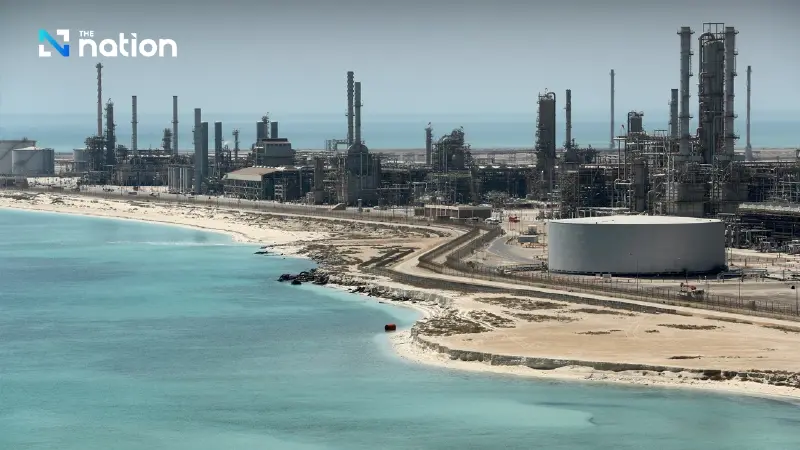


Saudi Aramco shut Ras Tanura after a drone attack, sources say, as Gulf tensions flare and Brent jumps about 10% on supply and shipping fears
- Saudi Arabia ordered the shutdown of the Ras Tanura refinery, one of the country’s largest refineries, as a precautionary measure after it was hit by a drone attack.
- The attack was part of wider regional conflict, heightening tension and affecting major energy transport hubs in the Persian Gulf.
- The incident had an immediate impact, pushing global crude prices—especially Brent—up by about 10%.
Reuters and Hindustan Times reported in line with each other that Saudi Aramco shut the Ras Tanura refinery after a drone strike, amid Iran’s retaliation for the US–Israel attacks.
This drove Brent crude futures up about 10%. The incident further intensified tensions in the Persian Gulf and disrupted the region’s key energy transport hub.
Saudi Arabia’s state oil giant Aramco shut the Ras Tanura refinery after it was hit by a drone, industry sources said on Monday, after Tehran launched attacks across the region in retaliation for the US–Israeli strikes on Iran.
The Ras Tanura complex, located on the kingdom’s Gulf coast, is home to one of the Middle East’s largest refineries, with refining capacity of 550,000 barrels per day (bpd), and serves as a key crude export terminal for Saudi Arabia.

The refinery was shut as a precautionary measure and the situation was under control, the sources said.
The drone attack was part of a wave of strikes across the Gulf region, including attacks in Abu Dhabi, Dubai, Doha, Manama, and the commercial areas of Duqm in Oman.
These attacks paralysed major maritime shipping hubs in the UAE and Oman and pushed Brent crude futures up about 10% on Monday.
Saudi Arabia’s heavily protected energy infrastructure has been targeted before, most notably in September 2019, when an unprecedented drone and missile attack hit the Abqaiq and Khurais facilities, temporarily knocking out more than half of the kingdom’s crude oil production capacity and causing turmoil in global markets.
However, crude prices have risen sharply because the intensifying Iran war has disrupted global energy supply chains.
The Strait of Hormuz, which handles the transport of about one-fifth of the world’s oil supply each day, has almost come to a standstill after at least three oil tankers on the route were attacked by drones, despite the existence of pipelines operated by Saudi Aramco and Abu Dhabi National Oil Co. Energy traders are now betting that crude flows could slow significantly—if not stop entirely.
West Texas Intermediate (WTI)—a light, low-sulphur crude produced in the United States—was trading at $72.79 a barrel on Monday morning, up 8.6% from around $67 on Friday, according to CME Group data.
Brent crude, the global benchmark, was trading at $79.41 a barrel on Monday morning, according to FactSet, up 9% from $72.87 on Friday, which was the highest level in seven months at that time.
Rising global energy prices mean consumers will pay more for fuel at the pump and face higher costs for consumer goods and other items, at a time when many are already under pressure from high inflation.
