
Bangkok Suffocates in PM 2.5 as Cambodia's Fires Contribute to Crisis
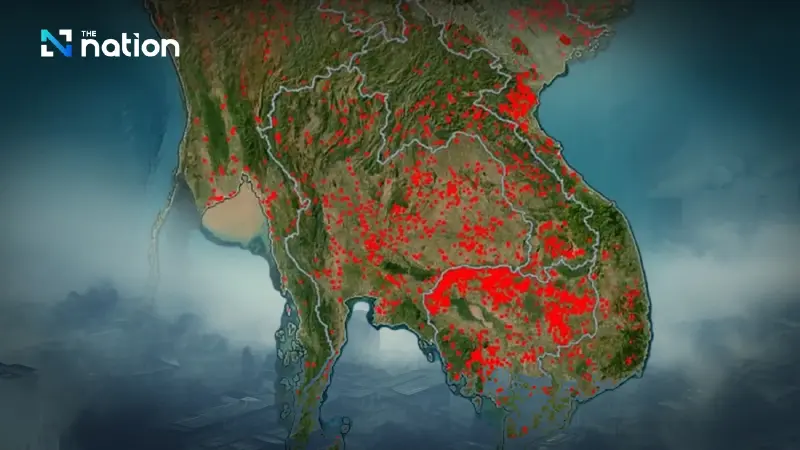


PM 2.5 levels in Bangkok hit hazardous levels, with Cambodia’s fires contributing significantly. Experts urge action under the Clean Air Act to address the ongoing crisis.
Bangkok is once again facing a severe PM 2.5 pollution crisis, with air quality reaching hazardous levels in several areas, including Bang Rak and Nonthaburi. Satellite images reveal that much of the pollution is coming from Cambodia, where large-scale fires along the border are contributing to the hazardous air quality.

Satellite Images Reveal the Source of Pollution
Recent data from NASA satellites show numerous hotspots in Cambodia, especially along the border, where fires have been burning in agricultural areas. These fires are marked as "red" in the satellite imagery, indicating large-scale open burning. At the same time, the central and eastern regions of Thailand are also experiencing ongoing fires, further exacerbating the problem.
Meteorological Department's Analysis
The Thai Meteorological Department explained that this pollution crisis has worsened due to weaker cold winds. As a result, the wind has shifted direction, bringing dust and smoke from Cambodia and the eastern regions into Bangkok, where it accumulates in the closed environment. Additionally, the phenomenon of "air inversion" has trapped the pollutants, preventing them from dissipating and causing a continued buildup in the city over the next 1-2 days.
Calls for Action on the "Clean Air Act"
Experts and social media users are discussing the urgent need for the Clean Air Management Act, which, if enforced, would offer several key measures to manage pollution:
- Clear penalties for those responsible for open burning.
- Cross-border cooperation: Authority to negotiate and implement economic measures with countries that are sources of pollution.
- Data integration: To provide early warnings and restrict pollution-causing activities in a timely manner.
"If the Clean Air Act is implemented, we will definitely see fewer cases of air pollution accumulation like this, as it will provide clear legal authority to address the sources of the fires," sources said.
Public Recommendations
For those in areas affected by high pollution levels (orange and red zones), it is recommended to avoid outdoor activities. If it is necessary to go outside, people should wear N95 masks and stay updated on the situation using the Air4Thai or AirBKK apps.
