
CAAT enforces new drone restrictions on Thai-Cambodian border from February 7
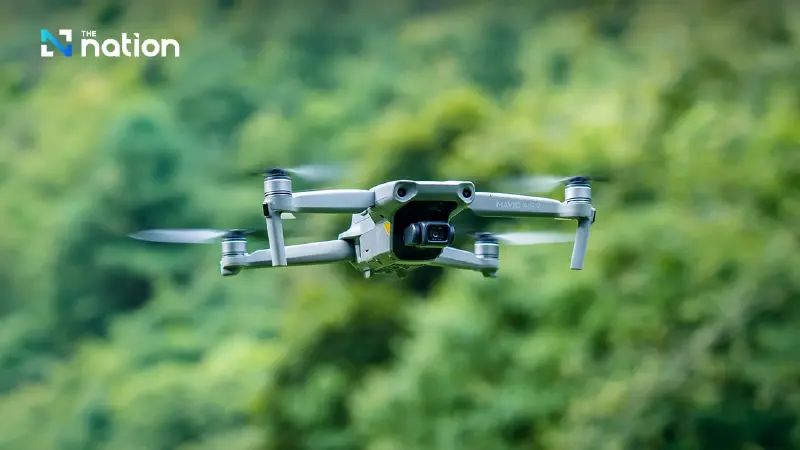


CAAT issues new regulations for drone operations (No. 15), relaxing some measures while maintaining no-fly zones for security, effective from February 7.
The Civil Aviation Authority of Thailand (CAAT) has issued a new regulation regarding the use of unmanned aircraft (drones) in areas that may affect national security along the Thai-Cambodian border (No. 15).
This regulation will come into effect from February 7 and will remain in force until further notice. It is a revision of the previous regulation after continuous assessments with security agencies.
According to CAAT, the situation following the implementation of the previous regulation (No. 14) has generally improved, allowing for some relaxation of drone operational restrictions. This aims to help the public and businesses return to normal activities.
However, strict measures will still be enforced in key security areas and critical national infrastructure.
No-fly zones:
Areas with military deployments or district-level operations in seven provinces:
- Ubon Ratchathani: Districts of Khemarat, Na Tan, Pho Sai, Si Mueang Mai, Khong Chiam, Sirindhorn, Buntharik, Na Chaluai, and Nam Yuen.
- Si Sa Ket: Districts of Phu Sing, Khun Han, and Kantharalak.
- Surin: Districts of Phanom Dong Rak, Kap Choeng, Sangkha, and Buachet.
- Buri Ram: Districts of Lahan Sai and Ban Kruat.
- Sa Kaeo: Districts of Khlong Hat, Aranyaprathet, Khok Sung, and Ta Phraya.
- Chanthaburi: Districts of Mueang Chanthaburi, Soi Dao, and Pong Nam Ron.
- Trat: Districts of Mueang Trat, Klong Yai, and Bo Rai.
Areas within a 9-kilometre (5 nautical miles) radius of designated airports.
Areas specifically prohibited by energy or security agencies:
- Chonburi: Districts of Bo Thong, Bang Lamung, Ban Bueng, Si Racha, Sattahip, Ko Si Chang, and Phan Thong.
- Rayong: Districts of Mueang Rayong, Nikhom Phatthana, Ban Khai, and Pluak Daeng.
- Chachoengsao: Districts of Mueang Chachoengsao, Bang Pakong, Bang Nam Priao, and Phanom Sarakham.
- Phetchaburi: District of Ban Laem.
- Samut Songkhram: District of Mueang Samut Songkhram.
- Samut Sakhon: District of Mueang Samut Sakhon.
Drone operations are allowed in some cases, such as agricultural activities, disaster prevention and response, urgent missions that could cause damage if not carried out, or law enforcement activities that require drone use to gather evidence.
These activities must be authorised by the landowner or relevant authorities, and the operations must comply with strict conditions.
Flight conditions:
- Operators must register both the drone and the drone operator with CAAT.
- Flight operations must be requested at least 3 days in advance through the UAS Portal or uasportal.caat.or.th.
- Flights must not exceed 90 metres (300 feet) above ground level.
- Flights are permitted from 6am to 6pm. For flights outside these hours (4.01am–5.59am or 6.01pm–12am), specific permission must be requested via CAAT. Flights are prohibited between 12am and 4am.
- Before each flight, operators must inform CAAT about the location, date, time, and purpose of the flight through the UAS Portal and notify the Anti-Drone Centre for Remotely Piloted Aircraft at [email protected].
Military, police, customs, Ministry of Agriculture, Ministry of Natural Resources, and National Intelligence Agency drones may operate within these zones as part of their duties.
Customs, Ministry of Agriculture, and Ministry of Natural Resources drones must notify relevant authorities in advance when operating in no-fly zones.
Violators of these regulations face a fine of up to 40,000 baht, imprisonment for up to one year, or both. In necessary situations, military or security personnel may take countermeasures, including using anti-drone systems.
If you witness illegal drone activity or operations that may pose a security threat, please report the following details (date, time, location, drone type, and any available photos or videos) to the responsible agencies:
- Unmanned Aircraft Standards and Technology Development Division, CAAT at 02-568-8851 or [email protected]
- Anti-Drone Centre for Remotely Piloted Aircraft, Metropolitan Police Bureau at 02-126-7846 or [email protected]
- Local police or military/security units.
CAAT urges the public and drone users to comply with the laws and regulations strictly to ensure national security, safety, and public order.
