
Police chief orders watch on groups over post-election protests
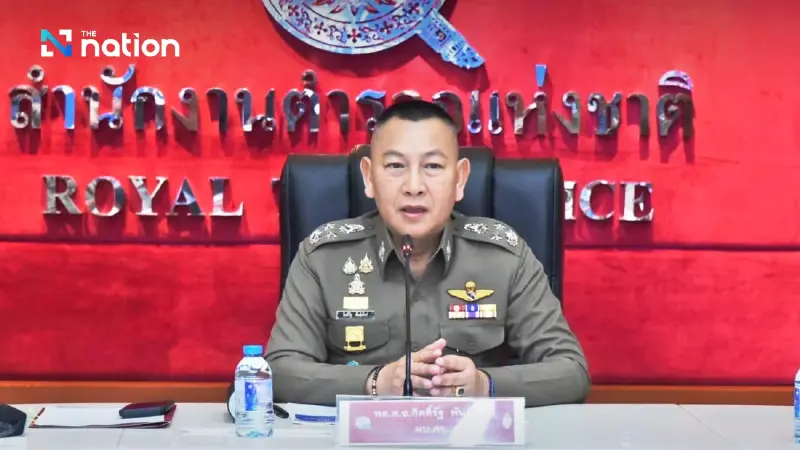


Police order nationwide monitoring of “risk groups” after election complaints in 17 constituencies; riot-control units told to stand by and counter fake news
Police chief has ordered close monitoring of “risk groups” amid concerns they could incite protests over election complaints, and has instructed riot-control units to stand by to handle incidents if needed.
On February 10, 2026, at the Royal Thai Police Operations Centre, Pol Gen Samran Nualma, Deputy Commissioner-General of the Royal Thai Police and director of the election security and public order centre at police headquarters, chaired a meeting to review the public-order situation linked to the election. Representatives from relevant units nationwide attended, including via video conference.
Authorities said there are currently complaints in 17 constituencies across 15 provinces. Issues cited include tally sheets found in rubbish bins, observers being blocked, CCTV cameras covered with black bags, lack of transparency in vote counting, delayed reporting of results, unusually high invalid ballots, “ballot-jumping”, and damaged ballots. Officials said most complaints have been filed and are already being addressed and prosecuted, while some points remain under the Election Commission’s process.
Pol Gen Samran said the police chief was concerned about how police officers carry out duties in line with Election Commission guidelines, and therefore issued instructions for police in all units and all areas to follow three main tracks:
1) Intelligence
Intelligence teams were told to closely monitor reactions from groups in their areas that could mobilise crowds to create unrest. Police were also instructed to track and block rumours and fake news on social media that could mislead the public or incite conflict. Officers were told to coordinate with provincial Special Branch units to update “risk group” watchlists and assess daily trends—especially in highly competitive areas—while exchanging information closely with the Election Commission. Police were also told to watch for cross-area movement of crowds and the transport of weapons or illegal items during the post-election transition period.
2) Coordination with the Election Commission
Investigators were instructed to coordinate with provincial Election Commission offices to track the progress of objections. If the Election Commission requests additional evidence from police, it should be provided as quickly as possible. Police were also told to arrange operational teams to protect witnesses immediately upon request, and to strictly guard locations where ballot boxes and key documents are stored—at district offices or provincial Election Commission offices—until the process is completed.
3) Riot-control readiness
Riot-control company commanders were told to check that personnel and equipment are ready for use, position forces, reinforce operational tactics, and deploy rapid-response teams to contain incidents in high-risk areas.
Pol Gen Samran instructed incident commanders to continually assess the situation together with investigative units, so that responses can be adjusted appropriately and carried out strictly within the law.
