
Thai Ministry Debunks Claims That 'Mae Nak' Legend is Cambodian Folklore
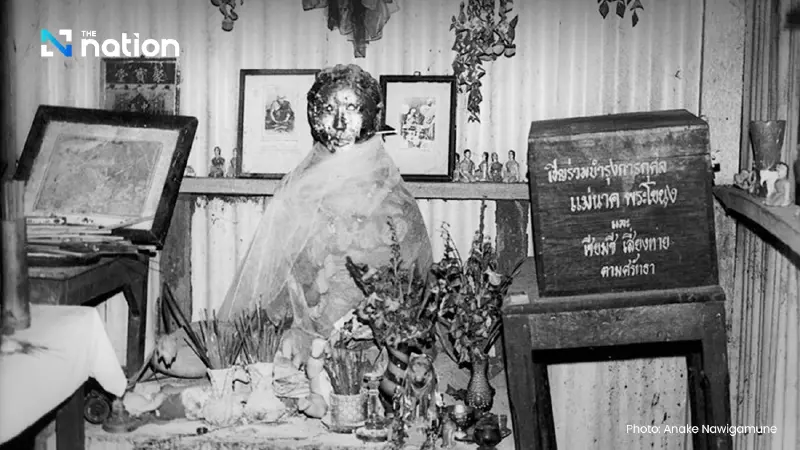


The Ministry of Digital Economy and Society warns the public after a viral claim falsely identifies the legendary "Mae Nak" as a Cambodian folk tale
- Thailand's Ministry of Digital Economy and Society has officially debunked a viral claim that the "Mae Nak" legend is a Cambodian folk tale.
- The false claim alleged the story was originally Cambodian and named "Mae Nak Battambang," but an investigation found no historical or academic evidence to support this.
- Authorities confirmed the legend is a well-documented piece of Thai folklore, specifically linked to the Phra Khanong district of Bangkok.
The Ministry of Digital Economy and Society warns the public after a viral claim falsely identifies the legendary "Mae Nak" as a Cambodian folk tale.
The Ministry of Digital Economy and Society (DES) has issued an official warning regarding a viral "fake news" story claiming that the iconic Thai ghost story, Mae Nak, is actually a Cambodian folk legend originally named "Mae Nak Battambang."
Wetang Phuangsup, the DES Ministry spokesperson, revealed that the Anti-Fake News Centre (AFNC) Thailand flagged the claim as part of a broader government initiative led by the minister, Chaichanok Chidchob, to combat disinformation and cybercrime.
According to the DES Ministry and the Fine Arts Department (Ministry of Culture), the claim that Mae Nak originated in Cambodia is entirely without merit.
After a thorough investigation of academic archives and cultural records, authorities confirmed the following:
Lack of Evidence: No historical or academic evidence supports the claim that the legend is Cambodian or was ever known as "Mae Nak Battambang."
Thai Provenance: The legend of Mae Nak Phra Khanong is a well-documented piece of Thai folklore, inextricably linked to the Phra Khanong district of Bangkok. It is a cornerstone of Thai literature, cinema, and folkloric studies.
International Verification: International academic sources and Cambodian cultural documents contain no reference to the story within the context or name suggested by the viral posts.
The Ministry warned that such groundless claims lead to cultural misunderstandings and have requested the public to refrain from sharing unverified information.

On 18 February 2026, the AFNC monitored 164,517 digital messages. Of these, 5,147 required formal verification, with the vast majority identified through "Social Listening" tools.
Of the eight most-discussed stories of the day, five were found to be false. Alongside the Mae Nak story, other debunked claims included a fake Russian proposal to build a border wall for Thailand and a fraudulent Department of Land Transport page offering driving licences.
Conversely, the Ministry confirmed as True that the Cabinet has approved carbon credits as tradable assets in the Thai capital market, and that Laos has officially proposed "Larb" for UNESCO Intangible Cultural Heritage status.
The DES Ministry has urged the public to rely solely on official government channels. Sharing disinformation can lead to financial loss, personal data theft, and broader social disruption.
Members of the public can report suspicious information via the 1111 hotline (ext. 87) or the official Anti-Fake News Centre website.
