
TAT opens Tourism Crisis Monitoring Centre to track Middle East tensions and assist stranded travellers
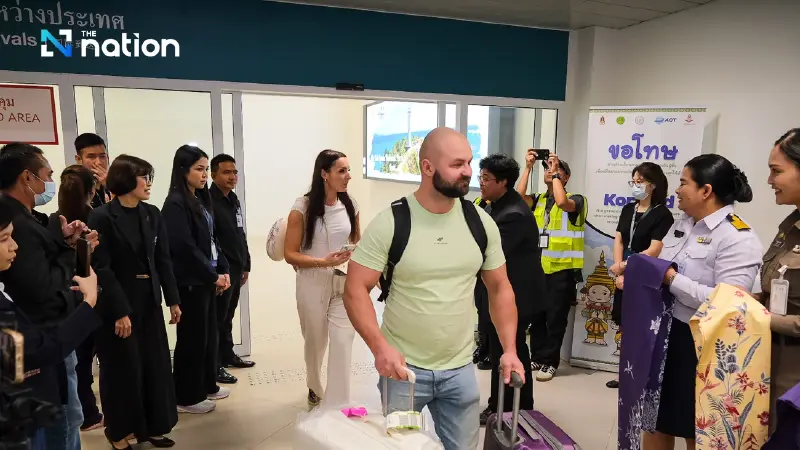


The Tourism Authority of Thailand has launched the Tourism Crisis Monitoring Centre (TCMC) to monitor Middle East tensions, assess impacts on tourism, and co-ordinate urgent assistance for travellers affected by flight cancellations.
The Tourism Authority of Thailand (TAT) has opened the Tourism Crisis Monitoring Centre (TCMC) to closely monitor rising tensions in the Middle East. The centre will serve as an operations hub for integrated information management—tracking tourism-related developments in Thailand and overseas, assessing potential impacts, and co-ordinating with relevant agencies to provide urgent assistance to tourists and passengers affected by flight cancellations.

TAT Governor Thapanee Kiatphaibool said that as the situation has prompted several Middle East countries to close their airspace, TAT’s overseas offices have been monitoring and reporting developments continuously. TAT has now activated the TCMC as the main mechanism for consolidating, analysing and assessing the situation. The authority has also prepared two scenarios to support short- and medium-term readiness, covering communications management, tourist care, and market recovery once the situation eases.
Initial monitoring shows the situation has directly affected the Middle East market. Suvarnabhumi, Don Mueang, Chiang Mai, Phuket and Krabi airports have been notified of a total of 59 cancelled flights by international airlines operating routes to, or connecting through, the Middle East. Airlines cited include Emirates, Qatar Airways, Etihad Airways, Gulf Air, Kuwait Airways, Air Arabia, flydubai, El Al, Arkia Israeli and Saudi Arabian Airlines, disrupting travel to and from the region. However, TAT noted that the Middle East market is currently in the Ramadan fasting period, which is typically a time of naturally slower travel activity.

On traveller assistance, TAT said it has been working closely with airports, airlines and related agencies. Suvarnabhumi Airport has increased staffing, set up assistance points, provided drinking water and opened temporary waiting areas. Airlines have arranged standby accommodation for most passengers, meaning the number of stranded passengers inside the airport remains limited. At other airports, TAT said it has co-ordinated with local agencies, including the Tourist Police Bureau, to provide close support and facilitation.
The TAT governor has also instructed domestic market teams to work with agencies nationwide to support any tourists who may be stranded, while preparing measures to stimulate domestic demand and other potential markets to help offset those affected. Once the situation stabilises, TAT said it will accelerate confidence-restoration measures and systematically move to attract tourists back to Thailand.
TAT said it will continue to monitor developments closely and provide accurate, timely information to operators and the tourism industry so all sectors can adapt and manage appropriately during this crisis.
Natthriya Thaweevong, Permanent Secretary of the Ministry of Tourism and Sports, commented on heightened tensions in the Middle East stemming from the conflict between Israel and Iran, which has affected some flight routes—particularly flights transiting the region—saying the ministry has been closely monitoring the situation.
She said the ministry has co-ordinated with all sectors to prepare for any potential impact. Although the situation in the Middle East has not yet affected Thailand’s tourism, the ministry must be ready to assist travellers who may be stranded due to flight cancellations.
She issued the following initial instructions:
- Agencies under the ministry are to work with partner networks—such as the Tourist Police Bureau and Airports of Thailand Plc (AOT)—to take care of tourists who may be stranded due to flight cancellations, by providing waiting areas and facilities and co-ordinating rebooked flights in line with international standards.
- The Department of Tourism, the Tourism Authority of Thailand (TAT) and the Tourist Assistance Centre (TAC) are to jointly manage operations and facilitate assistance for tourists in various areas who may have concerns, including deploying staff at airports and key tourist attractions.
- Authorities are to monitor the situation and check flight information in real time, both for cancellations and additional services (extra flights), so tourists receive accurate and timely information, reducing confusion and preventing further stranding.
- TAC staff are to be stationed at key airports—especially Suvarnabhumi Airport—in line with the evolving situation, to ensure assistance is fast and effective.
- The TAT is instructed to prepare packages for tourists who are stranded and unable to return, as well as for those who may come to stay in Thailand to escape the war.
- A 24-hour hotline must be available to assist and co-ordinate with tourists at all times. Further information can be obtained via the Tourist Police (1155), Tourism Authority of Thailand (1672), or the TAC at Suvarnabhumi Airport on 02 134 4077.
Natthriya said tourist safety is the ministry’s top priority and requires systematic preparedness measures. “We are monitoring the situation day by day, conducting in-depth risk assessments, and integrating efforts across all agencies to strengthen care measures in a strict, careful and practical manner. We must not let uncertainty undermine visitors’ confidence. Thailand will remain a safe place that looks after everyone responsibly,” she said.
