
Ombudsman asks Constitutional Court to rule on ballot barcodes breached voting secrecy
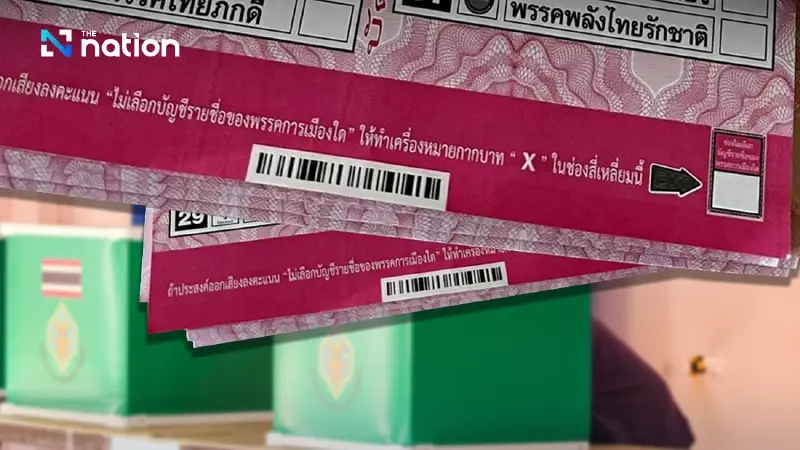


Thailand’s Ombudsman has asked the Constitutional Court to rule on whether barcodes and QR codes on February 8 ballots breached secret voting rules and could void the election
Thailand’s Office of the Ombudsman has resolved to submit a petition to the Constitutional Court over the use of barcodes and QR codes on ballot papers, asking it to determine whether the February 8, 2026 general election was conducted in breach of the constitutional requirement for secret voting.

On March 13, 2026, the Ombudsman’s Office said it had received 21 complaints from members of the public concerning the election of members of the House of Representatives held on February 8, 2026.
The complainants asked the Ombudsman to refer the matter, together with its opinion, to the Constitutional Court under Section 213 of the 2017 Constitution. They argued that the use of barcodes and QR codes on ballot papers could make it possible to identify voters and verify how they voted, meaning the ballot was not secret and that their constitutional rights and liberties had been violated.
The Ombudsman said that, at a meeting on March 10, it considered facts gathered during its inquiry together with the relevant legal provisions and found the issue weighty enough to warrant adjudication.
It concluded there were sufficient grounds to believe that the Election Commission, the EC secretary-general and the Office of the Election Commission, in designing and printing ballot papers containing barcodes and QR codes for the February 8 general election, may have created a system under which ballots could be linked or traced back to individual voters.

According to the Ombudsman, this raised credible concerns that voting may not have been secret, contrary to the intent of Sections 83 and 85 of the Constitution, and may therefore have amounted to a violation of the rights and freedoms of the complainants and other eligible voters protected under the charter.

It therefore approved on March 13 the submission of a petition and opinion to the Constitutional Court for a ruling under Section 213.
The Ombudsman added that several related complaints are still under consideration. These include whether Clause 129, paragraph two, of the Election Commission’s 2023 regulation on House elections — which allows the EC to prescribe additional codes, symbols or wording on ballot papers in special cases — is compatible with Section 85 of the Constitution and Sections 84 and 96 of the organic law on the election of MPs.
Other pending issues include complaints over the number of constituency and party-list ballot papers not being equal, as well as whether the use of barcodes and QR codes on ballot papers may have breached the Personal Data Protection Act 2019.
