
Russia ready to sell oil to Thailand as Sihasak seeks new energy sources
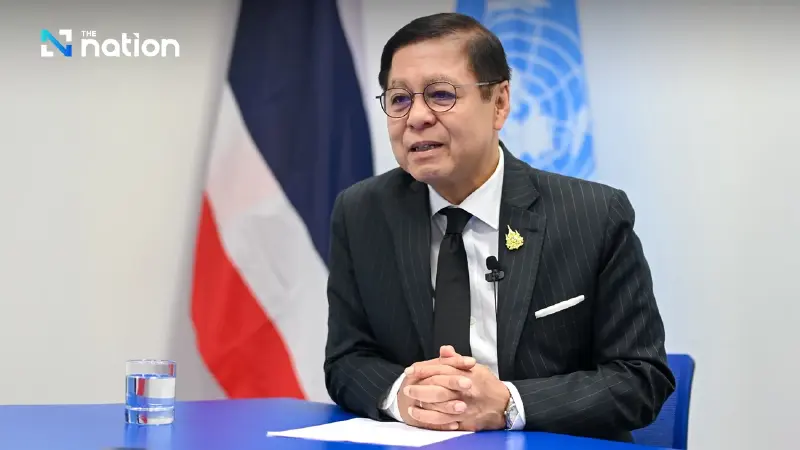


Thailand says Russia is ready to sell oil, while Foreign Minister Sihasak Phuangketkeow continues talks with Brazil, Nigeria and Kazakhstan to secure new energy supplies
Russia is ready to sell oil to Thailand, while FM Sihasak Phuangketkeow is continuing talks with Brazil, Nigeria and Kazakhstan in search of new energy sources.
• The Thai government is negotiating for new oil sources to cope with the energy crisis, with Russia responding positively and indicating that it is ready to sell oil to Thailand.
• Sihasak Phuangketkeow, Minister of Foreign Affairs, is seeking additional energy supplies from other countries, including Brazil, Nigeria and Kazakhstan.
• These efforts to secure new oil sources are aimed at reducing the impact of the conflict in the Middle East, which has caused volatility in global oil prices and disrupted transport.
The impact of the war in the Middle East has driven global crude oil prices higher, largely because transporting crude through Iran’s Strait of Hormuz has become increasingly difficult, resulting in volatility in world oil prices.
Thailand is among the countries that import no less than 50–60% of its crude oil through the strait. Although the government has confirmed that Thailand still has oil reserves for more than three months, or around 101 days, public anxiety has intensified as fuel users increasingly rush to stockpile oil amid uncertainty over whether supplies will remain sufficient in the longer term. The government, meanwhile, has not remained idle and is seeking new oil sources while negotiating purchases to ensure adequate domestic supply.
Most recently, the government announced fuel price adjustments effective from March 18, 2026. Diesel was increased by 50 satang per litre, with the ceiling remaining at no more than 33 baht per litre, while petrol and gasohol prices rose by 1 baht per litre. E20 and E85 were the exceptions, with prices reduced. The move was made in response to the Middle East war crisis and to maintain the level of the Oil Fuel Fund, after prices had been held steady for 15 days until March 17, 2026.
Sihasak Phuangketkeow, Minister of Foreign Affairs, spoke about coordination with various countries to find new energy or fuel oil sources.
He said the government has oil reserves for 95–100 days, but the fighting remains highly uncertain. The Prime Minister therefore believes that if Thailand can source oil from elsewhere, contacts should be made to identify which countries are ready to sell oil to Thailand.
Sihasak said Thailand has already contacted Russia and received a positive response, with Russia indicating that it is ready to sell oil to Thailand. He added that, particularly at this time, the United States has relaxed sanctions measures, meaning that vessels that have already departed port are now able to sell to various countries. Thailand has also contacted Brazil, Nigeria and Kazakhstan, among others. Ultimately, however, the relevant agencies, including the Ministry of Energy, will need to hold further detailed discussions.
As for progress in helping the three Thai crew members still stranded from the vessel Mayuree Naree, Sihasak stressed that he had spoken by telephone with Iran’s foreign minister to coordinate assistance. Iran’s foreign minister expressed regret over the Mayuree Naree incident, but also said that it was not a situation in which shipping should be taking place.
Iran has promised to help search for the three Thai crew members by coordinating with the Iranian navy, although the situation still depends on conditions on the ground, as fighting continues. Thailand has also coordinated with Oman to ask it to liaise with the Iranian navy, and the Royal Thai Navy has likewise been asked to contact the Iranian navy directly.
Regarding talks with two members of the Gulf Cooperation Council, or GCC, Sihasak said he had spoken by telephone with Bahrain and the United Arab Emirates to express concern over the situation, as both countries have been affected by the war. The discussions also served to reaffirm Thailand’s position that it wants to see peace restored, opposes the use of violence, and believes war should not happen, with diplomatic efforts and negotiations being the proper way forward.
Now that the situation has escalated, he said he wants all parties to help reduce the intensity of the fighting and retaliation. At the same time, Thailand continues to support peace, sovereignty and territorial integrity for all countries in the region, especially those not involved in the war but still affected by it, including the UAE, Bahrain, Qatar, Kuwait and Lebanon. He said those countries had thanked Thailand for taking this position.
