
Narongchai urges targeted relief for those hit hardest by energy crisis
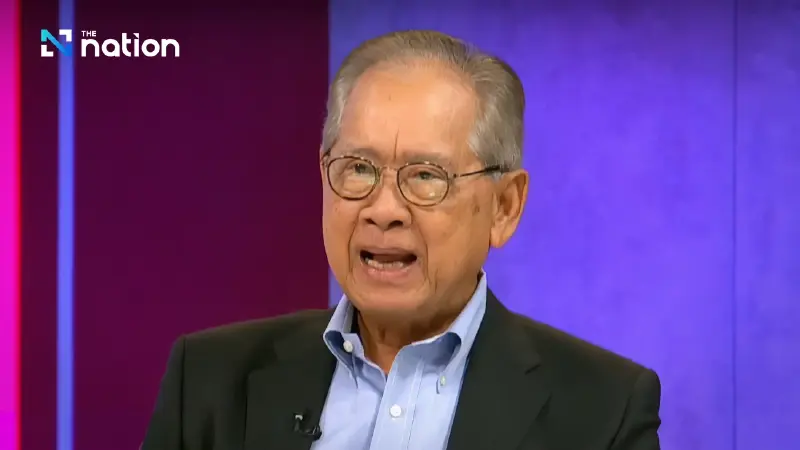


Former energy minister Narongchai urges the government to give targeted relief to those hardest hit as the energy crisis drives up fuel, power and living costs.
Narongchai Akrasanee, a former energy minister, said on the television programme Kom Chad Luek on Friday (March 27, 2026) that the Middle East conflict involving the United States, Israel and Iran is rooted in “historical revenge”, with no prospect of an outright winner or loser.
He said the confrontation was being driven by deep grievances on both the US-Iran and Israel-Iran sides, making it difficult to bring to a decisive end.
He pointed to several historical examples to explain his view. On the US-Iran side, he referred to the 1953 overthrow of Iran’s government and the bitterness that followed the 1979 hostage crisis at the US Embassy in Tehran.
On the Israel-Iran side, he said Israel’s long-running conflict with Hamas, Hezbollah and the Houthis, groups he said had received Iranian backing, had reinforced a cycle of retaliation across the region.
“This is a conflict of historical revenge,” Narongchai said. “There is no way it will end with a clear-cut victory or defeat.”
He added that the conflict could only ease “when both sides grow weary”, when resources begin to run down, and when pressure builds both inside the warring countries and among outside parties affected by the turmoil.
Narongchai said the conflict would gradually lose intensity because rising oil prices and wider economic pain were hurting far more people than just the three main parties involved.
“More people stand to lose than just the three parties fighting,” he said, arguing that these external pressures would eventually force the conflict to soften, even if it did not truly end.
For Thailand, he said the country would need to live with the energy crisis for some time. He warned that expensive oil and gas would keep pushing up fuel prices, add pressure to electricity bills through higher LNG costs, and worsen the cost of living.
He also said the Oil Fuel Fund and LPG fund could not absorb much more pressure, meaning further price increases would be difficult to avoid.
“Thailand has to live with expensive oil and gas,” he said. “What worries me most is LNG. When LNG becomes expensive, it feeds into electricity prices and that hurts.” He added that diesel prices could rise further because the government would eventually struggle to keep subsidising them.
Rather than trying to freeze prices across the board, Narongchai urged the government to provide targeted relief for those genuinely in distress. “It would be better to help the groups that are truly suffering than to hold down all prices,” he said, arguing that focused assistance would be fairer, clearer and less burdensome than blanket subsidies.
