
Firecrackers, not bullets — Thailand denies Cambodia accusation
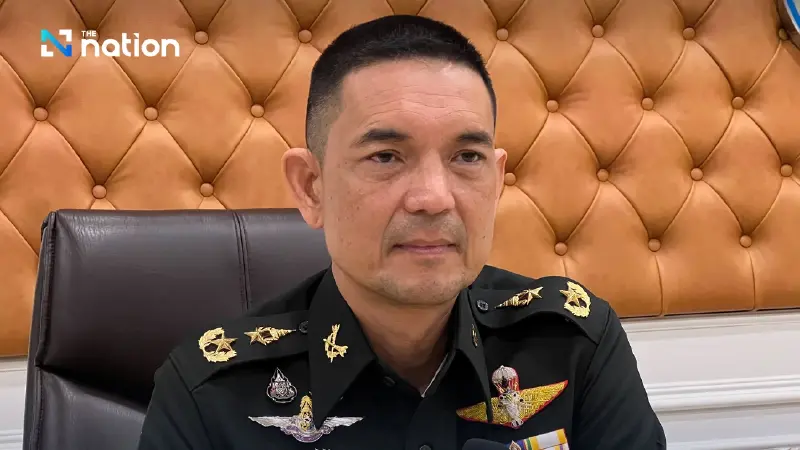


Thai defence officials deny Cambodian claims of gunfire at O’Smach, saying troops used three firecrackers as warning signals
Thailand’s Defence Ministry has denied Cambodian claims that Thai soldiers opened fire near the Chong Chom border crossing in Surin province, saying Thai troops used only three firecrackers as warning signals after Cambodian personnel allegedly moved close to a Thai barbed-wire line.
Maj Gen Winthai Suvaree, spokesman for the Royal Thai Army, said on Wednesday (April 29) that the Thai unit responsible for the area had been informed by the Thai-Cambodian border coordination team that Cambodia would bring a group of diplomats to inspect an area near Thailand’s deployment line at around 10am.
Thai forces acknowledged the coordination and closely monitored the situation, he said.
However, Thai troops later observed Cambodian soldiers allegedly acting provocatively by moving close to Thailand’s barbed-wire line, despite prior warnings and explanations regarding mutual agreements between the two sides.
Winthai said the behaviour was repeated, prompting the Thai unit to set off three firecrackers as warning signals under procedure. The Cambodian side then moved away from the barbed-wire area.
The incident was reported to the Suranaree Force and the Second Army Region for further action, including the formal submission of a protest letter to Cambodia over what Thailand described as a violation of the joint statement.

Winthai stressed that such incidents should not occur, saying they reflected a lack of respect for international agreements and an attempt to create a situation that could make Thailand appear violent.
He insisted that was not the case, adding that Thailand had strictly followed rules and agreements. However, he said Thailand reserved the right to defend itself under international principles to protect public safety and national sovereignty in all circumstances.
The Second Army Region later issued a separate clarification after receiving a report from the Suranaree Force about the incident near Chong Chom, also referred to as O’Smach, at around 10.30am on April 29, 2026.
It said the Cambodian side had brought a group of military attaché assistants stationed in Cambodia into an area near a building allegedly linked to illegal activity, described as a “scammer building”, close to the barbed-wire line set up by Thailand to define the safety boundary.
Thai soldiers stationed in the area issued standard warnings for the group to move away from the barbed wire to prevent confrontation and reduce the risk of an undesirable incident, the Second Army Region said.
However, the Cambodian side allegedly continued to move close to the area and behaved provocatively, including taking photos in front of the barbed-wire line.
After learning that ASEAN observers were also present, Thai troops used a low-level control measure by setting off three firecrackers inside a building as warning signals to stop further movement and instruct the group to leave the risk area.
The Second Army Region said the action strictly complied with the rules of engagement. The Cambodian side then stopped moving and calmly withdrew the observers from the barbed-wire line.
It insisted that no firearms or lethal force were used. Thailand’s actions, it said, were carried out with restraint and with the safety of all sides as the top priority.
The Second Army Region also said Cambodia had shown repeated provocative behaviour along the border, particularly at night. It cited incidents such as motorcycles being ridden close to the barbed wire while engines were revved loudly, as well as gestures resembling the use of heavy weapons, allegedly intended to cause fear or provoke a Thai response.
Thai troops, it added, remained disciplined, patient and committed to strictly following the rules of engagement to prevent escalation, maintain border stability and preserve good bilateral relations.

In a separate statement, Rear Adm Surasant Kongsiri, spokesman for the Defence Ministry, responded to claims by Cambodia’s Defence Ministry spokesman that Thai troops had fired into the O’Smach checkpoint area five times between around 10.35am and 11.09am on April 29, 2026.
Cambodia claimed that Thai forces had used rifles, an M79 grenade launcher and M16 rifles while a group of military attaché assistants was visiting the area for observation.
Surasant said checks with the Royal Thai Army found that the incident stemmed from Cambodian troops allegedly provoking Thai forces by moving close to Thailand’s barbed-wire line.
He said the action breached the joint statement signed by both sides on December 27, 2025. Despite warnings and explanations over the agreement, the behaviour allegedly continued.
The Thai unit in the area therefore set off three firecrackers as warning signals under the rules of engagement, prompting the Cambodian side to move away from the barbed-wire area, he said.
Surasant firmly denied that Thailand had used weapons or opened fire as alleged. He said the overall situation remained under the control of security agencies.
Thai security agencies are continuing to monitor the situation closely to prevent misunderstandings and maintain stability along the border.
The Defence Ministry also urged the public and the media to rely mainly on official information and to use judgement before receiving or sharing news.
Surasant said security situations were no longer confined to physical areas but had also expanded into the realm of information warfare, which could create misunderstanding and affect national security.
The Defence Ministry said it would continue to communicate information in a “swift, accurate and transparent” manner to build public confidence and protect the country’s interests.
