
Thailand deploys six rainmaking units to tackle El Niño drought
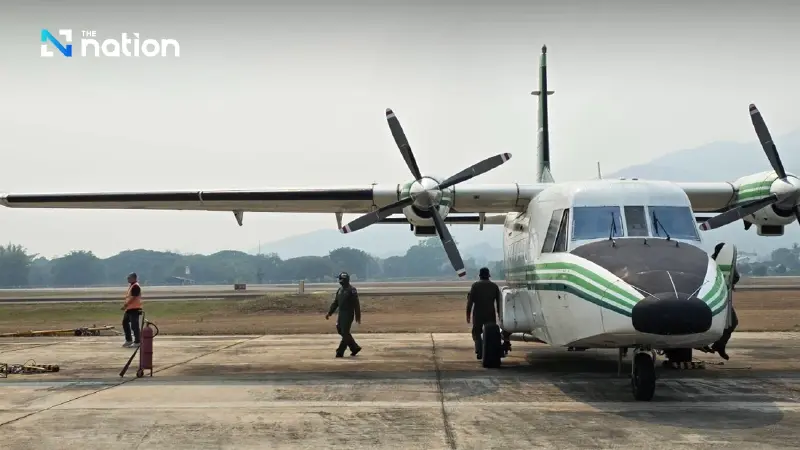


Thailand ramps up royal rainmaking operations nationwide as El Niño looms, aiming to boost reservoirs, protect crops and ease drought risks
Thailand has mobilised six rainmaking units nationwide as authorities brace for the impact of El Niño, which is expected to bring hotter weather and reduced rainfall throughout much of 2026.
On May 1, 2026, Rachen Silparaya, Director-General of the Department of Royal Rainmaking and Agricultural Aviation, said the Thai Meteorological Department’s March assessment indicated that weather conditions were likely to shift into an El Niño phase from May and potentially persist until the end of the year.

The development is expected to result in extreme heat and below-average rainfall, posing risks of widespread damage to agricultural areas.
In response, the department has established rainmaking operation units in drought-prone areas to increase water levels in reservoirs and restore moisture to forests and farmland as soon as weather conditions permit. The move forms part of proactive measures under the Ministry of Agriculture and Cooperatives, built around four key strategies: water storage, water replenishment, adaptation and monitoring.
Rachen said rainmaking operations had already begun on March 1, 2026, to support areas in need of water and increase reservoir levels.

Between March 1 and April 30, operations were conducted on 53 days, with 446 flights. Rainfall was successfully generated in 98.11% of missions, benefiting agricultural areas across 33 provinces, including Phetchabun, Uthai Thani, Nakhon Sawan, Kanchanaburi, Nakhon Ratchasima, Chanthaburi, Sa Kaeo, Phetchaburi, Prachuap Khiri Khan, Chumphon, Trang, Ratchaburi, Ranong and Songkhla.
A total of 80.08 million rai of land benefited from the operations. Water supplies were replenished in 12 large reservoirs and 51 medium and small reservoirs, with cumulative water volume reaching 55.13 million cubic metres in catchment areas.
With drought conditions and the potential emergence of a “super El Niño”, the department has adjusted its operational plan from May 1, 2026, onwards to better align with demand for rainmaking services.

Six operational units have been deployed as follows:
- Phitsanulok rainmaking unit, operating two medium-sized aircraft from the department and one BT-67 aircraft from the Royal Thai Air Force
- Buri Ram rainmaking unit, operating two medium-sized aircraft
- Surat Thani rainmaking unit, operating one large aircraft and one BT-67 aircraft from the Royal Thai Air Force
- Nakhon Sawan rainmaking unit, operating two medium-sized aircraft
- Chanthaburi rainmaking unit, operating three small aircraft
- Prachuap Khiri Khan rainmaking unit, operating three small aircraft
The department has also carried out weather modification missions to mitigate fine particulate pollution (PM2.5) in affected areas, including Bangkok and surrounding provinces, the North and the Northeast. Techniques used included dry ice seeding, cold water spraying, cloud formation and cloud enhancement to absorb and disperse particulate matter.
The air quality situation has since improved, with conditions returning to moderate, good and very good levels.
Operational results showed:
- In Bangkok and surrounding areas, operations conducted between December 1, 2025, and March 31, 2026, covered 115 days and 677 flights. PM2.5 levels were reduced below 37.5 micrograms per cubic metre — the standard threshold — on 105 days, representing a 91% success rate
- In the North, operations between February 1 and April 30, 2026, covered 83 days and 576 flights, with PM2.5 levels reduced below the threshold on 48 days, representing a 58% success rate
- In the Northeast, operations between January 15 and April 30, 2026, covered 42 days and 124 flights, with PM2.5 levels reduced below the threshold on 34 days, representing an 81% success rate
In addition, three hailstorm suppression units remain on standby in Chiang Mai, Phitsanulok and Khon Kaen to monitor and respond to summer storm conditions.
