
DDPM issues Thailand alert for run-off, floods and strong waves
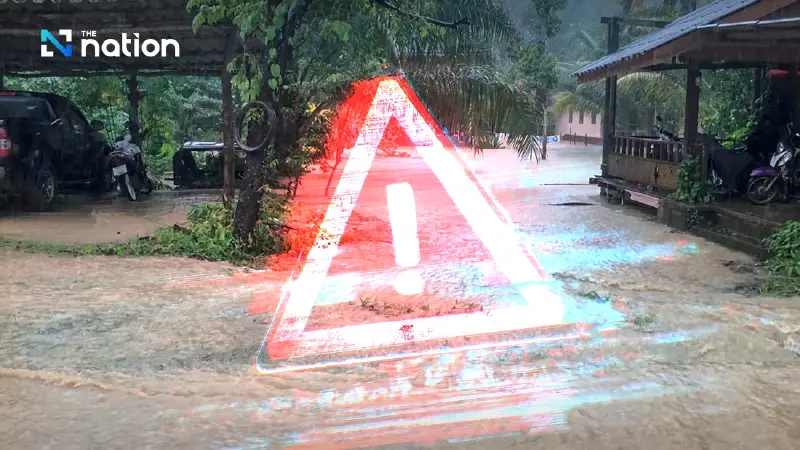


Provinces were told to monitor risk areas, alert residents and prepare shelters as heavy rain and strong waves were forecast from Tuesday (May 19, 2026) to Thursday (May 21, 2026).
- Thailand's Department of Disaster Prevention and Mitigation (DDPM) has issued a nationwide alert for forest run-off, flash floods, and waterlogging from May 19-21, 2026.
- The warning also includes strong winds and waves for southern coastal provinces, prompting instructions for boat operators to navigate with caution and a ban on swimming in affected areas.
- The alert follows a meteorological forecast for heavy to very heavy rain caused by a strong southwest monsoon, with numerous provinces across all regions of Thailand listed as at-risk.
- Provincial authorities have been instructed to closely monitor the situation, prepare shelters, and issue warnings to residents in vulnerable areas through various channels, including cell broadcasts.
The Department of Disaster Prevention and Mitigation (DDPM) has sent letters to provincial governors and directors in all provinces instructing them to prepare for forest run-off, flash floods, waterlogging and strong winds and waves between Tuesday (May 19, 2026) and Thursday (May 21, 2026).
The move followed an announcement by the Thai Meteorological Department (TMD) on heavy to very heavy rain in Thailand and strong winds and waves in the Andaman Sea, with effects continuing until Thursday.
The TMD said that from Tuesday to Thursday, Thailand would see increased rain and isolated heavy to very heavy rain, mainly in the western part of the country, covering the North, the Northeast, the Central region and the western coast of the South.
This is because a rather strong southwest monsoon is prevailing over the Andaman Sea, Thailand and the Gulf of Thailand, while a low-pressure cell covers the upper coast of the Socialist Republic of Vietnam.

The risk areas are as follows:
Forest run-off, flash floods and waterlogging
- North: Mae Hong Son, Chiang Mai, Chiang Rai, Lamphun, Lampang, Phayao, Phrae, Nan, Uttaradit, Tak, Sukhothai, Kamphaeng Phet, Phitsanulok, Phichit, Phetchabun, Nakhon Sawan and Uthai Thani provinces.
- Northeast: Loei, Nong Khai, Bueng Kan, Nong Bua Lamphu, Udon Thani, Sakon Nakhon, Nakhon Phanom, Chaiyaphum, Khon Kaen, Maha Sarakham, Kalasin, Mukdahan, Roi Et, Yasothon, Amnat Charoen, Nakhon Ratchasima, Buri Ram, Surin, Si Sa Ket and Ubon Ratchathani provinces.
- Central region: Kanchanaburi, Ratchaburi, Suphan Buri, Chai Nat, Sing Buri, Ang Thong, Phra Nakhon Si Ayutthaya, Lop Buri, Saraburi, Nakhon Nayok, Prachin Buri, Sa Kaeo, Chachoengsao, Chon Buri, Rayong, Chanthaburi, Trat, Phetchaburi, Prachuap Khiri Khan, Pathum Thani, Nonthaburi, Nakhon Pathom, Samut Sakhon, Samut Songkhram and Samut Prakan provinces.
- South: Chumphon, Surat Thani, Nakhon Si Thammarat, Phatthalung, Songkhla, Pattani, Yala, Narathiwat, Ranong, Phang Nga, Phuket, Krabi, Trang and Satun provinces.

Strong winds and waves in the South
- Ranong: Mueang Ranong, Suk Samran and Kapoe districts.
- Phang Nga: Ko Yao, Takua Thung, Thai Mueang, Takua Pa and Khura Buri districts.
- Phuket: all districts.
- Krabi: Mueang Krabi, Khlong Thom, Ko Lanta, Nuea Khlong and Ao Luek districts.
- Trang: Kantang, Sikao, Palian and Hat Samran districts.
- Satun: Mueang Satun, La-ngu, Thung Wa and Tha Phae districts.
DDPM asked provincial disaster prevention and mitigation command centres to closely monitor the situation in their areas and issue warnings to district disaster prevention and mitigation command centres, local administrative organisation disaster prevention and mitigation command centres, relevant agencies and people in at-risk areas, and to take the following actions:
For forest run-off, flash floods and waterlogging
Prepare for the situation, follow weather information and official news, and monitor areas at risk of heavy rain or areas with continuous accumulated rainfall, which could cause flooding.
For natural tourist attractions, especially caves, waterfalls and through-caves, if heavy rain creates a disaster risk, provincial governors should instruct responsible agencies to issue warnings and close off areas, strictly prohibiting anyone from entering.
Officials should also be deployed to monitor those risk areas 24 hours a day.
For strong winds and waves
Provincial governors should instruct responsible agencies to issue announcements or install warning signals for people along the coast, and inform tourists that swimming in the sea is strictly prohibited during periods of strong winds and waves.
For navigation, responsible agencies such as the Marine Department, the Royal Thai Navy and the Marine Police should be assigned to issue navigation warnings, telling boatmen, boat operators and passenger boat operators to navigate with greater caution.
If the situation in the area shows signs of becoming more severe, provinces should consider strictly banning vessels from leaving shore.
Temporary shelters should be prepared so they are ready and sufficient to receive evacuees
If a situation occurs, relevant agencies, including local administrative organisations, subdistrict headmen and village headmen, should be assigned to prepare sufficient food, drinking water and other essential items for temporary shelters.
DDPM also asked authorities to emphasise public relations efforts to build awareness through all channels and reach all groups of people via social media, village public-address towers and local radio, and to report the results of provincial disaster warnings through the LINE application group, “DDPM Prevention and Operations Group”.
In the latest update today, Tuesday, DDPM sent a Cell Broadcast message warning of heavy rain in Kapoe district, where accumulated rainfall exceeded 120mm, and rain was continuing.
It warned of floods, overflowing banks and mudslides in areas along canals and waterways, low-lying areas and foothill slopes.
People were told to move belongings to higher ground, move vehicles, secure valuables and important documents, beware of electric shock and look after vulnerable groups.
Earlier, DDPM warned of heavy rain in Mueang Phang Nga, Khura Buri, Takua Pa and Thai Mueang districts.
In the Takua Pa district, accumulated rainfall exceeded 150mm and rain was continuing.
It warned of floods, overflowing banks and mudslides in areas along canals and waterways, low-lying areas and foothill slopes.
People were told to move belongings to higher ground, move vehicles, secure valuables and important documents, beware of electric shock and look after vulnerable groups.
