
Thailand alcohol controls take effect pending advertising criteria
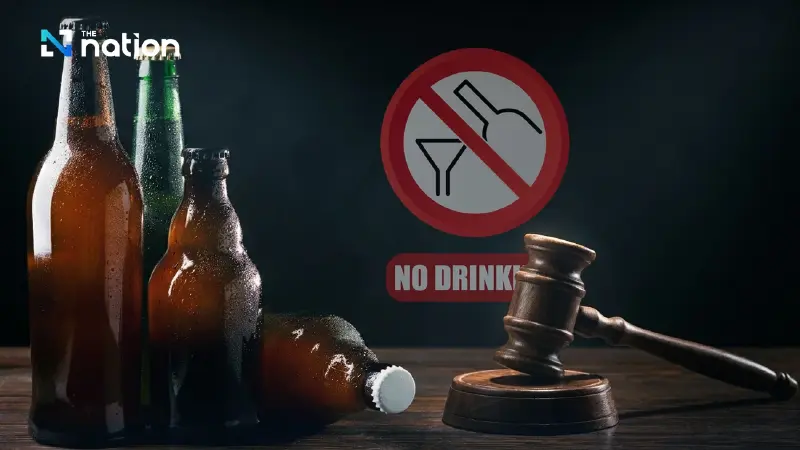


Eight notices setting out places where alcohol sales or consumption are banned have taken effect, while advertising rules remain unfinished.
- Thailand's new Alcoholic Beverage Control Act has taken effect, introducing updated restrictions on alcohol.
- The new controls immediately ban the sale and consumption of alcohol in eight specific types of locations, including public transport hubs, government properties, and public parks.
- While the main act is in force, the specific criteria that will govern the advertising and publicity of alcoholic beverages have not yet been issued.
- The delay in setting advertising rules is because the national control committee is not yet fully formed; until it issues the criteria, all alcohol advertising remains effectively banned.
The Alcoholic Beverage Control Act (No. 2) 2025 has been in force since Saturday (November 8, 2025).
Several sections require subordinate legislation, including rules on places where alcoholic beverages may not be sold or consumed, and rules on advertising and publicity.
8 areas where alcohol sales and consumption are banned
The latest eight notifications of the Alcoholic Beverage Control Committee on places or areas where the sale or consumption of alcoholic beverages is prohibited took effect on Tuesday (May 12, 2026).
They cover the following:
- State enterprises and other state agencies: no one may sell alcoholic beverages, except in areas designated as shops or clubs. No one may consume alcoholic beverages, except in areas designated as private accommodation, clubs or customary banquets. The rule does not apply to the Liquor Distillery Organisation.
- Public parks of state enterprises and other state agencies set aside for general public recreation: no one may sell or consume alcoholic beverages.
- Areas under the supervision and use of the civil service, state enterprises or other state agencies: no one may sell alcoholic beverages, except in areas designated as shops or clubs. No one may consume alcoholic beverages, except in areas designated as private accommodation, clubs or customary banquets.
- Factory operation areas: no one may sell or consume alcoholic beverages. The rule does not apply to alcoholic beverage factories where operations are carried out in the ordinary course of the factory’s trade, or to consumption forming part of production or maintaining production standards for alcoholic beverages.
- Transport terminals: no one may sell or consume alcoholic beverages.
- Public passenger piers and scheduled public passenger vessels: no one may sell or consume alcoholic beverages.
- Railway stations or trains on railway tracks: no one may sell or consume alcoholic beverages, except in an area designated for special events in the Bangkok Station concourse inside Bangkok Railway Station, with screening and necessary measures to maintain public order, public safety and restrictions on access to alcoholic beverages by children and young people, and with permission from the Minister of Public Health for that event.
- Roads, or vehicles on roads: no one may sell alcoholic beverages on a road, or on or inside a vehicle on a road. No one may consume alcoholic beverages on a road while driving or while travelling in or on a vehicle.
Advertising and publicity criteria still unfinished
For advertising and publicity for alcoholic beverages, Section 32 of the 2025 Act sets a ban on advertising, but also provides exemptions allowing it to proceed under criteria, procedures and conditions announced by the minister on the advice of the control committee.
That criteria notification has not yet been issued.
Nipon Chinanonwet, director of the Office of Alcohol Control Committee, Department of Disease Control, told ฺBangkokbiznews that the eight Alcoholic Beverage Control Committee notifications on places where sales and consumption are prohibited, which took effect on Tuesday (May 12, 2026), updated content from the previous law.
The power used has been changed from notifications issued under the Prime Minister’s Office to notifications issued through the control committee to comply with the new Act.
Nipon said the committee notification relating to criteria for advertising and publicity for alcoholic beverages had not yet been completed because the Alcoholic Beverage Control Committee must first have all members required by law before the issue can be considered.
Under the Act, the notification must be issued on the advice of the control committee.
“If the notification is rushed out while the committee is not yet fully constituted, it may result in a lack of clarity in the hearing of views from the private sector, which could later become a procedural issue in issuing the notification,” Nipon said.
Advertising and publicity are not allowed during the transition
Nipon also said that, to obtain a fully constituted committee, the Prime Minister had already signed the relevant notifications on criteria and methods for selecting the committee’s various components.
The matter is now at the stage of accelerating the preparation of notifications by the relevant department to set out practical details.
After that, the process can move to the recruitment and selection of individual committee members to complete the composition required by law.
Once the committee includes all sectors, discussions will begin on drafting details for advertising and publicity for alcoholic beverages in the next stage.
“While there is still no notification from the control committee on these criteria, advertising and publicity cannot yet be carried out because the main point in the Act is still a ban on advertising. It only provides exemptions allowing it to be done as set out in the notification. Since the notification has not yet been issued, advertising is in effect controlled by the system,” Dr Nipon said.
