Thailand urges Cambodia to face scam-centre facts after Hun Sen remarks
TUESDAY, MAY 26, 2026
Play
Thai police say Cambodia must tackle scam-centre bases after Hun Sen claimed Cambodia was a victim of online fraud gangs
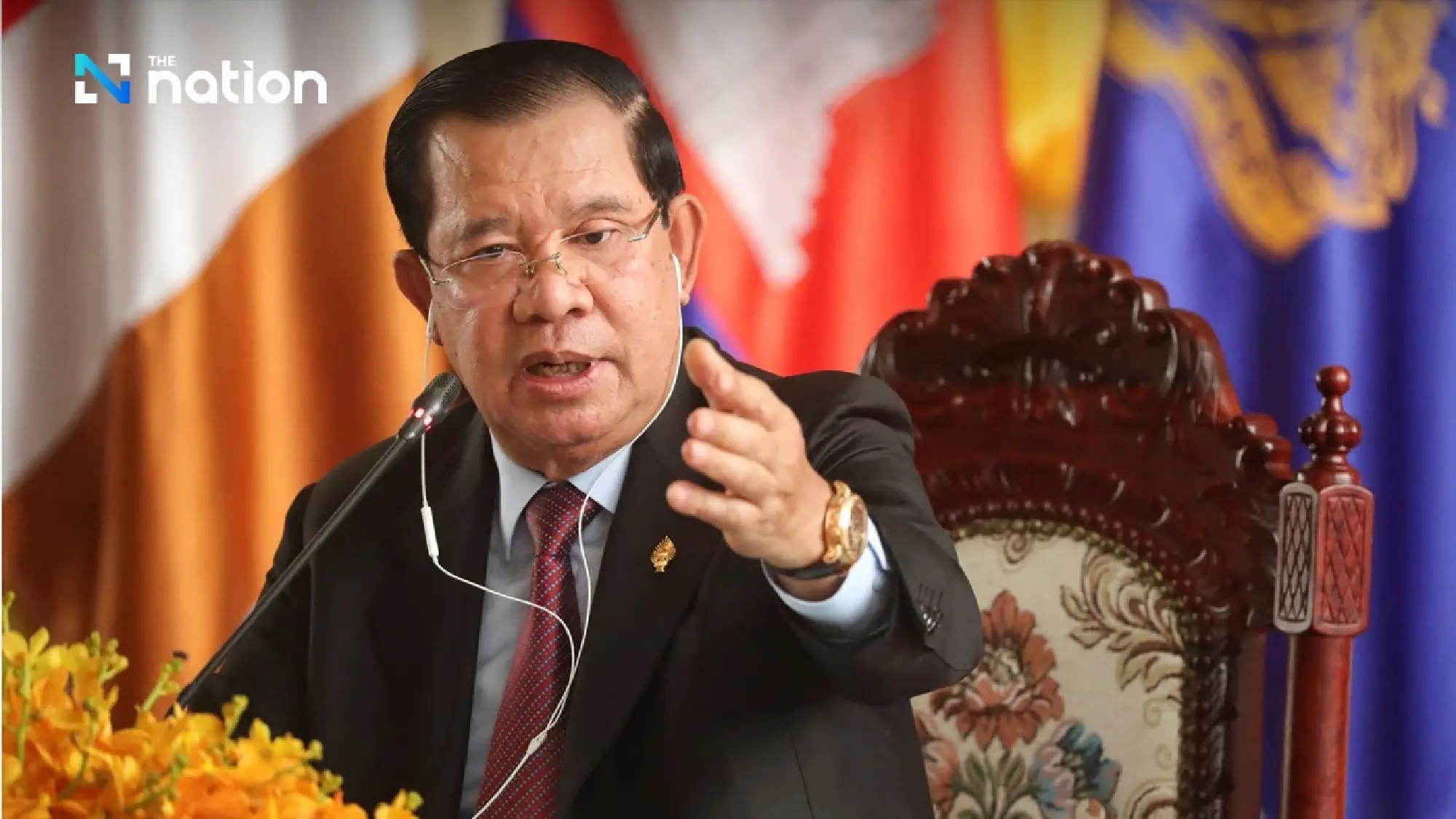
Thailand has pushed back against remarks by Cambodia’s Senate president Hun Sen over cross-border online scam gangs, saying Cambodia must acknowledge information pointing to scam-centre bases inside the country rather than shifting responsibility to Thailand as a transit route.
Pol Lt Gen Trairong Phiwphan, spokesman for the Royal Thai Police, said the fight against transnational crime should focus on the locations of scam operations, not only on the routes used by suspects to enter a country.
His comments came after Hun Sen said Cambodia was a victim of transnational online scam networks and called for investigations into how foreign suspects entered Cambodia, arguing that the country has no direct long-haul flights from some of the countries involved.
Thai police say scam bases are the key issue
Pol Lt Gen Trairong said international information had pointed in the same direction: large scam centres are based along border areas and in several locations inside Cambodia.
“Cambodia must accept the facts from international information that the main operating bases are there,” he said.
“If Cambodia acknowledges the problem and works seriously to inspect and crack down on these networks, the problem will quickly decline. Thailand, as a neighbouring country that has been heavily affected by online scams, would also benefit.”
He acknowledged that the Thai-Cambodian border is long and geographically complex, making it difficult in practice to completely seal off every crossing point.
However, he said Thailand had been working proactively through the Anti-Online Fraud Centre under the supervision of Pol Lt Gen Jirabhop Bhuridej, assistant commissioner-general of the Royal Thai Police.
The centre has used technology and intelligence to trace suspected scam operations and identify their coordinates, which Thailand is ready to share with Cambodia for enforcement action.
Thailand warns criminals not to use country as transit route
The police spokesman also warned transnational criminal groups and people wanted under international warrants not to use Thailand as a transit route or hiding place.
He said Thailand has intelligence systems and screening measures in place from the moment foreign nationals enter the country.
Even if some suspects are not yet listed in official databases and enter as ordinary tourists, officers will investigate and take legal action if they detect suspicious behaviour.
Pol Lt Gen Trairong said Thailand remains a safe destination for tourists and business travellers who enter the country legally.
The exchange followed remarks by Hun Sen on May 24 during a meeting with Cambodian ministries and agencies, in which he said Cambodia had also suffered serious damage from online scam networks.
He questioned how such groups entered Cambodia if they did not arrive through Phnom Penh International Airport, Techo International Airport, Siem Reap International Airport or Sihanoukville International Airport.
According to reports, Hun Sen said some countries had tried to blame Cambodia even though suspects had entered Cambodia through their own territories.
Scam centres remain a regional problem
Online scam centres have become a major regional crime issue, with border areas in Southeast Asia emerging as hubs for phone and online fraud.
Such networks have operated along the Thai borders with Myanmar and Cambodia, often involving trafficked workers forced to take part in scam operations.
An investigation into an abandoned compound in O’Smach, Cambodia found materials linked to industrial-scale fraud, including scam scripts and rooms staged to resemble official institutions.
The site offered one of the clearest views yet into how such operations target victims across countries.
The latest exchange underscores how online scam networks have become not only a law-enforcement challenge, but also a sensitive regional issue requiring cooperation between neighbouring countries.