
Thailand seeks fresh US Trade Representative talks to secure deeper tariff cuts
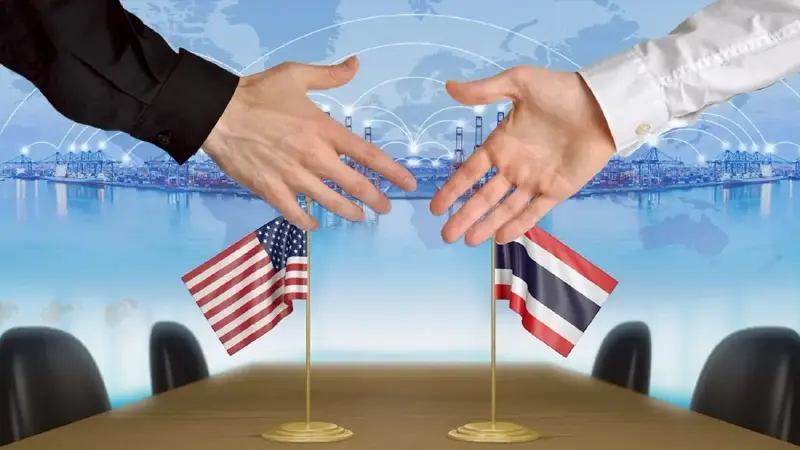


PM Anutin Charnvirakul used the ASEAN and APEC summits to personally urge US President Donald Trump to lower tariffs and improve trade terms for Thailand, while Deputy Prime Minister Ekniti Nitithanprapas expressed confidence in the positive direction of talks following the rare-earth MOU.
- Thailand's Prime Minister has directly appealed to the US President to reduce the 19% reciprocal tariff on Thai goods, prompting continued discussions with the US Trade Representative.
- While the US maintains a base 19% tariff, Thailand is negotiating to expand the list of specific products eligible for a reduced 0% tariff rate.
- As part of the negotiations, Thailand has agreed to eliminate its import tariffs on approximately 99% of US goods and make significant concessions on non-tariff barriers, such as recognizing US standards and liberalizing digital trade.
Negotiations between Thailand and the United States over reciprocal tariffs have shown steady progress since Washington imposed a 19% reciprocal tariff on Thai imports on August 1. The framework allows for further talks before a final agreement is signed in 2025.
Prime Minister Anutin Charnvirakul has raised the issue with US President Donald Trump twice, during the ASEAN Summit in Malaysia and the APEC Economic Leaders’ Meeting in South Korea. He urged the US to reduce the tariff rate below 19% and to offer improved trade terms. According to Anutin, President Trump agreed to instruct the US Trade Representative to continue discussions, signalling a positive direction for Thailand.
Ekniti confirms positive outlook
Deputy Prime Minister and Finance Minister Ekniti Nitithanprapas, who heads Thailand’s negotiating team, said the talks with the US have continued to produce encouraging signals. He noted that the recently announced Framework for an Agreement on Reciprocal Trade is broadly favourable for Thailand, as most ASEAN countries are facing similar tariff levels, meaning Thailand is not at a disadvantage compared to its regional peers.
He added that Thailand’s memorandum of understanding (MOU) with the US on cooperation in rare-earth minerals also strengthens bilateral ties. The agreement enhances Thailand’s leverage to negotiate further product categories eligible for zero-tariff export status to the US.
Next phase of talks
Ekniti said Thai officials are arranging further discussions with the US Trade Representative to finalise details, including regional value content (RVC) requirements and customs tariff rates Thailand will exempt for US goods under the deal. Although the framework has been announced, both sides can continue negotiations to refine the specifics.
“The Thai government is now scheduling meetings with the US Trade Representative to advance the negotiations,” Ekniti said. “Both countries aim to conclude the reciprocal trade agreement within this year, preparing for signature and domestic procedures before it comes into effect.”
Thailand and US unveil framework for reciprocal trade agreement
Following the ASEAN Summit in Kuala Lumpur last week, the White House published the Joint Statement on a Framework for a United States–Thailand Agreement on Reciprocal Trade, outlining a new bilateral trade framework designed to deepen economic ties and expand market access for exporters from both countries to unprecedented levels.
The statement said the framework builds upon the long-standing economic partnership between the two nations, including the 1966 Treaty of Amity and Economic Relations and the 2002 Trade and Investment Framework Agreement (TIFA).
Thailand to remove import tariffs on 99% of US goods
Under the framework, Thailand has agreed to eliminate import tariffs on around 99% of all US goods, covering industrial, food, and agricultural products.
Meanwhile, the United States will maintain its reciprocal tariff rate of 19% on Thai-origin goods, as stipulated under Executive Order 14257 issued on April 2, 2025 (and its subsequent amendments). However, certain products listed in Appendix III of Executive Order 14346 (dated September 5, 2025) will enjoy a reduced reciprocal tariff rate of 0%.
Cooperation on non-tariff barriers
Both countries have also pledged to address non-tariff barriers to trade. Thailand has committed to recognising US safety and emissions standards for motor vehicles, accepting certification from the US Food and Drug Administration (FDA) for medical devices and pharmaceuticals, and granting import licences for US-produced ethanol for use as fuel.
In addition, Thailand will revise its Customs Act by abolishing the reward system for customs officers involved in the detection of regulatory violations, while promoting good governance and high regulatory standards across the trade system.
Thailand to adopt US agricultural standards and expand bilateral trade
Thailand will ease trade barriers on US agricultural and food products by accelerating the approval of livestock and meat imports certified by the US Food Safety and Inspection Service (FSIS). The country will revise technical regulations to align with scientific principles and risk assessments while recognising certifications issued by agreed US regulatory agencies.
Labour, environmental, and governance commitments
Both countries have agreed to work together to uphold international labour rights, including amending Thai laws to guarantee workers’ freedom of association and collective bargaining, and to strengthen labour law enforcement, particularly in sectors vulnerable to child and forced labour. Thailand also pledged to maintain high environmental standards and ensure strict enforcement of related laws, such as cracking down on illegal timber trade, promoting efficient resource use, and implementing the WTO Agreement on Fisheries Subsidies. The country will also intensify efforts to combat illegal, unreported, and unregulated (IUU) fishing and wildlife trafficking.
IP protection and digital trade liberalisation
The two countries will jointly address long-standing intellectual property issues, including geographical indications (GI). Thailand will step up enforcement against trademark and copyright infringement, unlicensed royalty collection agencies, and the circumvention of technological protection measures, while expediting the backlog of patent applications.
In digital trade, Thailand will lift restrictions on US participation by refraining from imposing discriminatory digital service taxes, allowing cross-border data transfers for business purposes, and supporting the continuation of customs duty exemptions for electronic transmissions under the WTO framework.
Thailand also agreed to ease foreign ownership limits in the telecommunications sector, eliminate mandatory domestic data-processing requirements for debit card transactions, and scrap the screen quota system for films.
State enterprise reforms and strategic cooperation
Both nations will cooperate to curb market-distorting behaviour by state-owned enterprises (SOEs) and strengthen collaboration on economic and national security matters. This includes building resilient and innovative supply chains, enhancing cooperation on export controls, investment screening, and anti-tax evasion measures.
Thailand to import US goods worth US$18.8 billion
The two sides also noted a series of commercial deals between US and Thai companies across multiple sectors. These include agricultural imports such as feed corn, soybean meal, and dried distillers’ grains with solubles (DDGS) worth around US$2.6 billion per year; energy imports including liquefied natural gas (LNG), crude oil, and ethane worth approximately US$5.4 billion per year; and the purchase of 80 aircraft, bringing the total value of imports to about US$18.8 billion.
In the coming weeks, Thailand and the United States will accelerate negotiations to finalise the Agreement on Reciprocal Trade, paving the way for official signing and domestic legal procedures before the agreement enters into force.
