
Suchart confirms government will not raise arsenic standard to 0.05 mg/L


Deputy Prime Minister Suchart Chomklin confirmed that the government will not raise the arsenic standard from 0.01 mg/L to 0.05 mg/L. The government is also committed to introducing stricter environmental standards to protect the public.
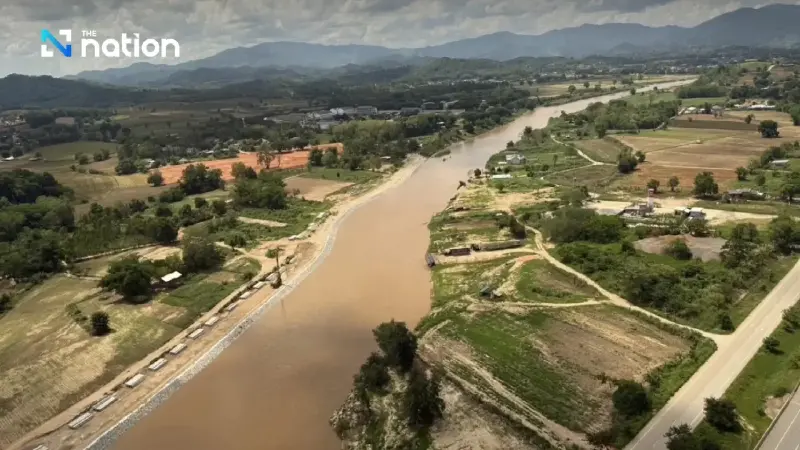
Suchart Chomklin, Deputy Prime Minister and Minister of Natural Resources and Environment, revealed that the water quality in the Mae Kok River, its tributaries, the Sai River, the Mekong River, and the Salween River has shown the presence of heavy metals, with some areas exceeding the standard limit for arsenic in surface water. Thailand’s standard for arsenic is set at a maximum of 0.01 milligrams per litre (mg/L), which aligns with drinking water standards. It has been reported that the government is attempting to address this issue by proposing a raise in the arsenic limit from 0.01 mg/L to 0.05 mg/L, in line with the standards used by countries such as China, Malaysia, Vietnam, and several others, including Myanmar, which is the source of the contaminated water.

Suchart clarified that, as Deputy Prime Minister and Minister of Natural Resources and Environment, and as President of the National Environmental Committee, he reaffirmed that the government has no plans to raise the arsenic standard for surface water from 0.01 mg/L to 0.05 mg/L as reported. He further added that the government is open to listening to feedback from the public and all stakeholders to collaboratively find solutions to the problem, ensuring that people have confidence in the environment and safety for both living and working, with the aim of restoring the economy and tourism to pre-crisis levels.


The establishment of environmental quality standards is critical for controlling pollution and protecting ecosystems, ensuring their sustainability. Setting these standards aims to reduce the adverse effects of pollution on wildlife and human health. The main goal is to conserve and restore natural resources while promoting balanced economic and social development.
Suchart reiterated that the government understands these issues and will support the implementation of stronger environmental standards to protect both the environment and the quality of life of citizens.
