
Finance Ministry to roll out three-phase flood relief plan for affected regions in Thailand
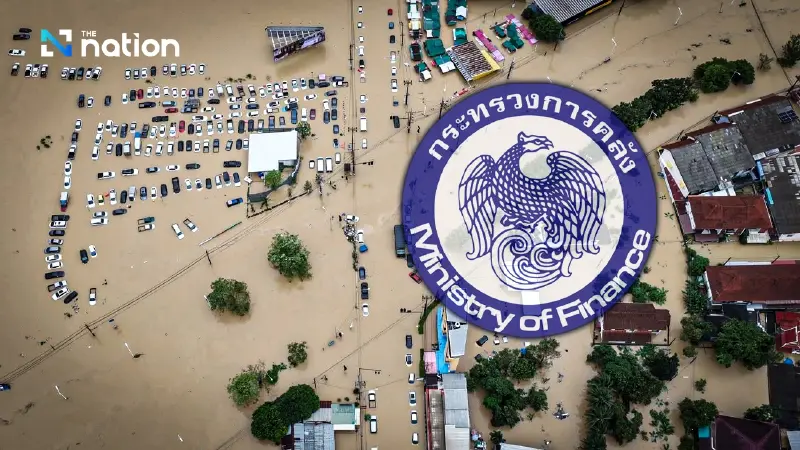


The Finance Ministry plans a three-phase flood relief plan, including immediate aid, post-flood recovery loans, and long-term economic support for affected businesses.
The Ministry of Finance is working on a comprehensive three-phase flood relief plan aimed at providing immediate assistance, supporting business recovery, and ensuring long-term economic stability for those affected by the floods in Songkhla and other provinces.
According to a source, the plan’s details are as follow:
Phase 1: Immediate emergency measures
In the short term, the Ministry will coordinate with financial institutions, public and private agencies, and charities to provide urgent relief, including donations of essential goods and setting up emergency shelters. Efforts will also focus on assisting government officials directly impacted by the floods, as they play a critical role in the recovery process. Once the immediate crisis begins to ease, the Ministry is prepared to move to the next phase of the recovery process.
Phase 2: Post-flood recovery and business support
As the situation transitions from an emergency to a recovery phase, the government will offer loans for recovery, with a focus on repairing damaged homes and vehicles. This assistance will be offered through low-interest loans and tax incentives, allowing affected individuals and businesses to claim repair costs as tax deductions. The Ministry will also focus on supporting local businesses, particularly SMEs, in flood-affected areas to help them continue operations. The Ministry will coordinate with the Ministries of Commerce and Labour to ensure a cohesive response.
Phase 3: Long-term economic support
For the long-term recovery of flood-affected areas, the government will rely on existing fiscal mechanisms and budget reallocations from specialised financial institutions (SFIs). Should additional funds be needed, the government will consider using extra-budgetary measures or semi-fiscal interventions. In the months following the crisis, the Ministry of Finance will assess the economic impact and continue to support businesses, ensuring a sustainable recovery.
Additionally, the Ministry is tracking macroeconomic impacts, including the flood’s effects on GDP projections. The Ministry will work to gather accurate damage assessments once the flooding subsides, as the economic fallout may extend beyond the flooded areas to impact government operations, such as the Revenue Department, which has faced disruptions in its ability to carry out regular duties.
