
Transport maps out 160-billion-baht buyback of four rail lines under 30-year O&M model
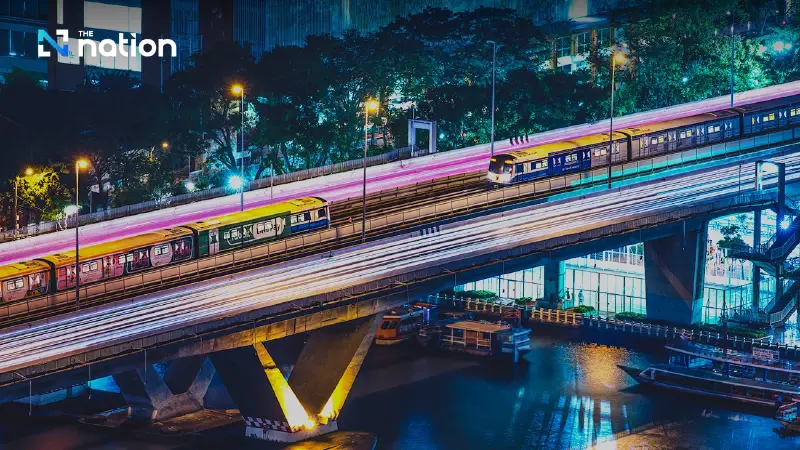


Transport Ministry plans a 160-billion-baht buyback of four PPP rail lines to create single ownership under MRTA, cap fares and enable a seamless common ticket
The government is preparing a 160-billion-baht plan to buy back concessions on four major electric train lines in Bangkok in a first phase of rail reform, with the aim of making the Mass Rapid Transit Authority of Thailand (MRTA) the single owner of the network and switching to 30-year “Operations and Maintenance” (O&M) contracts with private firms.
The policy underpins the cabinet’s flagship 40-baht-a-day fare pledge and is designed to lower ticket prices and finally deliver a fully integrated common ticket without entry charges between lines.
Phase 1: buyback of four PPP Net Cost lines
According to Transport Ministry sources, the ministry will ask the cabinet on December 16, 2025 to approve, in principle, the buyback of four PPP Net Cost concessions in Phase 1. Under the current model, private operators invest, run the system and collect all fare revenue. The lines are:
1. Green Line (BTS)
- Sukhumvit Line (light green): Mo Chit–On Nut
- Silom Line (dark green): National Stadium–Saphan Taksin
Bangkok Metropolitan Administration (BMA) holds the concession with BTSC, covering the core sections Mo Chit–On Nut and National Stadium–Saphan Taksin, which expire in 2029.
Separate O&M contracts for running and maintaining the core and both extensions – Taksin–Bang Wa, On Nut–Bearing, Mo Chit–Khu Khot and Bearing–Samut Prakan – run until 2042.
2. Blue Line (MRT)
- Hua Lamphong–Bang Sue and the extension Hua Lamphong–Lak Song.
MRTA’s concession with BEM covers train operations, fare collection and commercial development, expiring in 2049, with revenue-sharing obligations to MRTA set out in the contract.
3. Pink Line (Khae Rai–Min Buri)
Concession with Northern Bangkok Monorail Co Ltd (NBM) under a PPP Net Cost model. The private partner finances civil works, systems, rolling stock and O&M for 30 years from opening, with the state providing a civil-works subsidy. The concession ends in 2053.
4. Yellow Line (Lat Phrao–Samrong)
Concession with Eastern Bangkok Monorail Co Ltd (EBM), also PPP Net Cost, mirroring the Pink Line in structure. The 30-year term from opening also ends in 2053.
MRTA to become single owner, state takes revenue risk
Deputy Prime Minister and Transport Minister Phiphat Ratchakitprakarn said the initial cabinet submission was postponed to allow time to refine technical issues and incorporate additional recommendations.
He stressed that the core objective is to reduce people’s cost of living while designing a financing model that does not worsen public debt.
If the cabinet endorses the single-ownership concept, MRTA will restructure all projects into PPP Gross Cost:
- The state will own all infrastructure and bear the revenue risk,
- while private firms are hired to operate and maintain the lines for a fixed fee.
“Single ownership will address high fares and ticketing fragmentation. Once MRTA owns the full network, it can manage fares as one system, move to a true common ticket and waive entry charges between lines,” Phiphat said.
This requires shifting from traditional concessions to a model where the state owns the assets and contracts the private sector purely as an operator. That would give the government full freedom to set fare policy and integrate ticketing.
Negotiating the buyback and funding options
To bring existing PPP Net Cost projects back under MRTA, the state must negotiate buyback terms with current concessionaires. The Transport Ministry will work with the Finance Ministry to determine the most appropriate model and valuation.
Early talks with concession holders indicate no objection in principle to the single-ownership idea, but detailed negotiations will be needed to avoid harming ongoing operations or operator rights. In practice, firms that currently hold operating rights are likely to be offered O&M contracts under the new system.
Phiphat said the buyback can only proceed once the cabinet approves the principle. The Transport Ministry has studied two initial financing routes:
- Infrastructure fund – creating a fund similar to the Thailand Future Fund (TFFIF) to raise capital for the buyback.
- New long-term concessions – offering 30-year O&M contracts and allowing private operators to use those contracts as collateral with lenders. The state would not need to borrow or provide guarantees, but would pay the buyback value in instalments over the term, alongside O&M fees, keeping headline public debt unaffected.
160 billion baht estimate for four lines
A Transport Ministry source said the initial estimate for buying back the four PPP Net Cost projects is around 160 billion baht, reflecting the fact that some lines have only recently opened and still have many years left on their concessions.
However, the ministry argues that with smart structuring and staged payments, the scheme need not worsen public debt, as deals could be framed as new contracts rather than upfront cash purchases, with private partners continuing to earn from O&M fees.
Talks with BTS and BEM already under way
The ministry and MRTA have already been in contact with the two main concession groups:
- BTS Group – Green, Yellow and Pink Lines
- BEM – Blue Line
Both have signalled they accept the single-ownership policy in principle, provided negotiations protect ongoing operations and commercial rights. As a result, they may retain roles as operators under new O&M contracts even after revenue rights are transferred back to MRTA.
New 30-year O&M model
Officials say the new contract model under study would likely be 30 years in length. In the early years, when the consolidated system may still be loss-making, the state could negotiate grace periods for buyback payments and O&M fees, gradually paying down obligations over 20–30 years.
By the end of that period, all current concessions would expire, and the state could tender a new round of operating contracts. At that point, Thailand might even choose to have a single nationwide rail operator, running all MRTA-owned lines under one integrated service platform.
