
Industry ministry to tighten controls on 156 Bangkok plants
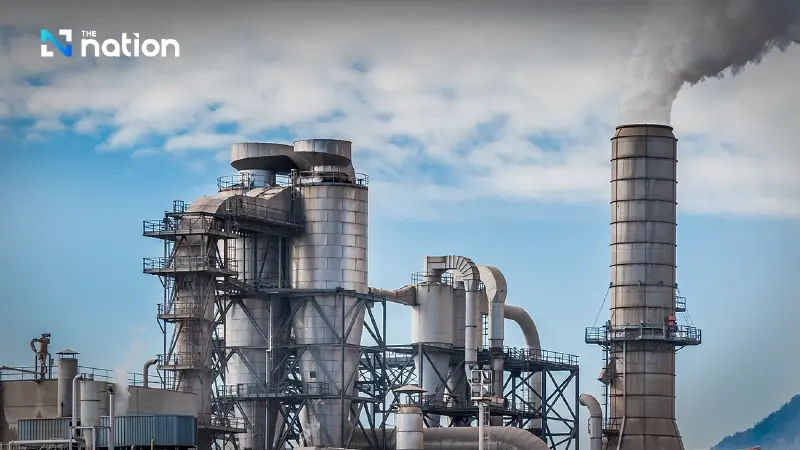


Industry Ministry and Bangkok will tighten controls on 156 factories from July 1, 2026, using real-time CEMS monitoring and stricter emissions standards to cut PM2.5
The Industry Ministry and Bangkok Metropolitan Administration will tighten pollution controls on 156 factories in Bangkok from Wednesday, July 1, 2026, as part of efforts to tackle PM2.5 more systematically by using technology and stricter local standards.
Nattapol Rangsitpol, permanent secretary for industry, said the ministry is working with Bangkok to upgrade air-pollution management through three proactive measures.
1) Upgrading factory regulation and emissions monitoring
Nattapol said the ministry is moving away from the approach of applying the same emissions standards in every area, arguing this no longer fits Bangkok’s urban context and the growth of residential communities.
Under the new rules, emissions standards for factories in Bangkok will be stricter than the general national standard. Factories must control air pollution from boiler combustion so that dust emissions do not exceed 60 milligrams per cubic metre for gas fuel, and 90 milligrams per cubic metre for solid and liquid fuels — which he said is a significant tightening (more than 62% stricter).
The ministry will also upgrade real-time oversight of factory air emissions through the Continuous Emission Monitoring System (CEMS). The requirement will take effect on July 1, 2026, expanding coverage from just eight facilities previously required to install such systems (such as refineries and power plants) to more than 156 large factories.
He said the public will be able to access and track each covered factory’s emissions at all times. If readings exceed the standard, factories will be required to take prompt corrective action.

2) Raising vehicle emissions standards
Nattapol said the government has already enforced Euro 6 exhaust-emissions standards for small petrol vehicles since January 1, 2025, and for large petrol vehicles since January 1, 2026.
He said the ministry is also supporting electric vehicles through the EV3.5 scheme and excise tax reductions, focusing on expanding EV use.
3) Controlling sugarcane burning
Nattapol said measures to reduce sugarcane burning are aimed at achieving “burn-free” Thai cane. For the 2025/2026 crushing season, farmers have been offered support, including subsidies for cutting fresh cane and purchasing cane leaves.
The goal is to keep burned cane nationwide below 10%, and mills were instructed to stop accepting cane during the New Year period from December 27, 2025 to January 4, 2026, to reduce truck volumes and lower accident risks.
To make controls on cane and other crop burning more concrete in the coming year, he said the ministry is stepping up cooperation with the Interior Ministry, the Ministry of Higher Education, Science, Research and Innovation, and the Digital Economy and Society Ministry. The focus will be on reducing burning both before and after harvesting, while cutting PM2.5 impacts through knowledge-sharing, technology expertise and stronger operational networks.
Bangkok Governor Chadchart Sittipunt said air-quality monitoring shows the number of days PM2.5 exceeded the standard fell 40%, while average PM2.5 concentration declined 12% from the same period last year.
He said the improvements reflect stronger source controls and Bangkok’s overall dust-management efforts. One key factor, he added, was cooperation with provinces in the central and eastern regions to curb agricultural burning, which helped cut hotspots in those areas by 28%. Bangkok also tightened enforcement against black-smoke vehicles by lowering the limit from 30% to 20%.
