
New rules tighten feed corn, wheat imports; burn-free proof required
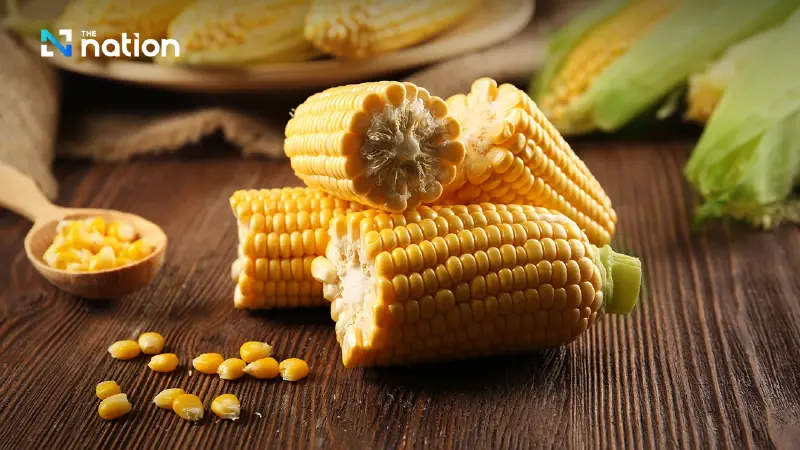


Four new Commerce Ministry rules effective Jan 1, 2026 require burn-free certification and origin data for feed corn and wheat imports to curb cross-border pollution.
Deputy government spokesperson Airin Phanrit said on Tuesday that the Department of Foreign Trade under the Commerce Ministry has issued four regulations governing imports of feed corn and wheat for animal feed in 2026, effective from January 1, 2026.
She said the measures are intended to regulate feed-ingredient imports more systematically, protect public health and raise Thai product standards in line with government policy. The four regulations align with resolutions of the Feed Corn Policy and Management Committee and have been approved by the Cabinet.
Feed corn must come from “no-burn” production
Regulation 1: A Commerce Ministry announcement requires imported feed corn used for animal feed to come from production areas or farming practices that do not use burning during cultivation. The aim is to reduce cross-border haze and PM2.5 pollution, support environmentally friendly agriculture, and upgrade agricultural supply-chain standards in line with global trade trends.
Importers must prepare production-source information and supporting evidence to prove compliance with the no-burn requirement, and must retain the relevant data and documents for five years for traceability checks.
AFTA/ATIGA imports: duty-free, but limited import window for general importers
Regulation 2: A Commerce Ministry announcement on importing feed corn under AFTA/ATIGA for 2026 allows unlimited imports of feed corn originating from and shipped directly from ASEAN member states at a 0% tariff.
However, for general importers, the permitted import period is shortened to five months, from February 1 to June 30, 2026, to avoid affecting Thai farmers during the main domestic harvest season.
WTO agricultural commitments: import quota expanded to 1 million tonnes
Regulation 3: A Commerce Ministry announcement on issuing certificates for preferential tariff payment under Thailand’s WTO agriculture commitments for feed corn in 2026 expands the import volume from the previous arrangement—where the Public Warehouse Organisation (PWO) imported 54,700 tonnes per year—to allow both the PWO and general importers to import a combined total of 1 million tonnes per year.
Wheat permits follow last year’s approach
Regulation 4: A Commerce Ministry regulation on applying for and granting permits to import wheat in 2026 follows the same approach as last year, to ensure the animal-feed industry has sufficient and continuous raw materials. It does not introduce new policy-significant conditions comparable to the new no-burn requirements for feed corn.
Government urges importers to prioritise compliance
Airin said importers should prioritise compliance with the no-burn feed corn rules, as they are new and involve additional documentation and verification requirements—especially stricter sourcing systems and more rigorous origin checks. She noted that the other measures largely follow frameworks businesses are already familiar with.
