
DRT unveils zonal fare model for Bangkok rail network, final proposal due by end-2026
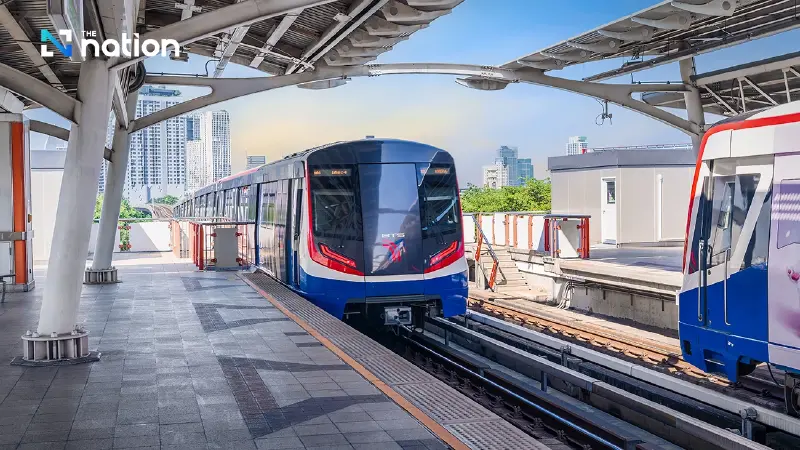


The Department of Rail Transport is studying a zonal fare model for Bangkok’s rail network to cut high travel costs, with a final proposal expected by the end of 2026.
Pichet Kunadhamraks, director-general of the Department of Rail Transport (DRT), said after chairing the first focus group meeting on the study into zonal fares for rail mass transit, linked to congestion charging in high-traffic areas, that the agency is accelerating work on a new fare structure for Bangkok and its surrounding provinces.
He said the Ministry of Transport had previously floated the idea of buying back electric rail concessions so that the state could take charge of revenue management and set fares itself. This, he said, would allow the policy to be applied across all rail lines in Bangkok and the metropolitan area without creating an excessive public debt burden or requiring overly high state subsidies.
The DRT is now studying several new fare models, including distance-based fares, flat fares and zonal fares. These will be considered alongside the proposed congestion charge to ensure the system covers all eight rail routes in Bangkok and its surrounding areas.
As part of the new fare structure study, zoning is being designed to better reflect actual travel distance and costs. At present, two main models are under review:
- Area-based zones, divided by location or station
- Time-based zones, where fares are calculated according to journey duration, such as one rate for trips completed within 60 minutes and another rate for longer journeys
“We believe a time-based fare system is the fairest and easiest for the public to understand. People would be less likely to dispute the issue of distance,” Pichet said.
However, data collected by the department show that the average rail journey in Bangkok is around eight stations, or 11.25 kilometres, taking only about 20 to 25 minutes.
He said that if the base time were set at one hour, most commuters would not be affected and would still be able to pay lower fares under the government’s policy.
Pichet added that the DRT has also been working with the Office of Transport and Traffic Policy and Planning (OTP), which is studying congestion charging for vehicles entering traffic-congested zones. The aim is to align the zoning data and create a common standard so that the public are not confused by having separate zone systems for cars and rail services.
At the same time, preliminary calculations suggest that if a flat fare of 20 baht for all lines were introduced, the state might have to provide as much as 8 billion baht in subsidies per year. By contrast, a flat daily fare of 40 baht would help reduce the subsidy burden on the government.
He said that if an appropriate zoning system were introduced in future, after all rail concessions had been bought back, it would help long-distance commuters who currently pay as much as 130 to 200 baht a day for return journeys.
Under the new model, this could fall to around 50 to 80 baht a day, which he said would be a more acceptable level for the public while easing the burden on the state.
“The process of buying back rail concessions is a sensitive matter involving legal issues and the establishment of various committees for consideration, as these are projects tied to multi-year budget commitments,” Pichet said.
He said that following the latest public hearing, the department would analyse the feedback received and prepare policy recommendations aimed at setting rail fares that are appropriate, fair and supportive of sustainable public transport use.
Pichet added that, under the department’s plan, the study on zoning and fare models is expected to be finalised and submitted to the Ministry of Transport by the end of this year, in preparation for drafting regulations and operational guidelines under the government’s policy.
As for the urgent measure introducing a 40-baht flat daily fare for connecting journeys between the Red Line suburban rail service and the Purple Line, which came into effect on December 1, 2025 and is due to end sometime in 2026, he said there could be a proposal to extend it while the government waits for progress on buying back rail concessions.
He added that there is still no clarity on the establishment of a committee to negotiate concession contracts.
