
Govt invokes emergency decree, orders 2-baht refinery cut
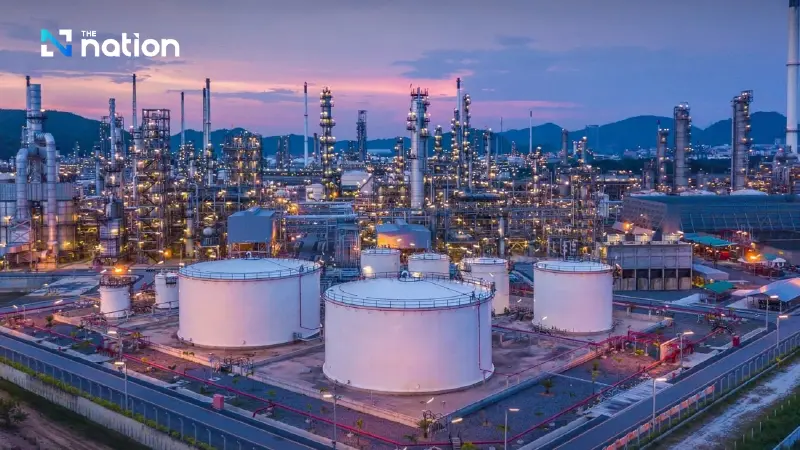


NEPC adopts a Singapore Minus ex-refinery pricing formula, applying a discount to Singapore benchmark prices before domestic fuel sales
Thailand’s government has ordered domestic refiners to cut diesel refinery prices by 2 baht per litre, marking a major intervention in the country’s fuel pricing system as the Oil Fuel Fund sinks deeper into deficit under the pressure of rising global oil prices.
The move was approved by the National Energy Policy Council, or NEPC, under powers granted by the Emergency Decree on the Correction and Prevention of Oil Shortage B.E. 2516 (1973). The government said all refineries operating in Thailand would be required to comply, warning that violations could trigger legal penalties, including imprisonment.
The decision comes as the war in the Middle East continues to push up global oil prices and lift domestic retail fuel costs, with diesel climbing above 50 baht a litre. The Oil Fuel Fund, which had remained in positive territory at 2.459 billion baht on March 1, 2026, had fallen to a deficit of 53.226 billion baht by April 5. Officials said the worsening position had made it necessary to bring refiners into the burden-sharing effort rather than relying further on fund subsidies.
Energy Minister Akanat Promphan said the urgent measure followed Prime Minister Anutin Charnvirakul’s policy to carry out what he described as a historic restructuring of oil prices, with the aim of managing refinery profits and easing the cost of living for the public. He said the message to all six refiners was clear: they must help shoulder the global energy crisis.

At the centre of the change is a new refinery pricing formula. Thailand will no longer use a system that fully references Singapore market prices under the import parity model. Instead, it will adopt a “Singapore Minus” approach, under which a discount is deducted from the Singapore benchmark before fuel is sold into the domestic system. Officials argued that in a time of crisis, Thailand could no longer justify pricing based 100% on the Singapore market and needed a special mechanism to align refinery gate prices more closely with actual costs.

Akanat said the government’s study found that gross refinery margins had risen abnormally in March and April, averaging about 7 baht per litre, while the additional cost burden from imports and insurance had risen by only about 3 baht per litre. That left scope, he said, for refiners to absorb part of the difference. On April 7, the refinery margin stood at 17.49 baht per litre, up sharply from 2.28 baht per litre on March 2, near the start of the conflict.
Under the NEPC resolution, ex-refinery diesel prices for B7 and B20 will be reduced immediately by 2 baht per litre. The government expects that, once passed through to retail prices, this could lower pump prices by as much as 2.14 baht per litre because of the knock-on effect of lower value-added tax. The measure is due to take effect as soon as it is published in the Royal Gazette on April 8, with the Oil Fuel Fund committee set to consider the retail pass-through on the same day. Officials said that could pave the way for lower diesel prices at service stations from April 9.
The government said the measure would initially use March data as its base and that refinery margins would be reviewed every one to two weeks. If the situation does not improve, the discount could be widened from 2 baht to between 3 and 5 baht per litre, with further reviews possible every three weeks.
Officials insisted the policy was not designed to force refiners into losses, but to trim what they see as excess profits during an exceptional period. Akanat said refiners were still profitable and that the 2-baht cut represented a reduction in excess gains rather than a push into the red. He said the aim was to relieve the Oil Fuel Fund, which is currently paying more than 1 billion baht a day to subsidise diesel. The ministry also made clear it no longer wanted to rely on future consumers’ money to hold prices down today, arguing that continued support through the fund would only become a longer-term debt burden for the public.
The government also stressed that this was not a repeat of the 2022 approach, when the state sought voluntary donations from the private sector into the Oil Fuel Fund. This time, it said, the mechanism would be legal, transparent and applied equally to all refiners. At the same time, the Energy Ministry said it remained open to discussions with operators facing liquidity problems in crude procurement.
Thailand currently has six oil refineries. They are Thai Oil Plc, with capacity of 275,000 barrels per day; PTT Global Chemical Plc, or GC, with 280,000 barrels; IRPC Plc with 215,000 barrels; Bangchak Corporation Plc with 120,000 barrels; Bangchak Sriracha Plc with 174,000 barrels; and Star Petroleum Refining Plc, or SPRC, with 175,000 barrels per day, with Chevron South Asia Holdings as its major shareholder. Together, they form the backbone of Thailand’s domestic refining system.
Akanat said only some of the six refiners attended the April 7 meeting convened by the NEPC and the Energy Ministry. He also said the ministry was checking crude supply daily to ensure there would be no shortage. Thailand had already secured confirmed crude deliveries of 30 million barrels for April, enough to meet domestic demand, while preliminary purchases for May stood at 18 to 20 million barrels. He said Thailand remained in a relatively strong position because its refining capacity exceeded domestic consumption of finished fuels.
The minister added that oil trade had become more complicated because of changing trade measures and sanctions, including those affecting Russian and Iranian crude, which in turn had disrupted tanker movements. The ministry was therefore working with the Foreign Ministry to use diplomatic channels to facilitate crude imports. He also said there would be enough fuel during Songkran, while warning traders against hoarding or profiteering during the transition to the new pricing mechanism, which could make refinery gate prices more volatile and in some cases move against Singapore market trends.
Alongside the refinery pricing intervention, the government is also trying to reduce crude import dependence by promoting domestically produced biofuels. It plans to expand B20 dispensing points for trucks along major roads at 100-kilometre intervals by April 20, 2026, in a move intended to reduce crude imports and spread income to oil palm, sugarcane and cassava farmers.
Not everyone in the industry is convinced. A refinery source told Krungthep Turakij that if the state moved to capture refinery profits when oil prices were rising, it should also explain whether it would compensate operators when prices later fell sharply and refiners were pushed into losses.
The source said refinery profitability must be assessed across the full year, noting that sudden price declines late in the year and weak economic conditions could drag annual profits below normal levels. The source also warned that if refiners were forced into an unsustainable position and reduced or halted production, the damage could be even greater than the current price controversy. In that view, hoarding and smuggling were more important causes of the present crisis than refining margins alone.
The government has also, for now, shut the door on the idea of a windfall tax on refineries. Deputy Prime Minister Pakorn Nilprapunt said the matter had not yet been discussed and was structurally complex because refinery costs are tied to imported crude and global market risks. He argued that what may look like a windfall during price spikes can quickly turn into losses when prices fall, meaning the gains are not risk-free. Pakorn said voluntary cooperation from refiners remained easier in practice, but any solution still had to take proper account of private-sector costs, profits and business risks.
As for a possible emergency decree allowing the Finance Ministry to guarantee up to 150 billion baht in borrowing for the Oil Fuel Fund, Pakorn said that would have to wait until after the prime minister had delivered the government’s policy statement to Parliament before it could be submitted to the Cabinet, because it involved state borrowing and loan guarantees.
