
Energy minister targets sub-THB3 power rate for small users
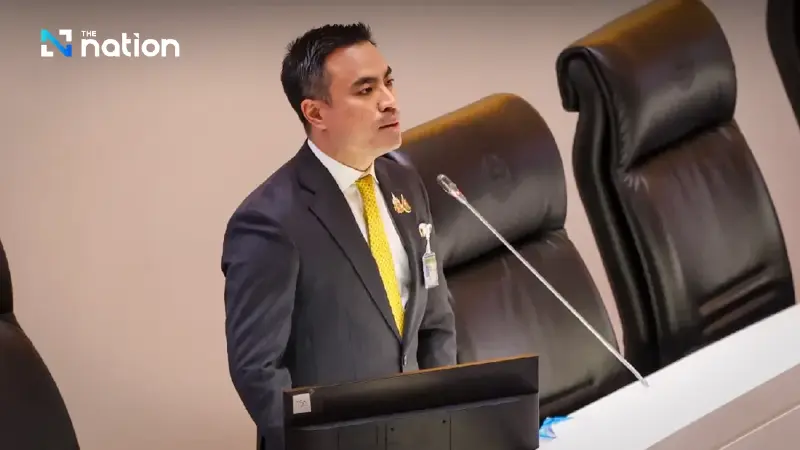


Energy Minister Akanat Promphan pushes electricity and oil price reforms, with households using under 200 units set to pay less than THB3 per unit
Energy Minister Akanat Promphan has pledged to overhaul both electricity and fuel pricing, telling Parliament that households with low electricity use should pay significantly less, while the government also moves to tighten control over oil price subsidies and bring greater transparency to the fuel pricing system.
Speaking during a parliamentary debate on energy management, Akanat said the Energy Regulatory Commission had set the electricity tariff for the May-August 2026 billing cycle at THB3.95 per unit, up from THB3.88 per unit in the January-April 2026 period.
He said reducing the next tariff period back to THB3.88 per unit could be done through a policy decision, by using funds from Thailand’s three state electricity authorities to help cushion the cost first.
At the same time, the Energy Ministry is preparing a broader restructuring of the tariff system. Akanat said the ministry wants the first 200 units of electricity use, or bills of no more than THB300, to be charged under a progressive tiered structure, similar in concept to the way personal income tax is applied.
The proposal will be submitted to the National Energy Policy Council, with the average electricity tariff to remain in the THB3.88 to THB3.95 range. He said the principle behind the plan is straightforward: people who use less electricity should pay less than those who consume far more.
Under the new structure, users consuming fewer than 200 units would pay less than THB3 per unit. Akanat said this could be done without affecting the overall average tariff and insisted the ministry would move ahead with it.
He also said the government would continue promoting renewable power generation, especially solar energy, while pushing ahead with measures such as Direct PPA, which would allow renewable energy producers to sell electricity directly to users, and Net Billing for households that feed excess solar power back into the grid.
Akanat also used the debate to hit back at criticism that he or the government might be too accommodating towards major business interests.
“Let me clarify the accusation that I and the government would be afraid of capital interests. The Prime Minister’s decision to appoint me as Energy Minister is proof that we are not more considerate of any tycoon than we are of the people,” he said.
On oil policy, Akanat said one of his priorities is to rein in the Oil Fuel Fund, which he argued currently has too much power to spend on fuel subsidies without sufficient limits. He said the legal intent was for the fund to maintain liquidity of around THB20 billion, yet it is now about THB50 billion in deficit and in the past had fallen to more than THB100 billion in the red.
He said no fund should be allowed to operate with that level of unchecked authority.
To address the issue, he proposed two main changes. First, the Oil Fuel Fund should have a clear ceiling on how much it can use to slow the pass-through of rising oil prices to domestic retail prices, with that limit set at THB20 billion. Second, the fund should become much more transparent in the way it considers and calculates the rates and mechanisms used to determine retail oil prices and related decisions.
Akanat said using the fund in this way meant using the future money of oil consumers to subsidise prices in the present. At one point, he said, daily losses had reached as high as THB2.5 billion, while current losses still run to hundreds of millions of baht.
He said this was why the government was trying to use the ex-refinery pricing mechanism to help ease the burden instead.
Akanat added that the government had also used its powers under the Emergency Decree on Remedy and Prevention of Shortage of Fuel Oil B.E. 2516 (1973), which authorises the Committee on Energy Policy Administration to take action on oil price problems.
He argued that the oil pricing mechanism is no longer functioning normally, especially because Thailand continues to rely on Singapore benchmarks while the gap between crude oil prices and refined oil prices has widened unusually sharply, pushing refinery margins higher and allowing refiners to make outsized profits.
Thailand has six refineries, he said, enough to supply the domestic market. Yet pricing still works as though the country lacks sufficient refining capacity, by using Singapore refined fuel prices plus a premium to set Thailand’s ex-refinery price.
That system, he said, should be changed.
He also called for a restructuring of marketing margins, saying that on some days they had surged by THB10 to THB20, while on other days they had dropped to negative THB5 to THB10. Although one study suggested a more appropriate level would be around THB2, he said the current volatility had made the system unstable and difficult to manage.
Akanat said it was unfair for the Oil Fuel Fund, which is effectively financed by oil users, to carry the full burden at a time when refinery operators should also help shoulder the pressure instead of reaping excessive profits.
That was why, he said, the Energy Ministry had discussed with refinery operators the use of a discounted Singapore reference price to determine Thailand’s ex-refinery price in April 2026.
If refining margins rise again this month, he said, the government will move to a new discounted refining-margin calculation model so refiners help share the burden with the public. He added that all refineries had cooperated well and said any war-related surcharge added to oil prices would also have to be clearly explained.
As for excise tax, Akanat said the government has full authority to act if needed, but stressed that any cut in excise would be treated as a last resort at a time when the state also has to preserve budget resources to help those affected by rising energy costs.
