
Thai Cabinet approves transport relief to keep fares and prices steady
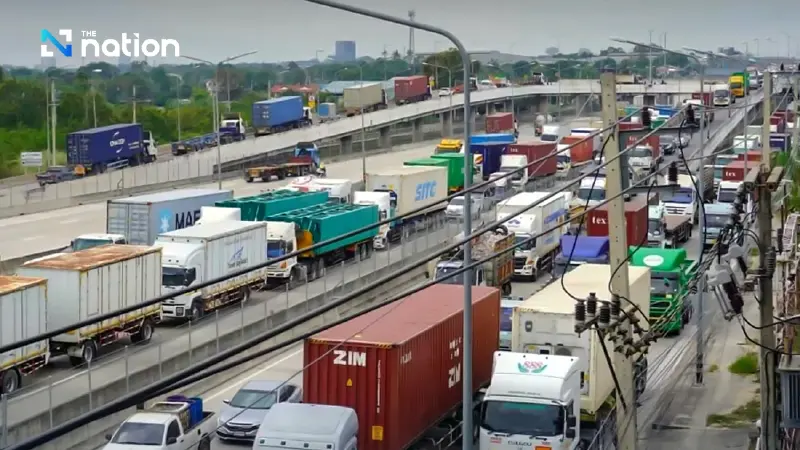


The 42-day support package will aid bus, taxi and freight operators as Bangkok seeks to curb energy-crisis costs and prevent fare and price increases.
- The Thai Cabinet has approved financial relief measures for transport operators to mitigate the impact of the energy crisis.
- The primary goal is to protect the public by keeping public transport fares stable, with subsidies provided for over 180,000 vehicles like buses, vans, and taxis.
- To hold down consumer goods prices, the government will also help cover freight costs for more than 287,000 trucks, preventing operators from passing on higher costs.
- The relief program will run for 42 days, from April 20 to May 31, 2026, with varying subsidy amounts based on vehicle type.

Phiphat Ratchakitprakarn, Minister of Transport, said on April 11, 2026, following the Cabinet meeting that day, that the meeting had resolved to “approve” relief measures for transport operators and public service vehicles.
The measures were strongly pushed forward by him and the Ministry of Transport, through the Department of Land Transport, in order to ease the impact of the energy crisis, which has affected the cost of living of people on a broad scale.
Phiphat said the key objective of the measure was not only to help keep operators going, maintain liquidity and keep their vehicles in service, but also, above all, to protect the public by guaranteeing that people would “not have to pay higher fares”.
The Ministry of Transport has divided the assistance into two main groups to ensure broad coverage and maximum benefit, as follows:

1. Buses and public hire vehicles using oil (travel cost relief measure)
The government will help shoulder costs for more than 180,332 vehicles so that operators can continue operating and the public can keep paying the same fares.
The measure covers the following vehicle categories:
- Transport Co., Ltd. buses and joint-service buses: subsidy for the fare difference during the Songkran period, from April 6-19, 2026, guaranteeing unchanged ticket prices so that people can travel back to their home provinces with peace of mind
- Vans, minibuses and songthaews in Bangkok: subsidy of 5,040 baht per vehicle
- Interprovincial vans and minibuses: assistance of up to 700 baht per day per vehicle, with actual mileage to be checked through an application
- Non-fixed-route hire vehicles (such as tour coaches and employee shuttle buses): subsidy of 5,040-7,000 baht per vehicle
- Taxis: subsidy of 5,040 baht per vehicle
- Public motorcycle taxis: subsidy of 840 baht per vehicle
2. Goods trucks (measure to hold down consumer goods prices)
To break the cycle of freight costs being passed on and added to the prices of consumer goods sold in the market, the Ministry of Transport will help share freight costs for more than 287,175 trucks, divided as follows:
- Trucks fitted with GPS: assistance of up to 6,000 baht per vehicle, with actual mileage to be checked through an application
- Trucks not fitted with GPS: assistance of 3,000 baht per vehicle
Toward the end of his remarks, Phiphat urged operators and drivers who meet the criteria to prepare to register for the scheme so that they can use the money as working capital and strengthen liquidity in their operations.
Registration will be open from April 16-19, 2026.
The measure will assist for a full 42 days, from April 20 to May 31, 2026.
Members of the public and operators can follow further information, details and conditions on the Department of Land Transport website, www.dlt.go.th, as well as the Department of Land Transport Facebook page, PR.DLT.News.
