
Old power deals under fire – heavy users face Bt5 tariff from June
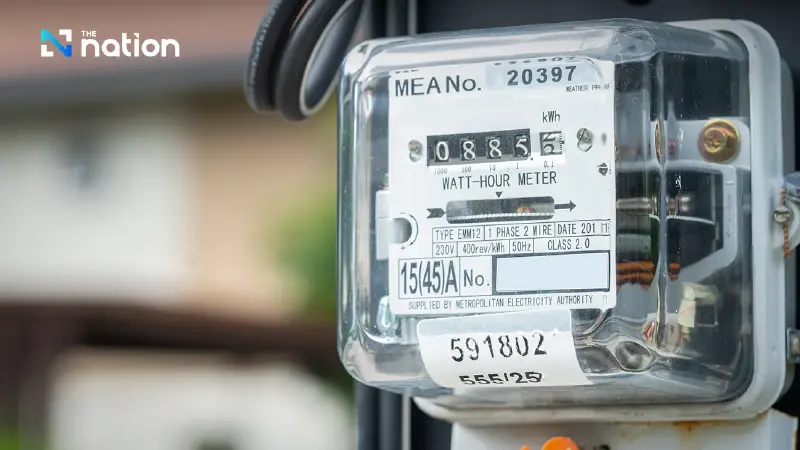


Energy Ministry plans June tariff shake-up, cheaper power for low-use homes and higher rates for households using over 400 units
- The Thai government is threatening to cancel old, expensive renewable energy "adder" contracts if private power producers refuse to renegotiate lower prices.
- A new tiered electricity tariff structure is planned for introduction from the June 2026 billing cycle.
- Under the new structure, households using more than 400 units of electricity per month will face a higher rate, with average charges rising to over Bt5 per unit.
- In contrast, 15.4 million households using less than 200 units per month will pay a reduced rate of no more than Bt3 per unit.
Energy Minister Akanat Promphan has warned that the government could cancel costly renewable energy “adder” deals if private power producers refuse to renegotiate, as the ministry prepares a wider overhaul of Thailand’s electricity tariff structure.
The Energy Ministry is in talks with relevant agencies on a full restructuring of power charges, with one of the main cost pressures linked to past renewable energy projects supported under the “Adder” scheme, or an additional payment on top of the normal electricity purchasing price.
Akanat said these projects account for more than 4,000 megawatts of capacity, or around 10% of Thailand’s total power generation capacity. Many are still being paid about Bt3-Bt5 per unit, adding roughly 20 satang per unit to the fuel tariff, or Ft.
He said he had already called in his team for discussions and would open negotiations with private power producers in this group to bring prices closer to current costs.
“Solar should not cost more than Bt2.20 per unit, while biomass projects must also renegotiate their prices because many have already recovered their investment. Energy costs have changed a lot. If they refuse to talk, we will cancel the deals. They can sue if they want, but we cannot allow electricity bills to remain expensive,” Akanat said.
If the ministry can reduce costs from the adder group, power bills could fall by around 10 satang per unit. The ministry has also consulted the Office of the Attorney-General to prepare for possible legal disputes.
At the same time, the government is preparing a new tiered electricity tariff structure covering 23.2 million households, with the aim of introducing it from the June 2026 billing cycle.
Under the proposed structure, 15.4 million households using no more than 200 units a month would pay no more than Bt3 per unit. The remaining 7.8 million households using more than 200 units would be split into two further tiers.
Households using 200-400 units a month, totalling around 4.6 million, would continue paying the normal rate of Bt3.95 per unit.
Those using more than 400 units a month, around 3.2 million households, would face a higher rate. Their average charge would rise from about Bt4.50 per unit to more than Bt5 per unit, an increase of roughly Bt1. The government is encouraging this group to install solar panels to reduce their bills.
Akanat said Thailand’s existing tiered tariff structure had been in place for more than 20 years and no longer reflected real costs. He argued that high-volume electricity users were among the reasons Thailand still depends heavily on natural gas for power generation, with gas accounting for more than 60% of the mix and imported LNG about 30%.
LNG prices remain vulnerable to global volatility, particularly amid unrest in the Middle East, he said.
“If we can cut LNG imports by 5-10%, bringing them down to about 20%, that would reduce the Ft by another 10 satang per unit,” he said.
The government is also pushing household solar installation, especially for homes using around 480-500 units a month or more, where investment in rooftop solar would be more financially worthwhile.
A 2-3 kilowatt system would cost about Bt60,000. If financed over 10 years at 3% interest, monthly repayments would be around Bt600, while the system could cut electricity use by 300-400 units a month, equivalent to savings of around Bt1,500.
The Energy Ministry is also working to simplify solar rooftop installation procedures. The process, which previously could take as long as a year, would be shortened to seven days for systems installed for self-consumption and no more than one month for meter installation. The ministry has already discussed the plan with the Interior Ministry and the Provincial Electricity Authority.
For households selling electricity back to the grid, the government plans to set the purchase rate at Bt2.20 per unit, higher than the rate paid to solar farms. The purchase quota would be expanded from 90MW to 500MW, out of national power generation capacity of around 50,000MW, with further expansion possible as demand grows.
The ministry is also preparing energy-efficiency measures for the public sector, including replacing streetlights with LED bulbs. If electricity use can be cut by one-third, this could reduce power costs by more than 10 satang per unit.
Separately, the ministry is still looking for ways to reduce electricity charges for the May-August 2026 billing period. The current rate is Bt3.95 per unit, up from Bt3.88 in the previous cycle, after the Ft rose by 7 satang per unit because of higher global energy prices linked to unrest in the Middle East.
Options under discussion include support from the central budget, funding from the electricity authorities, and shortfall funds linked to the gap in PTT’s natural gas costs. The ministry’s longer-term target is to bring the average power tariff down to Bt3.50 per unit.
