
Thai Parliament's Utility Bills Ignite Row Over Public Spending
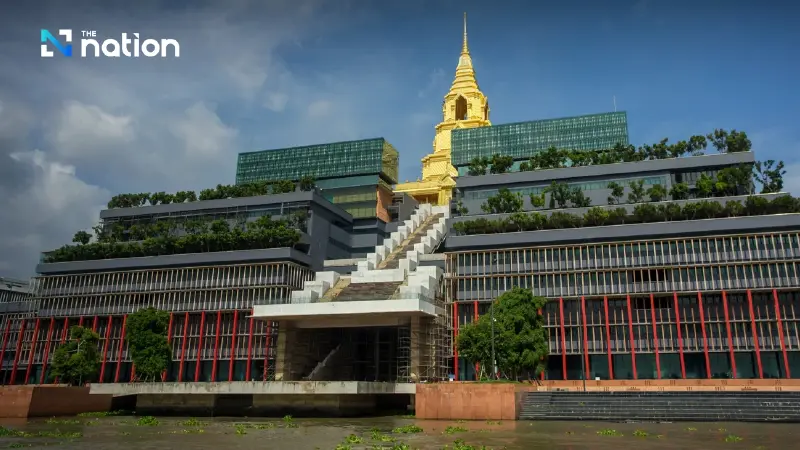


Despite being out of session, Thailand's Parliament is facing intense criticism after figures revealed water consumption of over 5.6 million baht in six months, with electricity bills consistently hitting 12-14 million baht monthly, sparking calls for greater accountability.
Thailand's Parliament is facing a growing controversy over its persistently high utility bills, with new data revealing staggering water consumption even when lawmakers are in recess.
Critics are lambasting the legislature for what they describe as wasteful expenditure, particularly when the public is urged to conserve energy.
Figures obtained by a parliamentary reporter show that between October 2024 and April 2025 of the current fiscal year (2025), the combined water consumption for the Secretariats of the House of Representatives and the Senate reached 330,395 units, incurring a total cost of 5,646,358.97 baht.
A breakdown of the monthly figures highlights particular anomalies:
- October 2024: 39,348 units (672,544.73 baht)
- November 2024: 35,215 units (601,964.67 baht)
- December 2024: 44,493 units (760,406.93 baht)
- January 2025: 51,208 units (1,033,300.58 baht)
- February 2025: 60,473 units (1,033,300.58 baht)
- March 2025: 46,817 units (800,094.34 baht)
- April 2025: 52,841 units (902,967.39 baht)
Notably, the water bill for February, a month with only 28 days, surged to over 1 million baht – matching January's bill despite fewer days.
The Secretariat of the House of Representatives is responsible for 70% of these costs (3,952,451.28 baht for 231,276.50 units), while the Senate Secretariat covers the remaining 30% (1,693,907.69 baht for 99,118.50 units).
This revelation follows earlier concerns raised by Thanyathorn Dhaninwattanathorn, a Bangkok MP for the People's Party, regarding Parliament's hefty electricity bills, which consistently range between 12 million and 14 million baht per month.
Thanyathorn pointed out that Parliament’s electricity usage is problematic, citing issues such as overly cold air conditioning that lacks flexible controls.
He drew a sharp contrast with the public's plight, where ordinary Thais are urged to conserve electricity by adjusting thermostats or reducing appliance usage due to the mounting burden of monthly energy costs.
Yet, electricity consumption at Parliament remains exceptionally high, even during parliamentary recesses when energy use should theoretically decline, particularly as over 700 meeting rooms and private offices for MPs and Senators are not in full use. However, the figures show little to no reduction.
"What is happening with the energy management system in the new Parliament building?" Thanyathorn questioned. "Why isn't the temperature control system flexible according to actual usage? Parliament should be a model of economy, efficiency, and public accountability."
Bhuntin Noumjerm, also a Bangkok MP for the People's Party, further elaborated on the scale of the spending, stating that Parliament's overall annual electricity budget stands at 160 million baht, with the annual water bill amounting to approximately 14 million baht, averaging over 1 million baht per month.
The mounting figures put pressure on parliamentary administrators to justify the expenses amid calls for greater fiscal responsibility.
