
Phumtham concerned Cambodia talks unlikely to resolve quickly
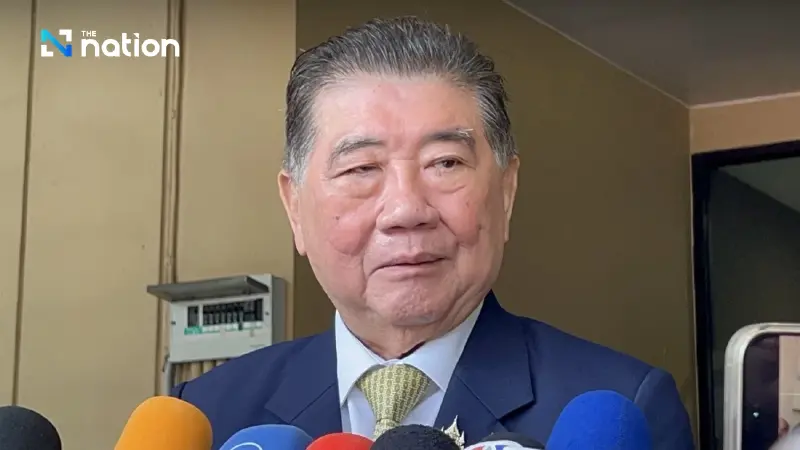


Interior Minister Phumtham Wechayachai has voiced concern over Cambodia’s inconsistency, saying the border dispute is unlikely to end soon.
Speaking to the press at Government House on Monday, Phumtham referred to the upcoming Thailand–Cambodia Regional Border Committee (RBC) meeting under the Second Army Area, scheduled for August 27.
Asked whether the meeting would propose similar conditions to those raised in the First Army Area’s RBC discussions, he replied that it would be a continuation of the previous round, though differences could arise depending on local terrain and issues.
“The main focus will be on reaching the most consistent understanding possible regarding the border,” he said.
On whether positive signs could be expected after Cambodia previously accepted some conditions, Phumtham pointed out that problems had emerged concerning barbed wire fences.
“What troubles us most is that the Cambodian side often says something different from what was agreed,” he said, adding that such behaviour was not new, recalling similar patterns when he previously served as defence minister.
He confirmed that Thailand has been gathering all necessary evidence and noted that Foreign Minister Maris Sangiampongsa is currently in Geneva to meet committees linked to the Ottawa Convention, bringing with him evidence of Cambodia’s violations.
“We are calm, peaceful and firm in protecting our sovereignty. Our instructions have always been to collect evidence whenever incidents occur. International responses to our position have been quite positive,” Phumtham said.
He insisted that Thailand’s stance remained clear: “While Cambodia may say whatever it likes, the international community can see the reality.”
When asked about protests in Cambodia urging US President Donald Trump to intervene in the border dispute – including calls to name a road after him – Phumtham said it was their right to make such demands.
Reflecting on the situation one month after the latest Thai–Cambodian clashes, Phumtham said border negotiations rarely conclude quickly.
“In some countries, such talks take decades or even centuries. For Thailand and Cambodia, this is only the start of a new round. Problems have arisen repeatedly over time but are settled case by case, depending on circumstances,” he said.
“There is no need for concern, provided we avoid unnecessary conflict and remain steadfast in protecting national interests.”
