
International media see Thai politics under Anutin as stable for now, but uncertainty looms
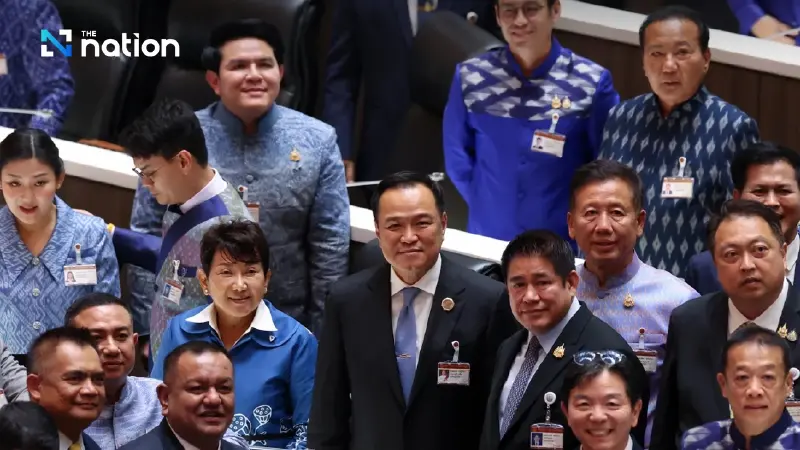


Global media report Anutin Charnvirakul’s rise as Thailand’s PM eases turmoil temporarily, but a national election keeps uncertainty alive.
Influential US media outlet The New York Times reported that Anutin Charnvirakul, leader of the conservative Bhumjaithai Party, has been voted in as Thailand’s new prime minister. The move, however, points towards a possible national election within the next four months, potentially in January, prolonging the political uncertainty that has gripped Thailand for months.
At 58, Anutin is set to become Thailand’s third prime minister in two years. He will lead a minority government at a time when the country faces a precarious ceasefire with Cambodia and an economic slowdown, driven by falling tourist numbers and import tariffs imposed under US President Donald Trump.

Known for his pro-legalisation cannabis policies, Anutin may push his cannabis agenda again. He recently stated that his goal remains to develop a regulated cannabis industry for medical use, arguing against reverting cannabis to a criminalised substance.
The report echoes Bloomberg, which noted that Anutin’s election eases political turmoil, though the reprieve may be short-lived. Peter Mumford, head of Southeast Asia Practice at Eurasia Group, a political risk consultancy, commented: “Friday’s vote immediately ended the recent drama and likely avoided the risk of a snap election this year. Yet Thailand’s political game will continue, especially as Anutin seeks to expand his coalition. Meanwhile, challenges await in a weak economy, particularly amid Trump’s trade war, and persistent tensions along the Thai-Cambodian border.”

Singapore’s The Straits Times added that Anutin may bring temporary stability amid ongoing chaos, following the removal of another powerful political family from office. Under a pact with the People’s Party, he is expected to dissolve parliament within four months of taking office and delivering a policy address. The new election could allow the People’s Party to gain more seats, having a commanding lead over rivals in opinion polls, with leader Natthaphong Ruengpanyawut ranked as the politician most desired by the public for the premiership.
Hong Kong’s South China Morning Post reported that Anutin’s victory received unexpected support from the People’s Party, the main opposition with the largest number of seats in Parliament. The party decided to back Anutin after an agreement was reached that he would hold a general election within the next few months. His ability to defeat Chaikasem Nitisiri of the Pheu Thai Party means that Pheu Thai must relinquish power after two years of internal party turmoil and growing public dissatisfaction. Thailand has experienced political instability for several years, and this latest change highlights the country’s continuing volatility, marked by sudden shifts in Parliament and unpredictable political alliances.

Reuters noted that, with decisive backing from the opposition, Anutin secured more than half the votes in the House of Representatives — a critical majority that enabled him to assume the premiership with ease. This ended a period of intense political rivalry, as he successfully outmaneuvered the most historically successful party in Thai politics. Anutin is a skilled negotiator and a central figure in Thai politics throughout years of turmoil, strategically positioning the Bhumjaithai Party among conflicting elites involved in complex power struggles, and participating in coalition governments over multiple terms.
His victory over Chaikasem is seen as a humiliation for Pheu Thai, once an unstoppable populist party under the influence of billionaire Thaksin Shinawatra, who departed Thailand on the evening of Thursday, September 4, for Dubai, where he has spent most of the past 15 years in exile.
